Menu
stage img
  • Focus

Swiss glaciers – melting in record time

02.10.2026 – Theodora Peter

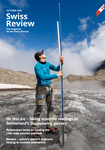
Alpine glaciers were severely affected in the scorching summer of 2026. Their dramatic retreat is one of the most visually striking symptoms of climate change. If temperatures continueto rise unchecked, glaciers could disappear entirely by the endof the century. “Swiss Review” accompanied two scientists on an expedition to assess the ice loss.

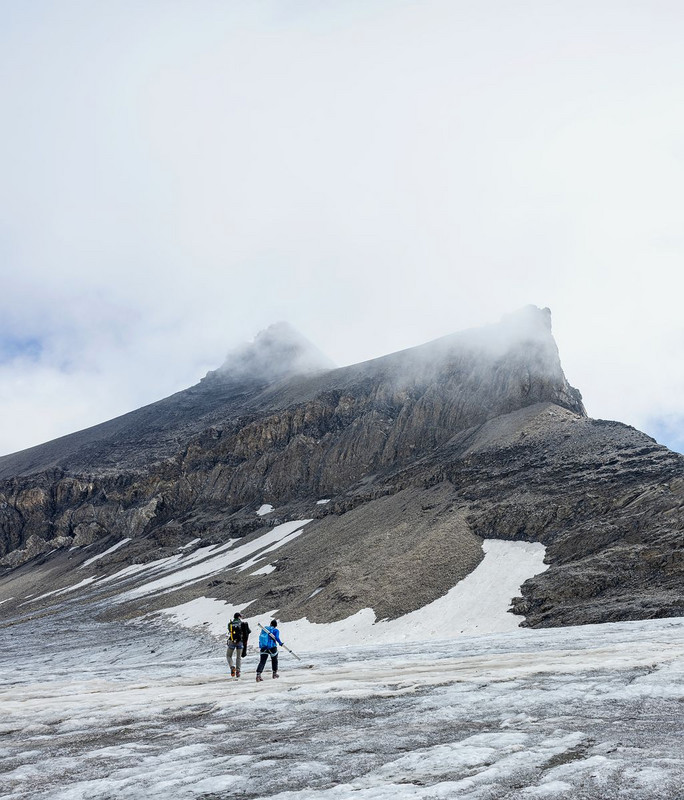
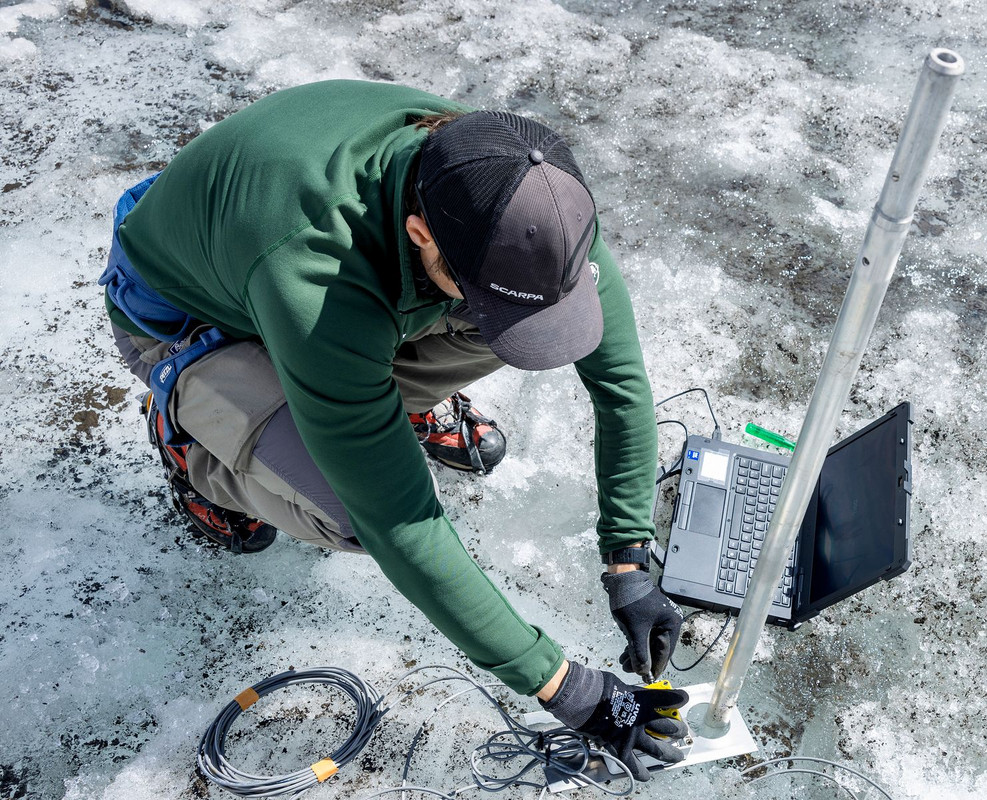
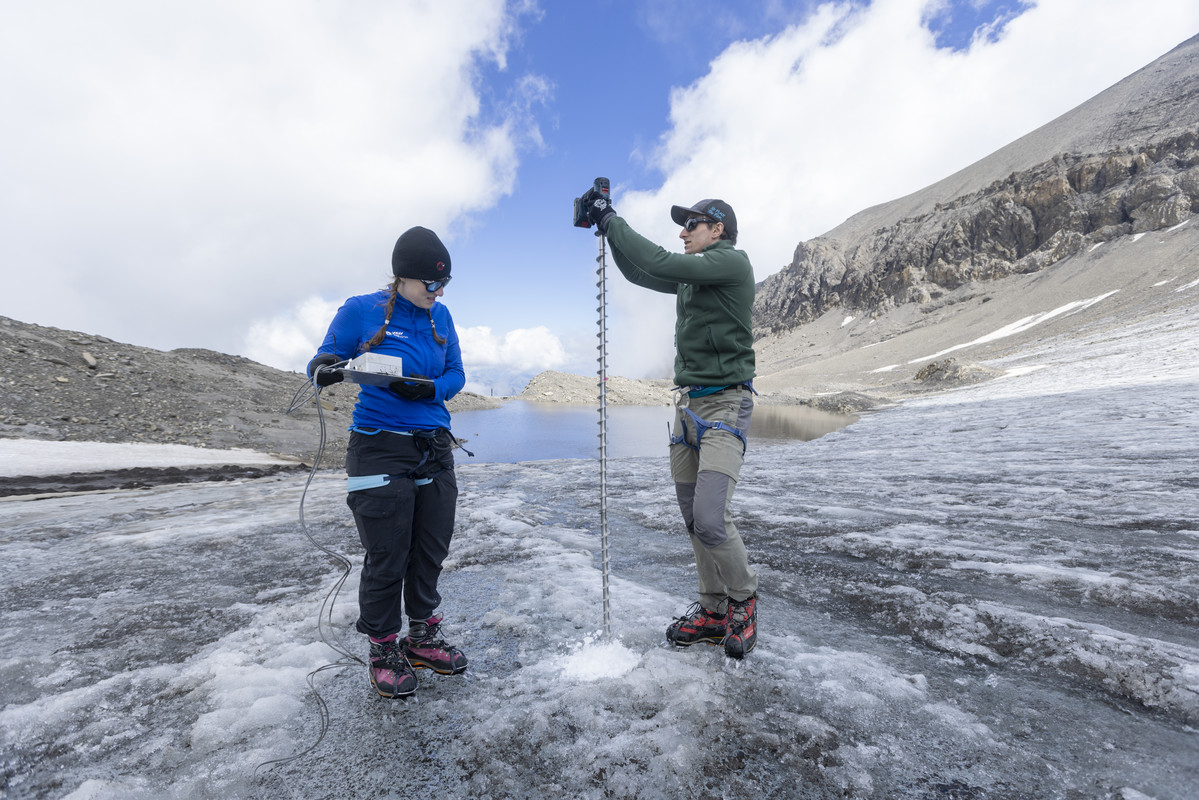
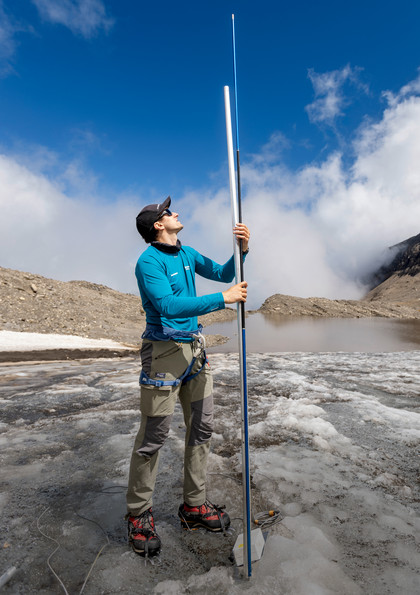
ETH Zurich scientists Janosch Beer and Ariana David assessing ice loss on the Scex Rouge glacier, where the cantons of Vaud and Valais meet. Photo: Marco Zanoni

We disembark at the Glacier 3000 station that straddles the cantons of Vaud and Valais, having ascended by cable car from the Col du Pillon. It is the last Monday of July, and we are now almost 3,000 metres above sea level. From this lofty perch, we can make out the highest peaks in the Alps. The tip of the Matterhorn has been dusted with fresh snow, as thunderstorms brought some showers the previous day. Otherwise, the precipitation already seems to have evaporated. This is a summer of extreme drought – and the next heatwave is on its way. Temperature records have been broken in many places around Switzerland.

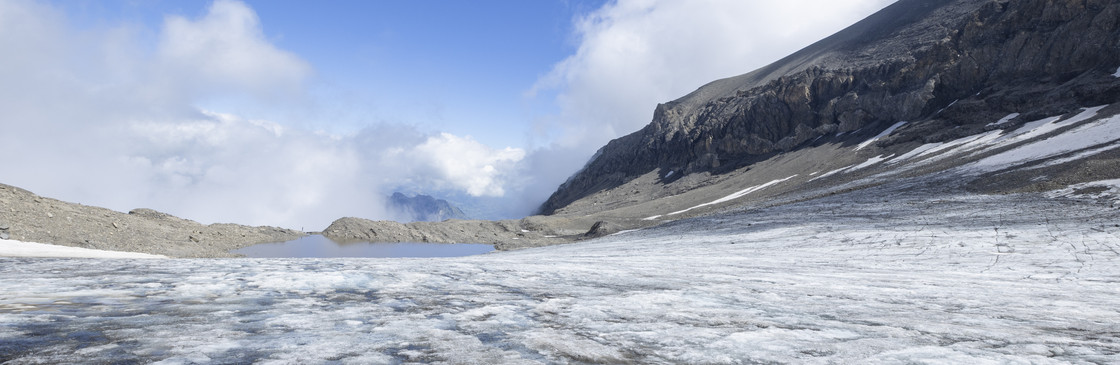
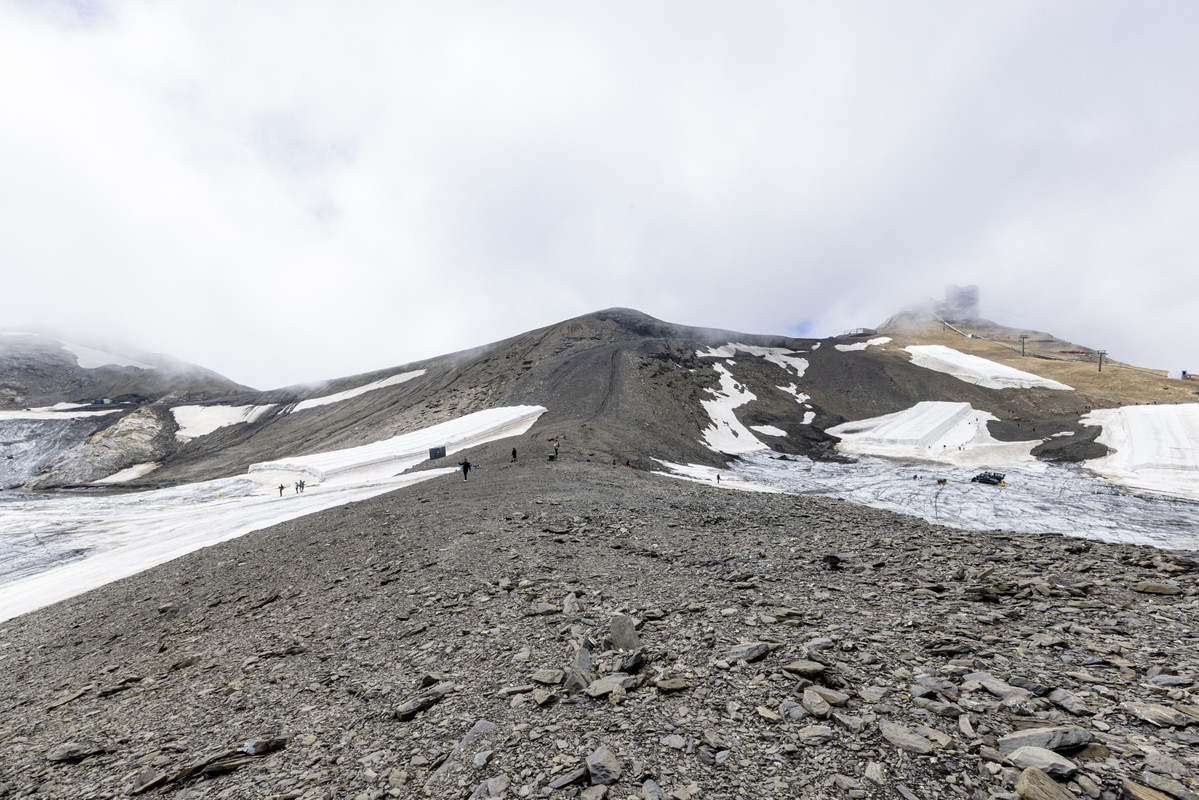
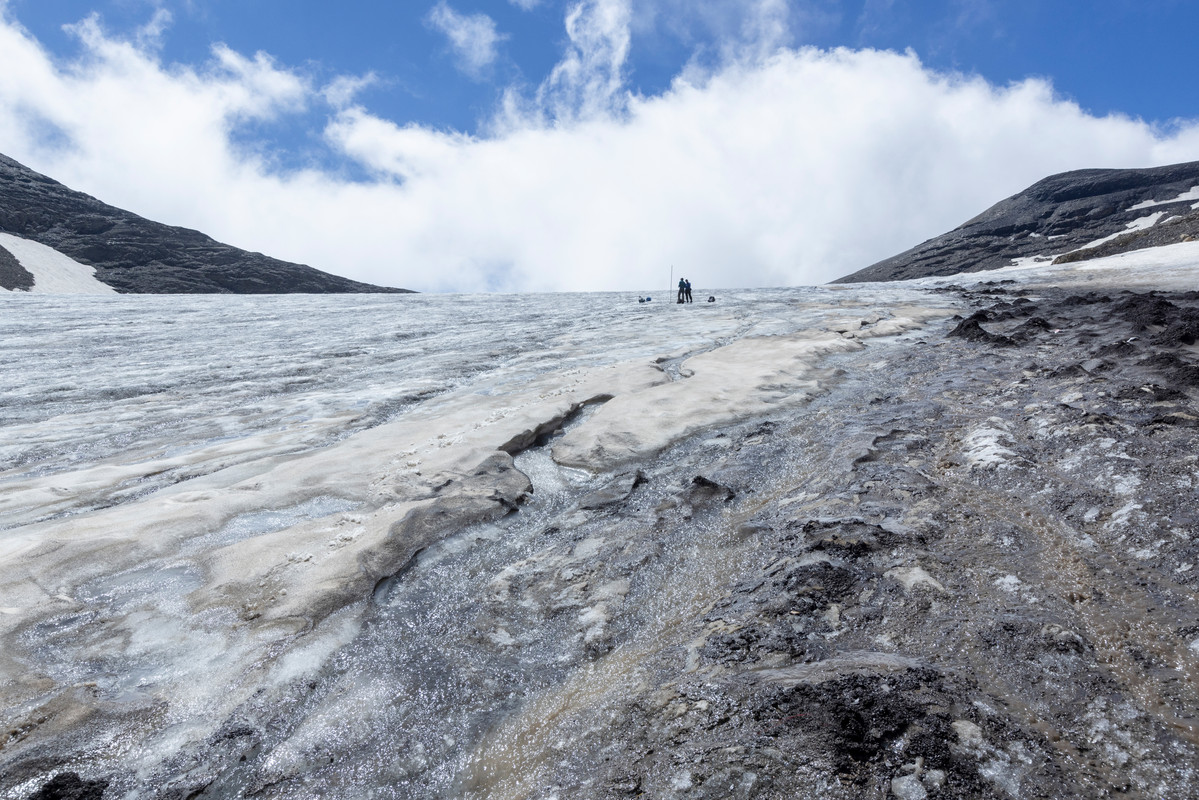
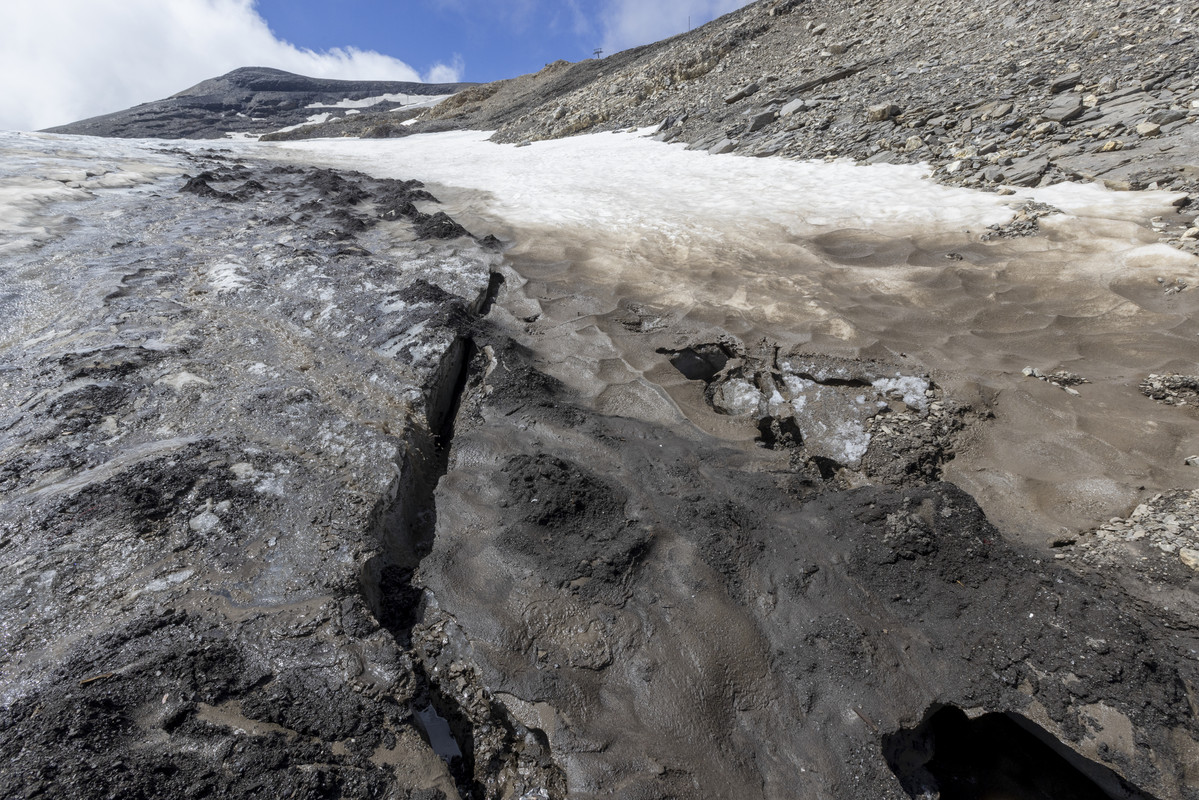
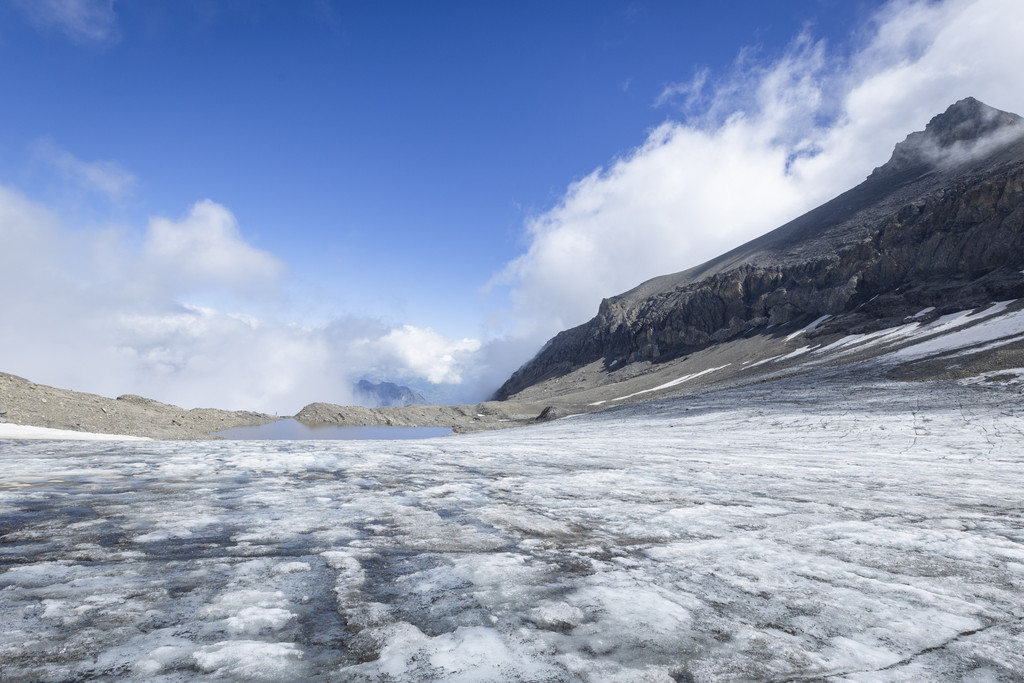
It is a fairly cool 10 degrees Celsius up here. Cloud formations drift across the sky. A high plateau stretches out before us, comprising the relatively flat Scex Rouge and Zanfleuron glaciers. These two ice masses were still connected to each other until a few years ago. They have been separated since 2022 by bare rock that emerged due to intense melting – a consequence of human-driven climate change. Ten years ago, this spot was still buried under 15 metres of ice. Now the rocky spine of the Col de Zanfleuron protrudes ever more prominently above the two shrinking glaciers.

The continuous sound of splashing

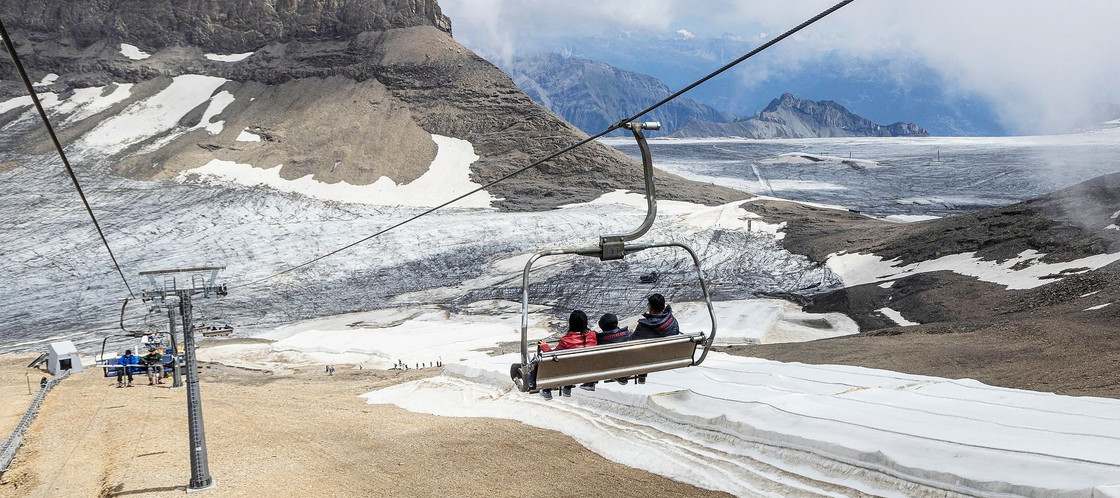
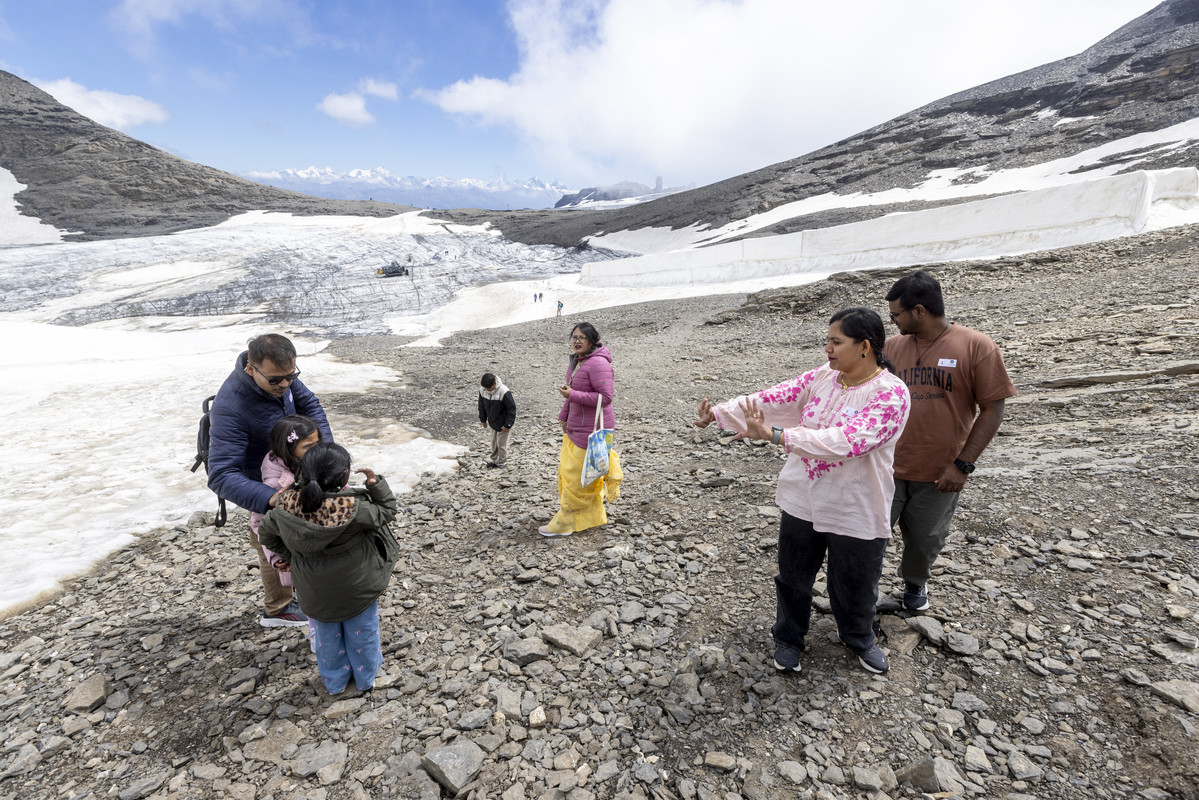
“Swiss Review” is out in the field with 31-year-old glaciologist and ETH Zurich doctoral student Janosch Beer as he measures surface melting and takes ice temperature readings on the Scex Rouge. Colleague Ariana David is with him, assisting with the work. We take the chair lift that leads 200 metres down to the glacier in summer, where tourists can then walk along a safe, marked trail called the Glacier Walk. Next to the lift lie long piles of snow covered in white tarpaulin. Many mountain resorts “farm” snow deposits like these to preserve snow from the previous winter for the following ski season.

On reaching the edge of the bare glacier, we fasten crampons onto our hiking boots. These additions will help us keep our balance on the slippery ground. There are rivulets and small streams everywhere along the slightly downward incline. We can hear the continuous sound of splashing. Beer has been coming here every summer for several years. “I have never seen the glacier so wet,” he says. Meltwater has collected at the lowest point to form a small lake, the contents of which cascade over the precipice.

Situated more or less halfway across the glacier is an aluminium pole that can be seen from a good distance. The glaciologists are using it to measure how much ice has been lost. It is called an ablation stake. A year ago, Beer inserted it four metres deep into the glacier. The pole’s upper end now sticks out almost three metres above the ice. “And summer isn’t over yet.” A second measurement at the lower end of the glacier completes the data: some 2.4 to 2.9 metres of pure ice have melted this season on the surface of the Scex Rouge glacier. According to Beer, this corresponds to readings from previous years, which were classed as high to extreme.

Without doubt, the glacier’s days are numbered. Still 40 or so metres deep, the Scex Rouge is likely to disappear within 20 to 30 years. This outcome is inevitable, because the glacier is unable to retreat to a higher area where snow would also fall in summer, allowing new glacier ice to form.

Too much water

Besides measuring the thickness of the ice, Beer is looking at the ice temperature at various depths. At the start of his research project, he installed sensors within the glacier that are connected to the surface via a long cable. Beer hooks up his laptop to the cable and downloads the various readings in no time. One of the things he is investigating as part of his doctoral thesis is how a lack of snow cover affects temperatures inside the glacier. The purpose of his findings is to help safeguard against the impact of natural events. The Blatten disaster in 2025 showed just how devastating the consequences of collapsing glaciers can be for villages below (see pages 16 and 17 as well as “Swiss Review” 4/2025).

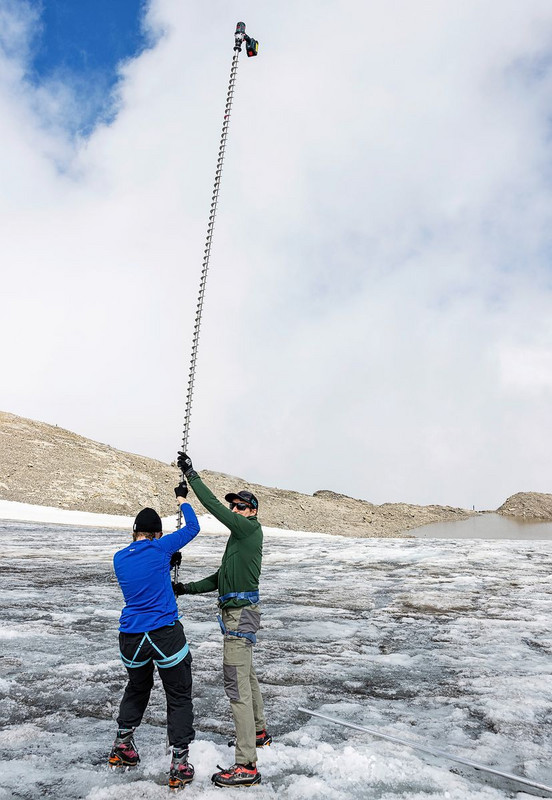
As soon as all the readings are complete, Beer takes out a power drill from his rucksack. The aluminium poles need to be pushed four metres deep into the glacier again, so he needs to drill new holes into the ice. Beer aborts his first drilling attempt after reaching a depth of one metre – too much water is pushing up from underneath. “This has never happened to me before,” the researcher says. After trying at a couple of other spots, he finally completes the job. His work on the Scex Rouge is finished for this year.

Beer spends the following days in Valais, taking more readings. The glaciologist emails us a week later, telling us that the ice was melting intensely wherever he went. “Some poles were protruding over three metres above the ice. We were able to take readings just in time. The ice around other poles had melted completely. These readings were lost.” He also noticed how much exposed ice was visible at altitudes over 4,000 metres. “Those parts used to be covered in snow all year round.”

One extreme year after another

All data on glacier volumes is fed to the Glacier Monitoring in Switzerland network, known as GLAMOS, which monitors 176 glaciers. Every September, at the end of the hydrological year, GLAMOS publishes overall readings from a number of key glaciers. These were not yet available at the time of our editorial deadline.

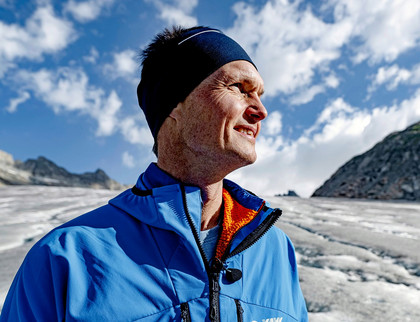
But 2026 already looked like an extreme year based on early readings in July, says GLAMOS director Matthias Huss. “Switzerland’s glaciers are in a very, very poor state,” the 46-year-old glaciologist confirms in a video call. Glaciers have been retreating continually since 1990, but the melting had again accelerated considerably in recent years, he said. The real tipping point was 2022, when records tumbled. “It has been one extreme year after another since then.”

Apart from the hot temperatures, this year’s massive glacial melt is down to a lack of winter snow. “If there is enough snowfall in winter, this can protect the ice well into summer.” However, melted areas of glacier expose darker surfaces that absorb the sunlight and warm up. “This turbocharges the melting process.” Sahara dust blowing into the Alps accentuates this effect.

Yet not even snowy winters are enough to stop the decline. Take 2024, for example, when Huss measured up to five metres of new snow covering the glaciers 3,000 metres up. “I remember thinking it would be impossible for the snow to melt completely by autumn.” Two hot summer months later, and the snow had gone. “Ultimately, summer is the key factor causing glacial melt.”

The big glaciers are also melting

Extreme years have a particularly devastating impact on small glaciers, causing them to disintegrate into smaller sections or disappear completely. Huss has himself witnessed the gradual disappearance of the Pizol glacier in the canton of St Gallen, which he has visited around 50 times in the last 20 years to take readings. “After 2022, all that was left was a rolling plateau of rocks and scree.”

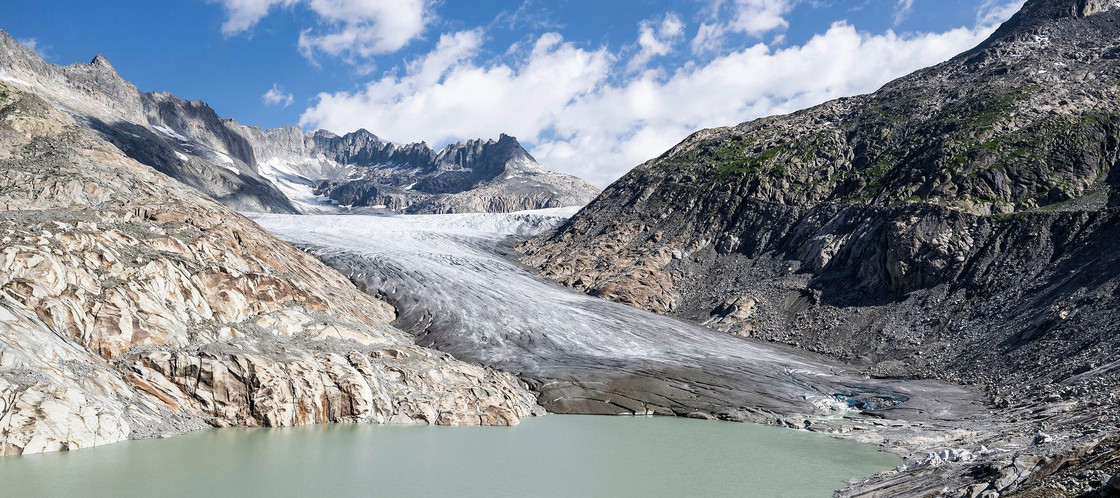
Switzerland’s biggest Alpine glaciers – the Aletsch Glacier in the Jungfrau region, and the Gorner Glacier near the Monte Rosa massif – suffer a moderate annual loss in thickness of around two metres, barely apparent to the naked eye. Both glaciers are hundreds of metres deep. “But if you stand in front of one of the glacier tongues, you notice the difference from one year to the next,” says Huss. The front of the Rhône Glacier is a prime example. “The ice there has retreated a long way back, leaving a lake where it has melted.”

According to Huss, the survival of high-lying glaciers depends on “whether the world turns the tide on climate change”. If we can limit global warming to 1.5°C, “then these glaciers can retreat to higher altitudes”. But this scenario is becoming increasingly unlikely. “We are currently on course for a 2.7°C increase in global temperatures. Climate projections even show the Alps getting warmer by 4°C.” If recent extreme years become the default, “it is quite possible that the ice will disappear completely even at altitudes above 4,000 metres by the end of the century.”

The outlook is depressing, but the glaciologist is undeterred. In fact, Huss believes documenting the great changes in the Alps is an opportunity. “We can harness the evocative force of glaciers to illustrate climate change.” Glaciers resonate with many people, be it due to childhood memories or holidays spent in the mountains. “Seeing them disappear before our eyes, we realise what is at stake.”

A chair lift takes visitors down from the Glacier 3000 station to the Scex Rouge (left) and the Zanfleuron (right) – two glaciers that were connected to each other until 2022. On the ground are long piles of leftover winter snow, kept under white tarpaulin for the next ski season. Photo: Marco Zanoni

Glacier Monitoring in Switzerland (GLAMOS) www.glamos.ch

More glacier photos: www.revue.link/ice

“Seeing them disappear before our eyes, we realise what is at stake.” Matthias Huss, glaciologist

Natural reservoirs in danger

The disappearance of glacier ice has major implications for water security. “There is a reason why the Alps are known as the water tower of Europe,” says glaciologist Matthias Huss. Major rivers like the Rhine, Rhône and Po begin there, fed in part by snowmelt and glacial melt. “The glaciers are like natural reservoirs; they help to keep water flowing, particularly when it is hot and dry.” People in Alpine valleys have taken advantage of glaciers for centuries, building channels to funnel meltwater towards their dry pastures and fields. Some of these ancient irrigation canals are still in use in Valais, where they are referred to as “bisses” in French and “Suonen” in German.

Hydropower generation is also likely to be affected in the long term as glaciers shrink, Huss says. Melting glaciers are currently helping to replenish reservoirs. “But the effect will diminish once these natural reservoirs have been drained.”

(TP)

The value of beauty

Switzerland’s national identity is intertwined with the Alps and their glaciers. The Swiss national anthem even refers to the mountains glowing bright with splendour in the red morning skies. But what if the Alps were one day reduced to nothing but desolate grey rocks and scree? Author Marcel Hänggi, who has covered the climate crisis as a journalist for over 20 years, addresses this question in his recently published book “Das Schöne, das verloren geht” (When beauty is lost). Driven by “grief at the devastation that humans have caused”, Hänggi looks at what we lose by destroying the environment, and why beauty hardly plays any role in the political and scientific debate. Can beauty be a reliable basis for making decisions? “Difficult to say,” he concedes. Yet the beauty of nature is relevant, “because we are quite obviously unable to protect the environment when we only consider the environment’s instrumental value.” In his wide-ranging essay, Hänggi moves the discussion beyond the notion of nature being something that is merely useful. “Without beauty, life is no longer deserving of its name.”

(TP)

Das Schöne, das verloren geht. Marcel Hänggi. Rotpunktverlag, 2026

Comments

×

First name, surname and place/country of residence is required

Enter valid name

Valid email is required!

valid email address required

Comment is required!

Comment rules have to be accepted.

Please accept

* These fields are required.

top