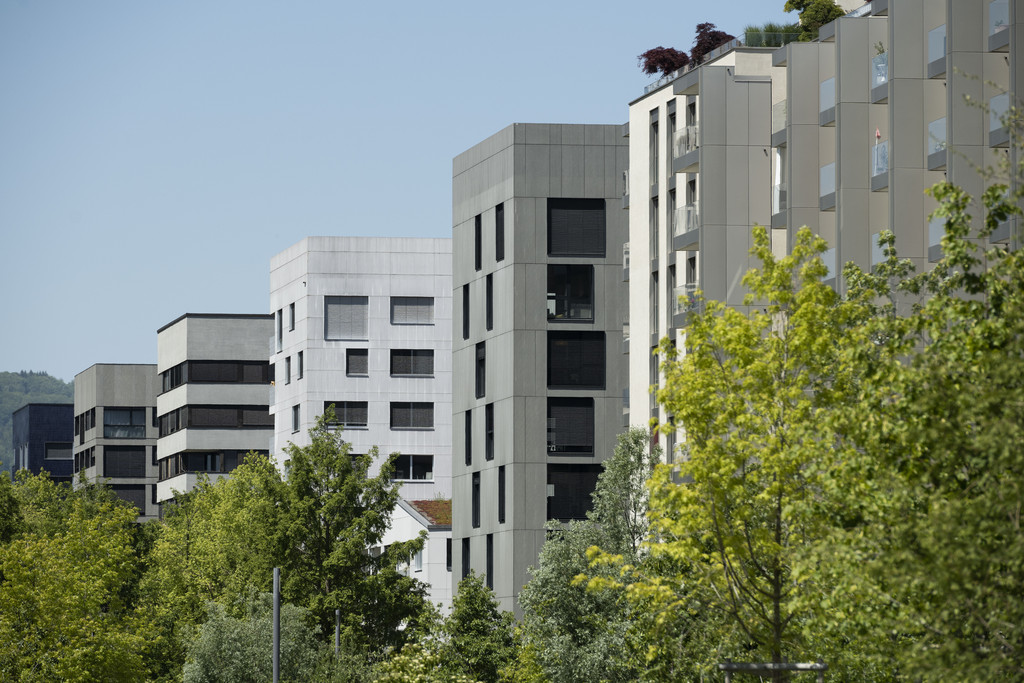
Innovative concepts address these concerns, showing how it is possible to build higher and more densely while creating green spaces. One urban planning model is the “ten-minute neighbourhood”, where jobs and everything you need for daily life are in close proximity. Developed by ETH Zurich and funded by the Swiss National Science Foundation, the idea is designed to help cantons and municipalities implement the Spatial Planning Act.
An annual 40,000 to 45,000 new homes have been created in Switzerland in recent years. According to estimates, 30 to 50 per cent more is needed to balance supply and demand. Although the number of building applications has increased slightly of late, the government realises that there is no quick fix. Together with cantons, municipalities and the property and construction sectors, it has drawn up an action plan consisting of 30 measures.
“It is not that we are not building enough. The problem is too many immigrants.”
SVP position
These range from more efficient authorisation processes to better use of building land. But they are only recommendations for the time being. More tangible is a proposal that the Federal Council has put to parliament: a fund that issues loans to non-profit housing developers being bolstered to the tune of an extra 150 million francs between 2030 and 2034, in order to facilitate the construction of low-cost homes. The Swiss parliament will vote on the scheme this year.
More affordable homes and an action plan to combat the housing crisis – this is how the government hopes to blunt the SVP’s “No to a Switzerland of 10 million” initiative. Will voters be on board? We will find out on 14 June.
Focus | Switzerland’s 10-million vote
Never before have so many people lived in Switzerland. A flourishing economy makes our country a popular destination for immigrants. This brings prosperity, but problems too.
– Part 1: How much immigration can Switzerland take?
– Part 2: The economy relies heavily on foreign Workers
including the personal account of someone who came and then left
– Part 3: The housing conundrum









Comments
Comments :
Il est ridicule de laisser la population suisse augmenter, que ce soit par l'immigration ou trop de naissances. Une fois les glaciers fondus... il faudra attendre la prochaine pluie et la partager en combien pour boire et se laver les dents? Stabiliser ou réduire le nombre de 9 millions d'habitants actuellement, c'est une priorité politique évidente.