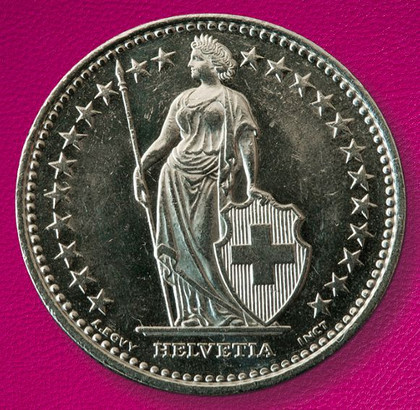
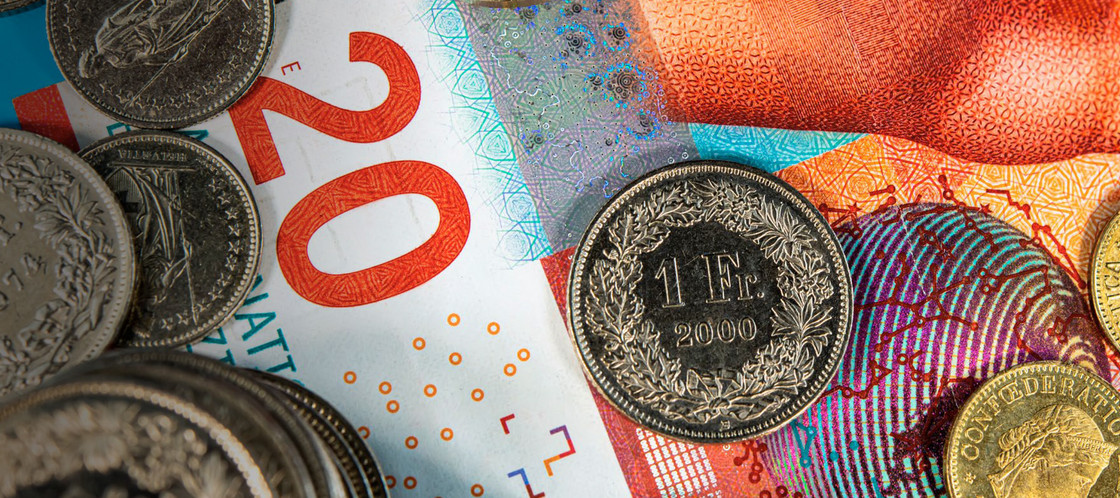
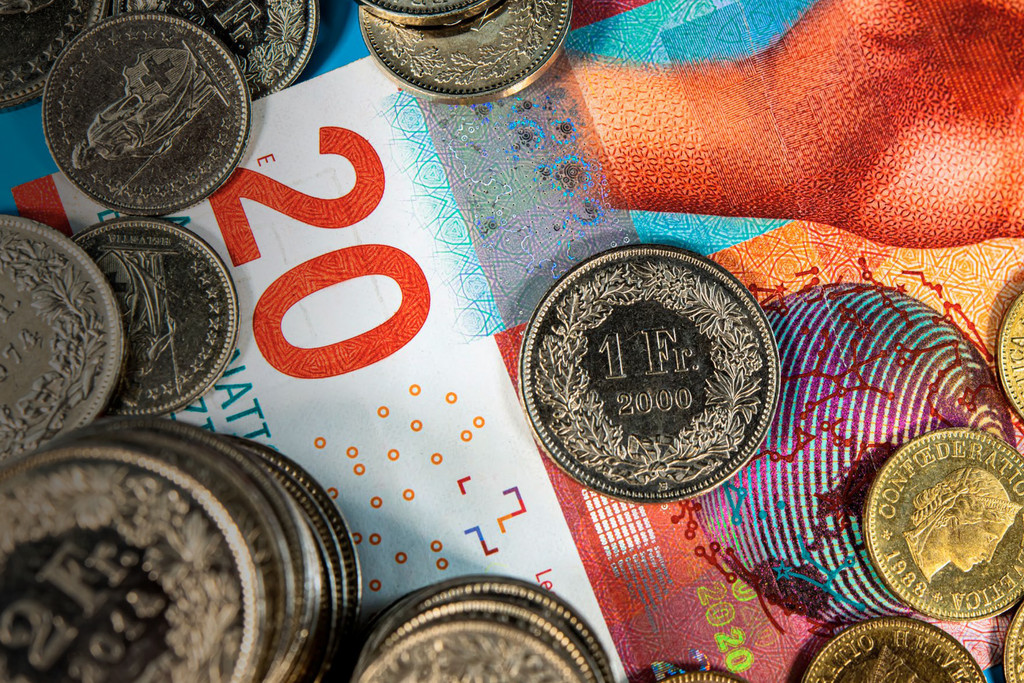
The Swiss franc is a symbol of stability and quality. Switzerland’s intimate relationship with its banknotes and coins is a source of national pride. Even in the age of tap-to-pay, the absence of cash would be unthinkable for most Swiss. Why is that?
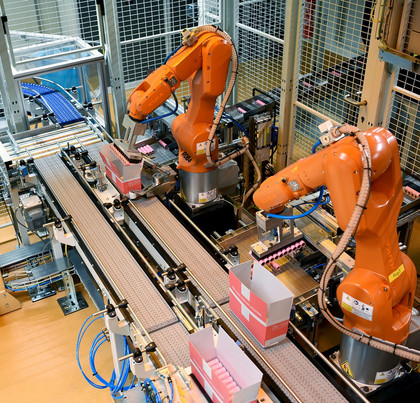
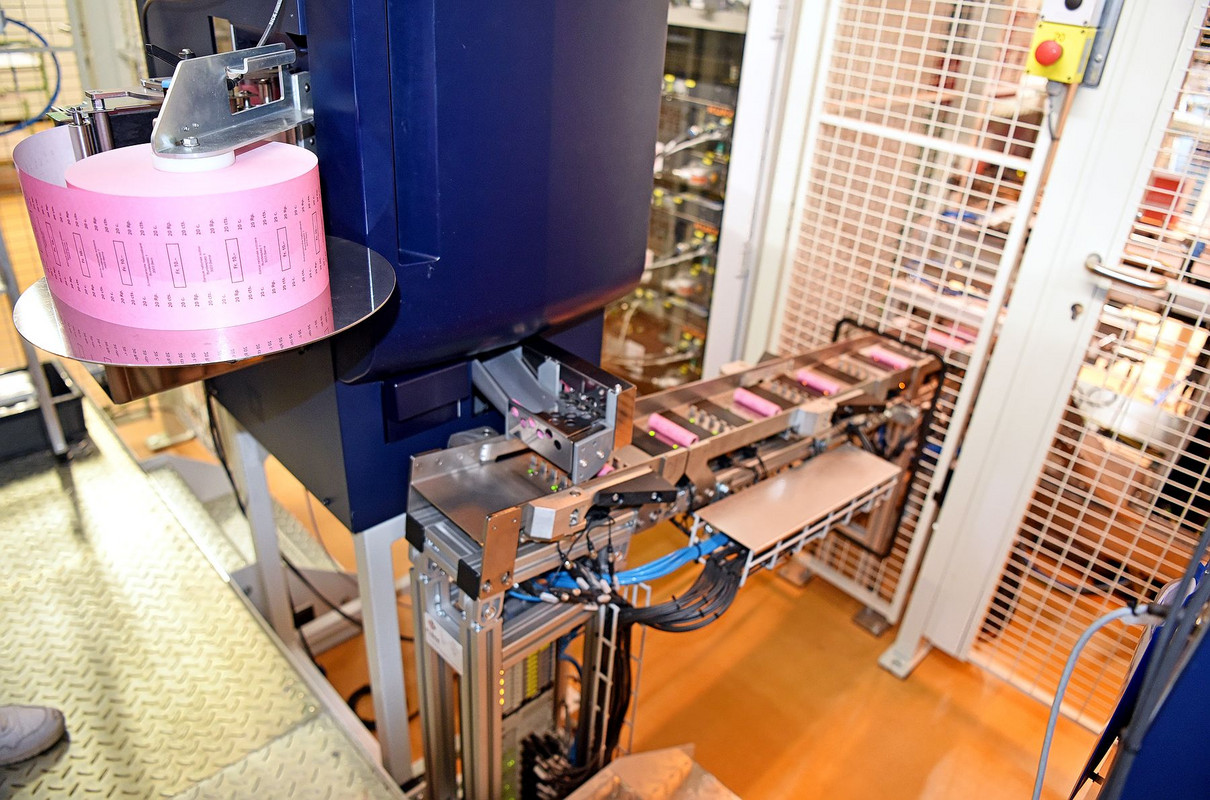
Before coins and notes return to circulation, they are sorted and repacked in the SNB’s underground vault in Berne. Pictured here: freshly packed rolls of 20-cent pieces. Photo: SNB
The Swiss National Bank (SNB) in Berne is the beating heart that regulates cash circulation in Switzerland, ensuring that Swiss banks always have enough cash in reserve for their private and business clients. Banknotes and coins worth a total of over 76 billion Swiss francs were in circulation in 2024 – around twice as much as 20 years ago.
For the purposes of this article, the SNB gave us a rare glimpse into its heavily guarded national cash vault in Berne, where banknotes and coins arrive in numerous crates every day – delivered by cash handling companies like Loomis that move the currency from A to B, supplying it to and collecting it from banks, shops and authorities around the country.
Money is sorted, checked, and replaced where necessary before it re-enters circulation. Last year, the SNB put some 244 million banknotes and 166 million coins back into circulation and withdrew 238 million banknotes and 131 million coins.
In the heavily guarded vault
To access the cash vault situated at the SNB’s headquarters on Berne’s Bundesplatz you must go through a security check. A lift takes you underground. After passing through a reinforced door, you walk into a labyrinth of winding corridors and staircases. The lighting in the first room that we enter is as bright as day.
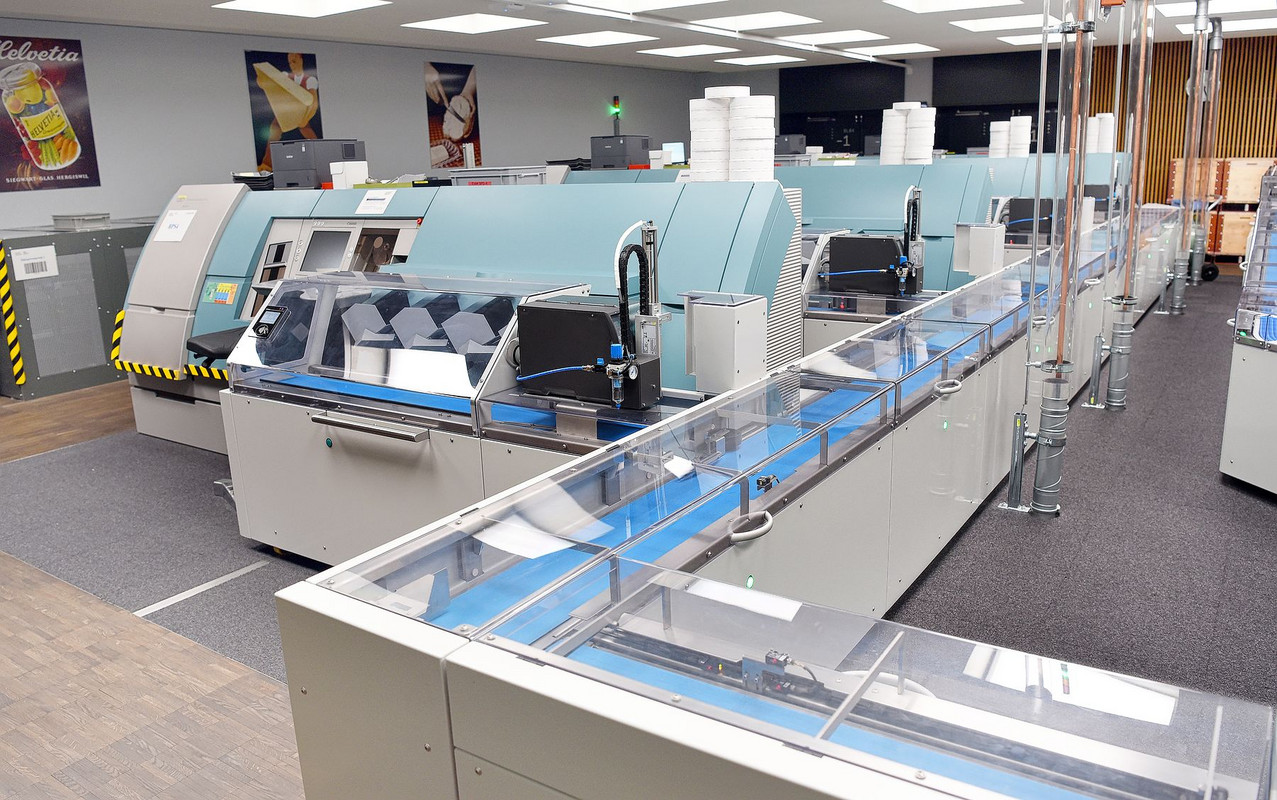
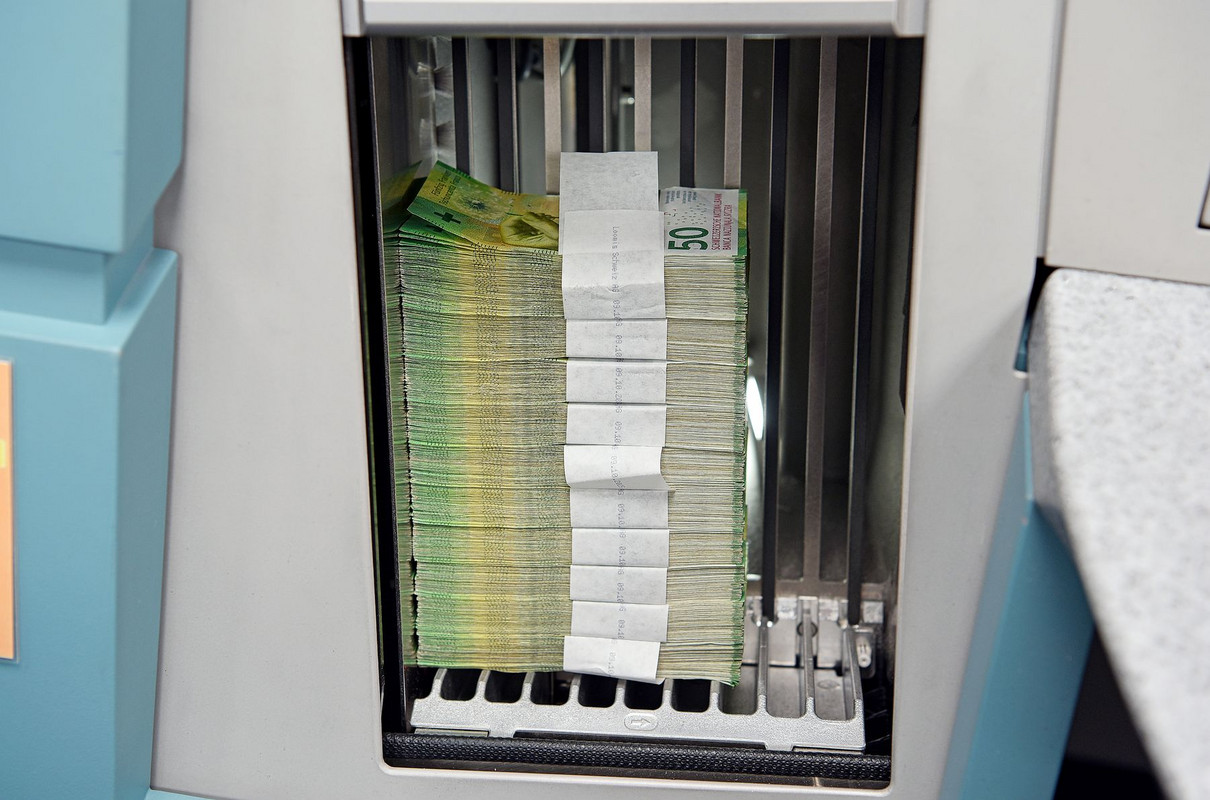
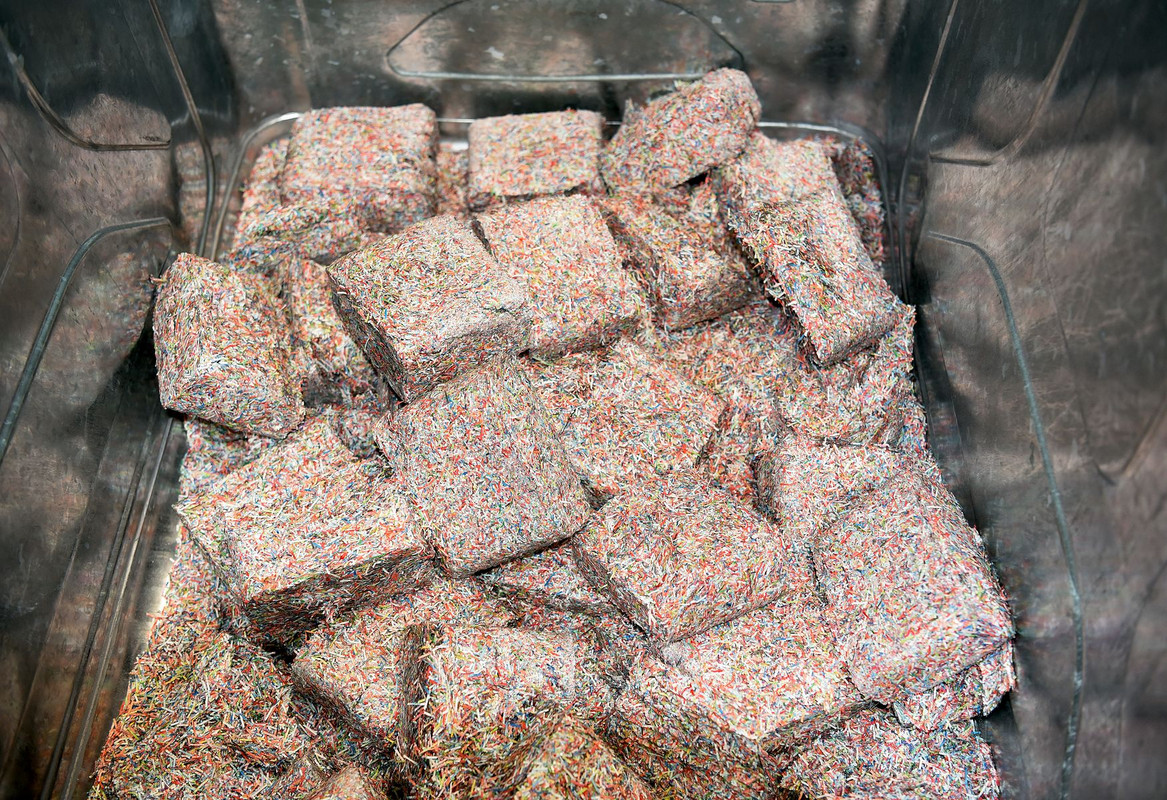
Equipped with machines, robotic arms, and conveyor belts, this space looks like a small industrial facility – albeit one chock-a-block with banknotes. Fifty-franc notes are being checked today. An employee puts the bundles into a machine, which verifies the authenticity and condition of every note within seconds. Counterfeits are sent to the federal police. Banknotes unfit for use because they are dirty, ripped or no longer meet the required standards in any other way are discarded. These go directly into the shredder and later end up at the waste incineration plant. Some 30 million banknotes were destroyed in 2024. In turn, the SNB issued 41 million fresh banknotes.
“High quality is our hallmark,” says Peter Eltschinger of the SNB’s cash department, who is accompanying us on this tour. The SNB’s banknotes are made to last and can withstand repeated folding and washing.
No one works alone
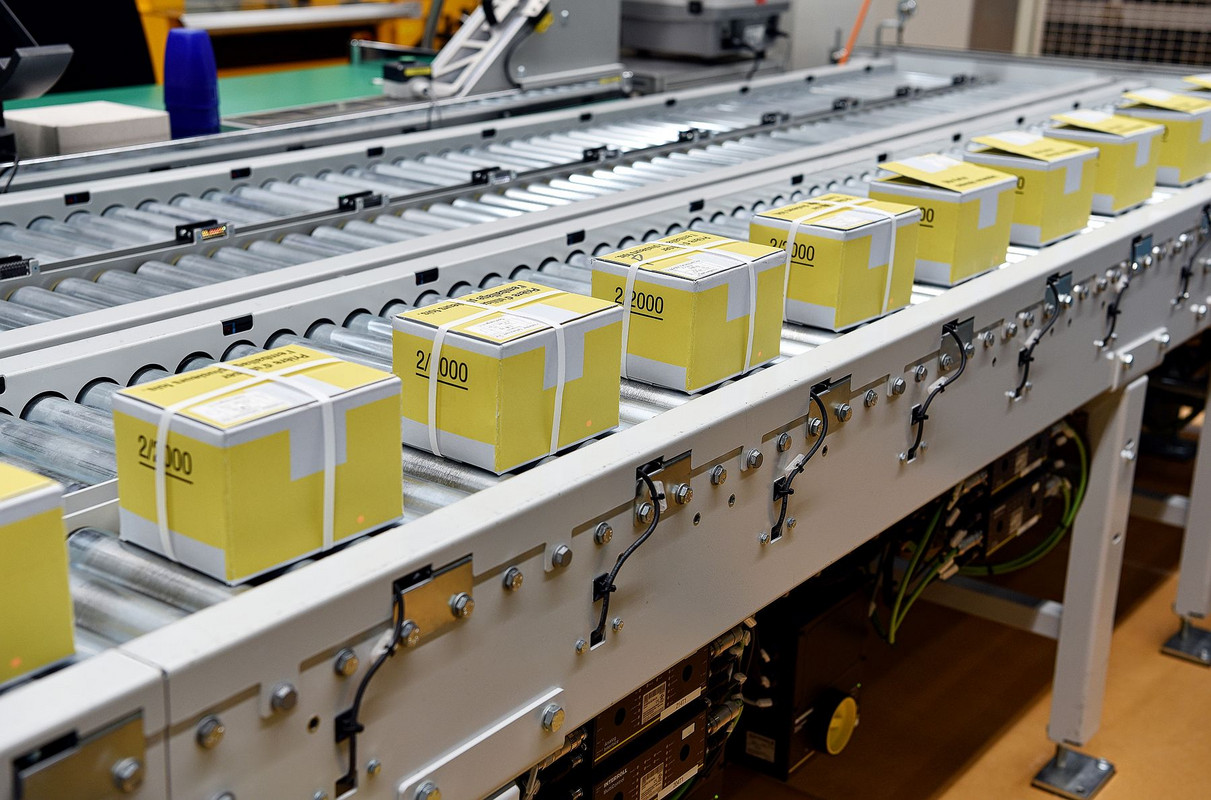
A machine repacks the banknotes that remain fit for use and are earmarked to return to circulation. Wrapped in plastic, each bundle moves along a conveyor belt and is checked individually by a member of staff before landing in a transport box. If any note has as much as a slight kink, the entire package will go back into the machine to be reprocessed.
More than one person is involved in each processing stage. No one works alone. All rooms and workstations have video surveillance. “This also protects our employees,” says Eltschinger.
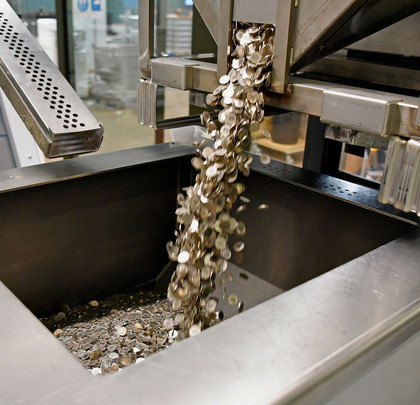
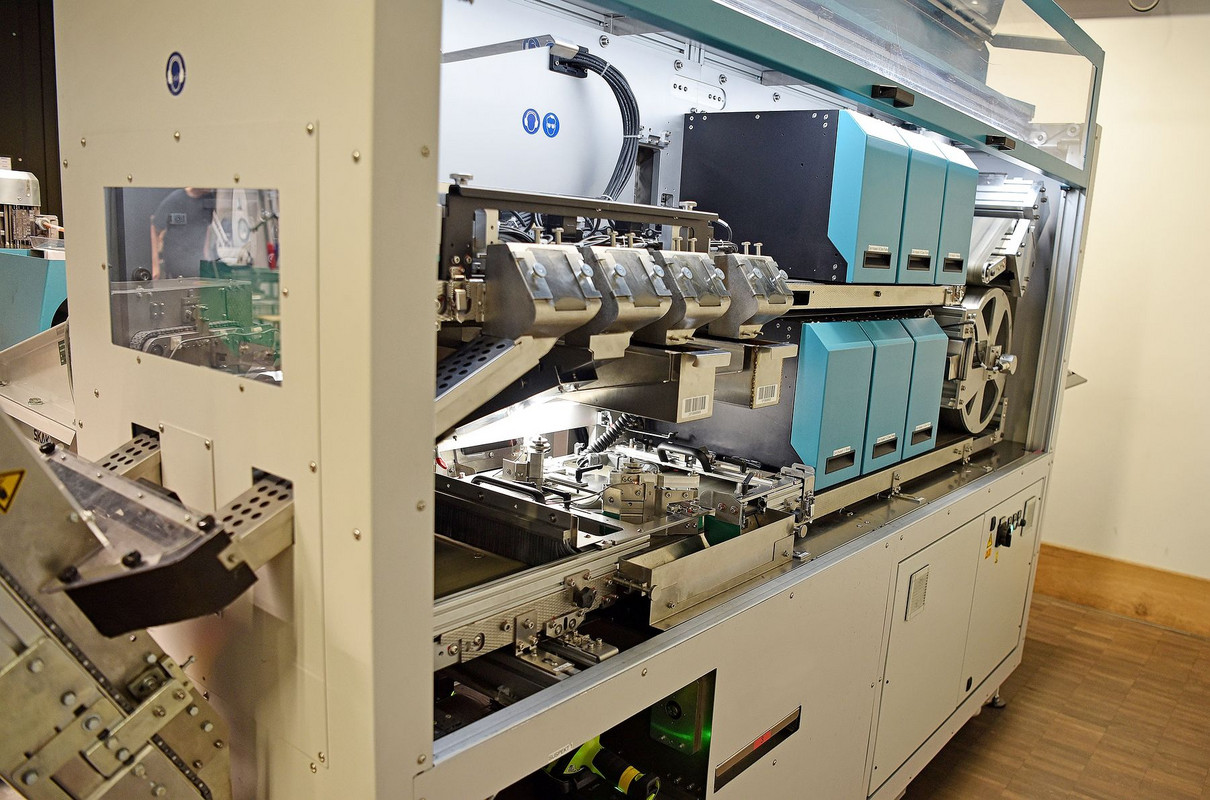
A lift takes us further down. The next stop is the coin processing facility. There is a lot more noise here than in the comparatively quiet banknote room. Twenty-cent pieces are rattling through the sorting machine today. Coins failing the quality test go directly into a separate collection point and will later be returned to Swissmint, the manufacturer. Swissmint, or the federal mint, will make these coins unidentifiable and dispose of the metal.
Used 20-centime coins run through the sorting machine. In 2024, coins with a total value of CHF 3 billion were in circulation. Photo: SNB
Coins fit for further use are wrapped in paper and repacked in boxes. Each denomination is denoted by a specific colour – in this case red for the 20-cent pieces. Most of the processing steps are automated in this room too. Employees intervene to cut open coin rolls and check coins that the machine is unable to process.
An incongruous red neon sign hangs on the wall. “Geld und Wert. Das letzte Tabu,” it says, which translates as “Money and its value – the last taboo”. It is a memento from Expo.02, the Swiss national exhibition held in 2002. The SNB asked curator Harald Szeemann (1933–2005) to create a pavilion for the event. The centrepiece was a glass cabinet in which a robotic arm continually pushed 100-franc notes into a shredder. It was a provocative display – and an elaborate con: the banknotes would have been discarded anyway, a process that still takes place every day behind closed doors in the SNB’s cash vault.
Our attachment to cash
The lift returns us to ground level at the end of our tour. We chat to Peter Eltschinger in the SNB’s wood-panelled “Salon bleu” meeting room. “What about people’s payment habits?” we ask. Fewer of us are using cash. According to an SNB study in 2024, private individuals now only make 30 per cent of their daily purchases in cash – down from about 70 per cent in 2017. Debit or credit card is the most favoured form of payment in Switzerland these days, accounting for almost half of all transactions. There has been a strong upsurge in the use of payment apps like Twint. “Twinting” is particularly popular among young people, whereas the over-55s and people on low incomes still pay in cash more often.
Cash doesn’t leave a data trail
Although the use of coins and banknotes is becoming increasingly rare in everyday situations, 95 per cent of the population want to retain the option of paying in cash. How do we explain this paradox? “We Swiss very much value our freedom of choice,” Eltschinger replies, adding that cash will continue to play an important role in future. He believes that the various means of payment complement each other. For one thing, you can use cash immediately and at any time, without the need for electricity or an internet connection. Nor does cash leave a data trail that could compromise financial privacy. Cash is also immune to the fees that are incurred for using credit cards and payment apps. Furthermore, most companies regard cash as the most economical means of payment.
The Swiss franc is a symbol of stability and quality. Switzerland’s intimate relationship with its banknotes and coins is a source of national pride. Even in the age of tap-to-pay, the absence of cash would be unthinkable for most Swiss. Why is that?
Cash assets
The Federal Council and parliament plan to enshrine in the federal constitution that the SNB guarantee the nationwide provision of cash. This is in response to the “Cash is freedom” popular initiative that was launched in 2023. The electorate will vote on the initiative and the associated counterproposal next spring (see box).
Besides using notes and coins to pay for goods and services, many people like to store their cash at home or in safes – if the number of large-denomination banknotes currently in circulation is anything to go by. Switzerland has over 36 million 1,000-franc banknotes in circulation that account for almost half of the value of all banknotes in use. The SNB is unable to put a figure on how much cash is being hoarded. “We simply don’t know,” says Eltschinger.
A possible clue comes from the proportion of obsolete banknotes that have yet to return to the SNB. For example, the number of 500-franc notes that have been obsolete for the last 25 years and are still to be retrieved is over 170,000. The total value of withdrawn banknotes still lying around amounts to over nine billion francs. It is highly likely that many of these obsolete notes are languishing under the nation’s floorboards. But here is the good news: although banknotes from earlier series no longer count as legal tender, you can still cash them in at the SNB any time in the future.
Information sheets on this topic are available on the SNB website (www.snb.ch). Eltschinger advises Swiss Abroad to check whether they can return their old banknotes to the SNB securely by post from their country of residence or otherwise physically exchange them at a bank in the country of residence. One restriction: this applies to banknotes from series 6 to 8. Older series are now only of collector's value.
New banknotes from 2030
The SNB is planning to issue a new series of banknotes. Every banknote series has a life cycle of around 15 to 20 years. The current series, introduced from 2016 to 2019, showcases Switzerland in all its diversity. Ahead of the next series, the SNB recently launched a design competition entitled “Switzerland and its altitudes”. Each of the new 10-, 20-, 50-, 100-, 200- and 1,000-franc banknotes will pay homage to Switzerland’s unique topography.
This is the first time that such a competition has been subject to a survey conducted among the Swiss population. In the space of three weeks, over 100,000 people viewed the 12 design submissions and voted for their favourites. Eltschinger: “We were pleasantly surprised by how many people took part.” The SNB nominated the six finalists this autumn, from whom the winner will be announced in spring 2026. Further development of the designs will then begin.
These drafts can be viewed on the SNB website. The new notes – Switzerland’s new “calling cards” – should go into circulation at the beginning of the 2030s.
Cash to be enshrined in the constitution
Swiss law already states that the Swiss National Bank must supply the country with sufficient cash in the national currency, the Swiss franc. But the Federal Council and parliament are now prepared to lend this principle greater weight by enshrining it in the constitution. No changes to the constitution are possible without the vote of the people and the cantons.
The authorities are responding to the 2023 popular initiative “Yes to a free and independent Swiss currency in the form of coins and banknotes (cash is freedom)”. Both the initiative and the direct counterproposal from parliament will be put to the vote on 8 March 2026.
The Swiss Freedom Movement (FBS), a libertarian pressure group fronted by former SVP politician Richard Koller, is behind the initiative. The FBS first made headlines during the Covid pandemic after leading protests against mandatory face coverings and other measures such as vaccination. Its 2021 initiative “against mandatory vaccinations” was rejected in 2024 with a resounding no.
The “Cash is freedom” initiative, due to be put to voters in spring 2026, has a greater chance of success. Its stated aim is to ensure that coins and banknotes are always available in sufficient quantities. The authors of the initiative criticise the increased use of electronic payment methods that leave digital trails. In their view, cash is the only sure way to protect anonymity.
No obligation to accept cash
One issue not being put to a vote is an initiative calling for shops, restaurants and public transport companies to be obliged to accept cash. Backed again by the FBS, this more drastic measure failed to collect the necessary number of signatures. Nevertheless, politicians are aware of the growing trend of only offering contactless means of payment. The cantonal parliament in Geneva recently decided to change the city’s local rules on hospitality. Consequently, bars and restaurants must now accept notes and coins from their guests as a valid means of payment. Other cantons are looking to take similar measures. A motion has been submitted in the federal parliament aimed at forcing all service providers to accept cash. The Federal Council rejects this obligation. (TP)
Thank you for your comment. Your Comment Added Successfully.
Thank you for your comment. Comments are approved within one to three days.
Oops! Something went wrong, please try again later.
Comments :
Thank you for your comment. Your Comment Added Successfully.
Redaktion "Schweizer Revue" 06.01.2026 At 11:03
Präzisierung
Wie im Artikel der "Schweizer Revue" erwähnt, können Banknoten früherer Serien zeitlich unbeschränkt bei der Schweizerischen Nationalbank umgetauscht werden. Allerdings gilt das NICHT FÜR ALLE FRÜHEREN SERIEN. Zeitlich unbeschränkt eintauschen lassen sich die Banknoten der letzten beiden Serien 6 und 8 (eine Serie 7 wurde nicht herausgegeben). Frühere Serien haben nur noch Sammlerwert.
Sie finden Merkblätter zum Umtausch auf der Webseite der Nationalbank:
Thank you for your comment. Your Comment Added Successfully.
Bernard Dugas, France 29.12.2025 At 20:11
Êtes vous sûr que le titre: "Pas d'obligation d'accepter les paiements en espèces" est vrai?
"Article 3 Obligation d’accepter" de la LUMMP (Loi fédérale sur l’unité monétaire et les moyens de paiement) en vigueur:
"1 Toute personne est tenue d’accepter en paiement jusqu’à 100 pièces suisses courantes."...
"2 Toute personne est tenue d’accepter en paiement les billets de banque suisses sans limitation de la somme."
Le vrai problème est qu'aucune peine n'est prévue pour ceux qui ne respectent pas ces obligations légales pourtant claires et limpides, et que les juges n'entrent pas en matière à ce sujet. cf."
Show Translation
Thank you for your comment. Your Comment Added Successfully.
Daniel Niederhäuser, Bolinao Pangasinan, Philippinen 25.12.2025 At 12:48
Sehr interessant.
Show Translation
Thank you for your comment. Your Comment Added Successfully.
Arye-Isaac Ophir, Israel 25.12.2025 At 07:38
Sehr guter Artikel und ja soooo passend zur Endjahresfestzeit, wo sich unsere Geldbeutel entleeren…Allerdings: Was Sie als Paradox bezeichnen, sehe ich gänzlich anders. Obschon auch ich zu 90% per Kreditkarte bezahle und darauf achte, dass die paar echten Barscheine und Münzen im Reissverschlussteil in meiner Taschenbörse unberührt bleiben, seh ich das nicht als Paradox, sondern als sichtbares, fühlbares Omen, als Notgroschen, als Amulett, als Ikone oder was auch immer, das mir die Existenzwirklichkeit des Besitzes vor Auge führt. Kurz gesagt: Wohltuend!







Comments
Comments :
Präzisierung
Wie im Artikel der "Schweizer Revue" erwähnt, können Banknoten früherer Serien zeitlich unbeschränkt bei der Schweizerischen Nationalbank umgetauscht werden. Allerdings gilt das NICHT FÜR ALLE FRÜHEREN SERIEN. Zeitlich unbeschränkt eintauschen lassen sich die Banknoten der letzten beiden Serien 6 und 8 (eine Serie 7 wurde nicht herausgegeben). Frühere Serien haben nur noch Sammlerwert.
Sie finden Merkblätter zum Umtausch auf der Webseite der Nationalbank:
https://www.snb.ch/de/the-snb/mandates-goals/cash#merkblatt2
Êtes vous sûr que le titre: "Pas d'obligation d'accepter les paiements en espèces" est vrai?
"Article 3 Obligation d’accepter" de la LUMMP (Loi fédérale sur l’unité monétaire et les moyens de paiement) en vigueur:
"1 Toute personne est tenue d’accepter en paiement jusqu’à 100 pièces suisses courantes."...
"2 Toute personne est tenue d’accepter en paiement les billets de banque suisses sans limitation de la somme."
Le vrai problème est qu'aucune peine n'est prévue pour ceux qui ne respectent pas ces obligations légales pourtant claires et limpides, et que les juges n'entrent pas en matière à ce sujet. cf."
Sehr interessant.
Sehr guter Artikel und ja soooo passend zur Endjahresfestzeit, wo sich unsere Geldbeutel entleeren…Allerdings: Was Sie als Paradox bezeichnen, sehe ich gänzlich anders. Obschon auch ich zu 90% per Kreditkarte bezahle und darauf achte, dass die paar echten Barscheine und Münzen im Reissverschlussteil in meiner Taschenbörse unberührt bleiben, seh ich das nicht als Paradox, sondern als sichtbares, fühlbares Omen, als Notgroschen, als Amulett, als Ikone oder was auch immer, das mir die Existenzwirklichkeit des Besitzes vor Auge führt. Kurz gesagt: Wohltuend!