Femicides in Switzerland – violence behind closed doors
17.07.2026 – Susanne Wenger
With domestic killings of women reaching a new high in 2025, the Confederation and cantons are putting forward measures to curb the violence and give victims better protection. But is that enough?
It is 13 February 2024 at around midday. A 41-year-old man punches his 38-year-old wife in the face and strangles her to death in their own home in an exclusive area of Binningen (canton of Basel-Landschaft). The couple, parents of two small children, are close to breaking up. The husband dismembers the body to dispose of it. A 47-year-old woman and her two daughters die after being stabbed in their apartment in Corcelles (canton of Neuchâtel) on the night of 19–20 August 2025. The 52-year-old ex-husband quickly becomes the focus of the investigation. A 71-year-old woman is found dead in her detached home in Grabs (canton of St Gallen) on 26 April 2026. The police arrest her 67-year-old husband.
In 2027, the Confederation and cantons plan to unveil a new national strategy to combat domestic and sexual violence.
Three violent killings at three locations in three years. There are women of every age in Switzerland who live in danger within their own four walls. It is becoming harder for society and politicians to ignore the scourge of domestic violence. The time when such abuse was isolated has long since passed. On average, a woman dies from domestic violence every two to three weeks in Switzerland. The number of women and girls killed in 2025 was 25 – the highest yearly figure since the federal government began listing such crimes separately in 2009. Overall, there were 55 homicides in Switzerland last year.
Government alarmed
The victims of domestic violence also include men. But there is a clear pattern with homicides: over 90 percent of victims are female, and the perpetrators are mostly male. The peak of 2025 has alarmed the government. “We cannot go on like this,” Interior Minister Elisabeth Baume-Schneider declared. Justice Minister Beat Jans called it a crisis of safety, given that gender-based violence leads to more fatalities than other crime in Switzerland. A committee of government, cantonal and municipal representatives approved urgent action back in mid-2025, when cases were proliferating. One of the recommended measures is that regions work together to create safe spaces in women’s refuges.
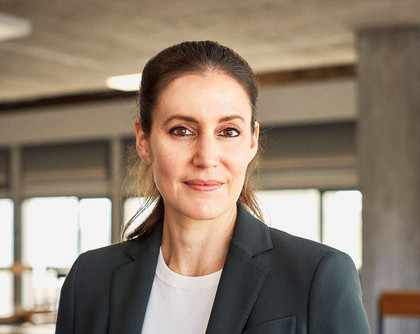
Male-on-male killings in Switzerland have fallen sharply, but the rate of intimate-partner homicides committed by men against women has remained much the same. “This is concerning,” says criminal law professor Nora Markwalder. Photo provided
Nora Markwalder, criminal law professor at the University of St Gallen, does not yet see a sustained rise in the number of homicides against women but thinks the figures are worryingly consistent. Whereas recent decades have seen male-on-male killings fall sharply in Switzerland, the rate of intimate-partner homicides committed by men against women has remained much the same. “This is concerning,” she says.
Murder, plain and simple
The term “femicide” offers a possible answer. Coined in the 1970s by the American sociologist Diana Russell, it touches on the social dimension of the crimes committed. The UN referred to femicide in 2012 as the killing of women and girls in their own homes. Analyses show that femicides are often linked to the perpetrator’s possessiveness, need for dominance, or general expectations of and attitude to women. The most dangerous time is when partners separate. Markwalder: “Around half of the killings happen during or after break-up.”
There is no definition of femicide in the Swiss legal context. Women’s rights groups, politicians, and the stopfemizid.ch research project have been employing the term for some time to raise awareness. But public authorities and the media are also using it more. Femicide tells it like it is, says Markwalder. “It is murder, plain and simple – not a family drama, or an accident, or a crime of passion, as they euphemistically used to call it.”
It is becoming harder for society and politicians to ignore the scourge of domestic violence. The time when such abuse was isolated has long since passed.
New victim hotline
Domestic violence – including rape, physical abuse, and threatening behaviour – used to be seen as a private matter in Switzerland: what happened at home stayed at home. It was not until 2004 that it became an offence prosecuted by the state. Politicians, irrespective of their political colour, have repeatedly demanded measures to combat gender-based violence. And by ratifying the Council of Europe’s Istanbul Convention in 2018, Switzerland has pledged to take action. A road map adopted by the Confederation and cantons in 2021 has produced some early results. A national hotline opened in spring 2026, with victims now able to call 142. Cantons have improved their escalation procedure to help identify abuse earlier; given that femicide often comes at the end of a spiral of violence, as a government analysis has shown.
The police have become more proactive in engaging with high-risk individuals. Some cantons are testing electronic tagging as a way to enforce restraining orders. The federal government has launched a prevention campaign to raise awareness of domestic abuse. Legislative changes are also up for debate in areas like gun law. A 2025 study by the University of St Gallen showed that domestic killings in Switzerland involve a disproportionately high use of firearms, especially among older perpetrators. One reason is that Swiss men are allowed to take their standard-issue weapons home with them at the end of military service.
Criticism – from left and right
Women’s rights groups and left-wing parties note that, despite making progress, Switzerland still needs to do more to implement the Istanbul Convention. They have criticised a lack of funding for women’s refuges and claim that protection for women varies a lot from canton to canton. The right-wing SVP says domestic violence is a migrant problem first and foremost. It wants tougher sentences handed out and offenders deported.
In 2027, the Confederation and cantons plan to unveil a new national strategy to combat domestic and sexual violence. Besides delivering a more standardised approach, it will also address the problem of digital violence. Furthermore, parliament has commissioned a feasibility study on how femicides – including those outside the domestic bubble – are recorded.
Shocking murder
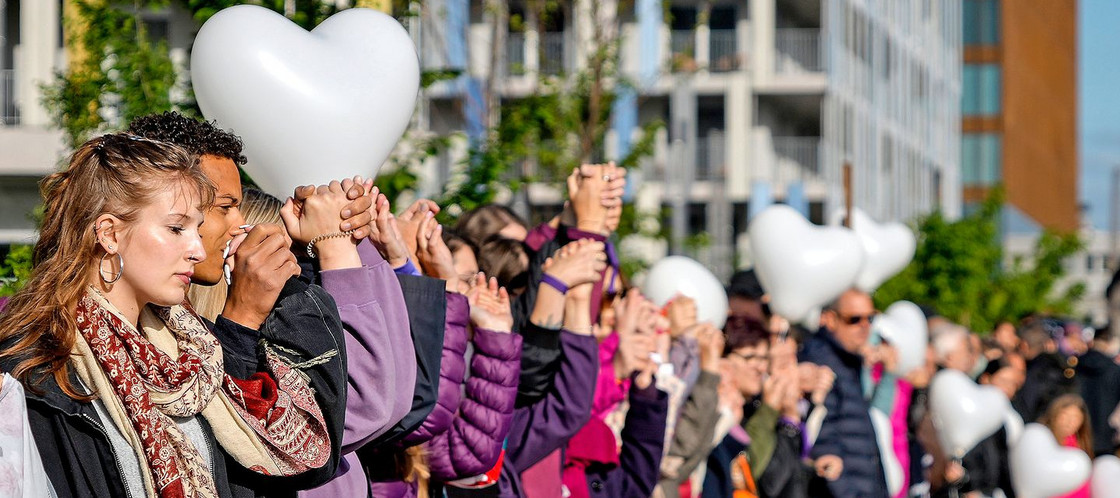
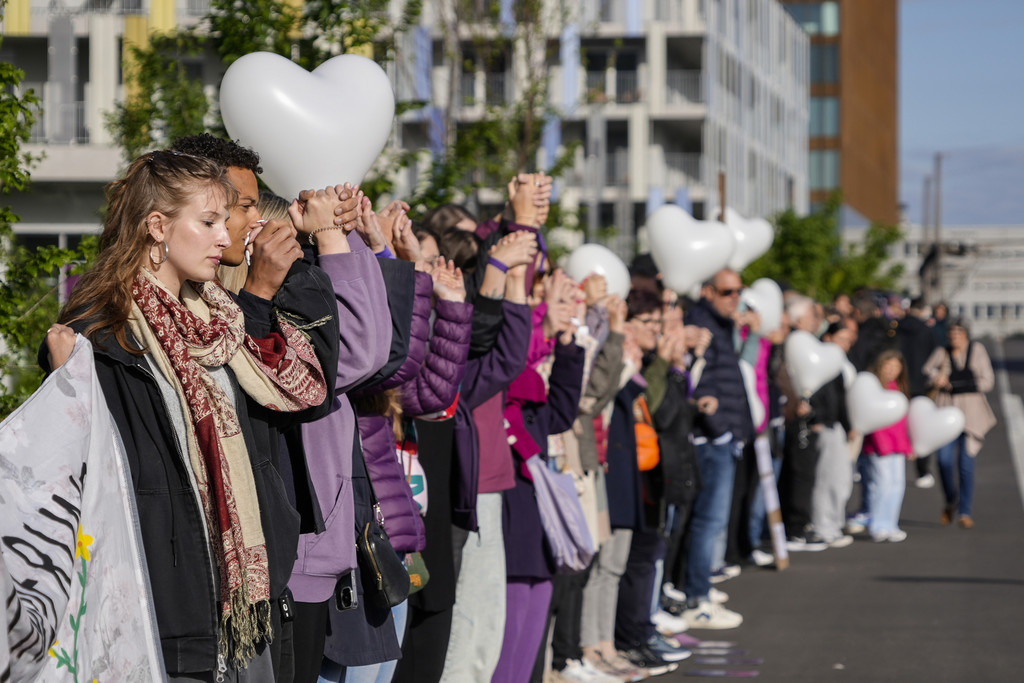
The Binningen case went to trial this May. It revealed a devastating chain of events. The Basel-Landschaft court sentenced the husband to life imprisonment for murder and for desecrating the corpse. It concluded that the perpetrator acted out of revenge and a need for control, and was hurt and angered by his wife wanting to leave him. In the end, he killed his wife to cover up his abuse. The presiding judge said out loud what many were thinking: “This is a case of femicide.” Family, friends and activists remembered the victim by forming a human chain outside the court during sentencing.
Thank you for your comment. Your Comment Added Successfully.
Thank you for your comment. Comments are approved within one to three days.
Oops! Something went wrong, please try again later.
Comments :
Thank you for your comment. Your Comment Added Successfully.
Marie Humphrey, Lausanne 14.10.2026 At 17:09
I really hope for humanities sake that the laws change and protect women in this country. I find it appalling that Switzerland is always last to the party with modernizing their ways. I think some of the countries are much more advanced than Switzerland. Whether that comes with laws, air-conditioning, and overall taking care of their citizens. I have travelled the world and I find Switzerland very backwards. I was in the capital of this country over the summer and I thought the train structure was disgustingly hot. This is how Switzerland treats its citizens. They don’t care that you are suffering. As long as they are not spending money.
Will this change anything in 2027? I beg to differ. Will there really be laws to protect women from violent crimes and death? Women and men really be prosecuted correctly? I really don’t think so. There isn’t much that they do here anyways. The victim is always at fault. The perpetrator always has more leniency because he’s mentally ill because he had a bad childhood because because because. But how about the victim? Maybe she also had a bad childhood. Does she deserve to get killed because of it?
Show Translation
Thank you for your comment. Your Comment Added Successfully.
Arye Ophir, Israel 03.08.2026 At 17:25
Häusliche Gewalt ist nicht nur ein wachsendes Problem in der Schweiz. In der gesamten islamischen Hemisphäre ist verbreitet und in der westlichen Welt ist sie immer mehr das schwache Glied in der zunehmenden gesellschaftlichen Gewaltverkettung, wo der Schwächere potenzielles Opfer ist. Die Opfer zu schützen fordert vor allem Vorbeugegewalt gegen die Gewaltbereiten und viel strengere Strafen.





![[Translate to English:]](/fileadmin/_processed_/c/d/csm_283259_b411da83c0.jpg)

Comments
Comments :
I really hope for humanities sake that the laws change and protect women in this country. I find it appalling that Switzerland is always last to the party with modernizing their ways. I think some of the countries are much more advanced than Switzerland. Whether that comes with laws, air-conditioning, and overall taking care of their citizens. I have travelled the world and I find Switzerland very backwards. I was in the capital of this country over the summer and I thought the train structure was disgustingly hot. This is how Switzerland treats its citizens. They don’t care that you are suffering. As long as they are not spending money.
Will this change anything in 2027? I beg to differ. Will there really be laws to protect women from violent crimes and death? Women and men really be prosecuted correctly? I really don’t think so. There isn’t much that they do here anyways. The victim is always at fault. The perpetrator always has more leniency because he’s mentally ill because he had a bad childhood because because because. But how about the victim? Maybe she also had a bad childhood. Does she deserve to get killed because of it?
Häusliche Gewalt ist nicht nur ein wachsendes Problem in der Schweiz. In der gesamten islamischen Hemisphäre ist verbreitet und in der westlichen Welt ist sie immer mehr das schwache Glied in der zunehmenden gesellschaftlichen Gewaltverkettung, wo der Schwächere potenzielles Opfer ist. Die Opfer zu schützen fordert vor allem Vorbeugegewalt gegen die Gewaltbereiten und viel strengere Strafen.