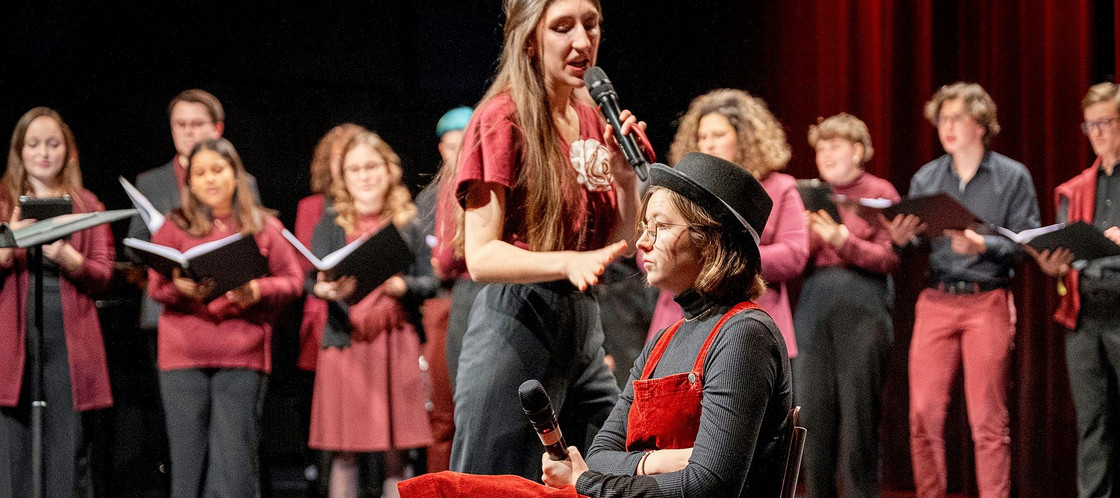
Choirs are extremely popular in Switzerland. Singing in a choir is a hobby for many people today. Yet in the 19th century, choirs exerted political influence heralding the birth of the modern federal Swiss state, says Berne musicologist Caiti Hauck, who has completed a pioneering study of the choral scene.
Caiti Hauck of the University of Bern studied the early history of choirs in Berne and Fribourg. Photo: Dres Hubacher
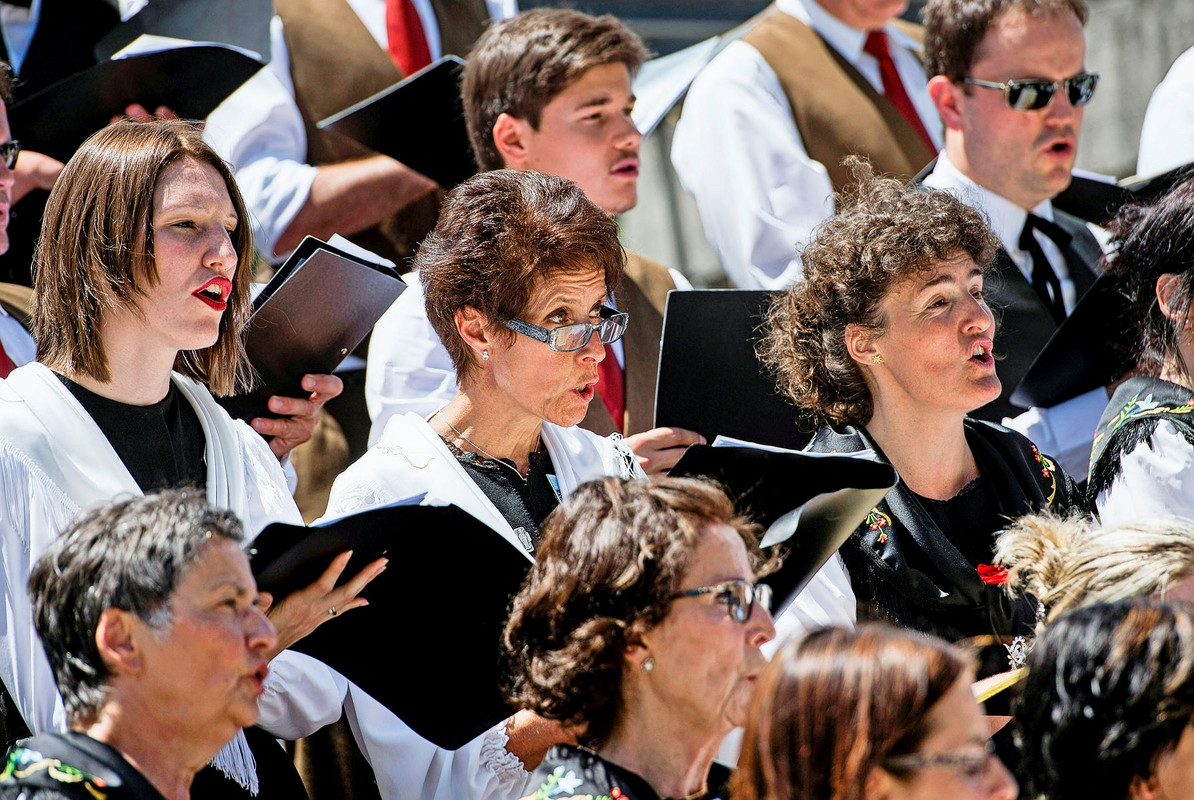
Choirs are omnipresent in the run-up to Christmas. Festive concerts come thick and fast from ensembles such as the Bach Choir of Berne, the Swiss Youth Choir, the Appenzeller Mittelland Gospel Choir, and the Pro Arte Choir of Lausanne. But choirs also sing all year round. Switzerland has a rich choral scene. Federal statistics show that one in five people in the country sing in their free time – mostly every week and most often in a choir. “Compared to other European countries, Switzerland has one of the highest numbers of singers per capita,” says Caiti Hauck from the University of Bern.
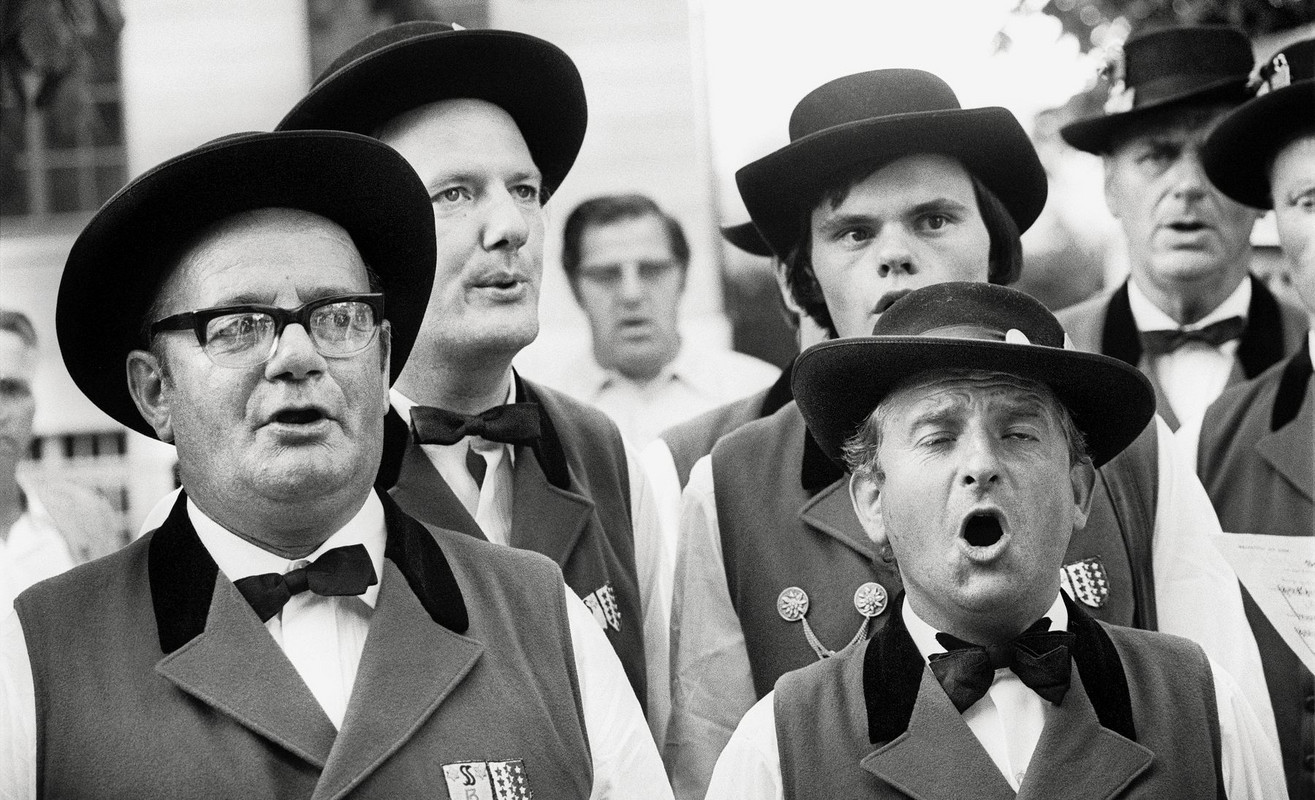
It is hard to pinpoint the exact number of choirs, because they come in many forms. Over 1,200 are currently affiliated to the Swiss Choral Association (SCV), the country’s umbrella organisation of secular choirs. They include male, female, mixed, children’s and youth choirs. Following a decline during the Covid pandemic, the number of choirs has levelled out, says Anna-Barbara Winzeler of the SCV. There are also hundreds of church choirs, hundreds of yodelling clubs, and many informal ensembles that do not appear in any official registers.
Historical roots
There is a particularly high concentration of choirs in the canton of Fribourg, whose choral scene is included in Switzerland’s national inventory of “living traditions” – a list compiled by the Federal Office of Culture in accordance with the UNESCO Convention for the Safeguarding of Intangible Cultural Heritage. Yet why are choirs so popular in Switzerland? Group singing improves mental health and demonstrably strengthens the immune system, but historical factors are also at play.
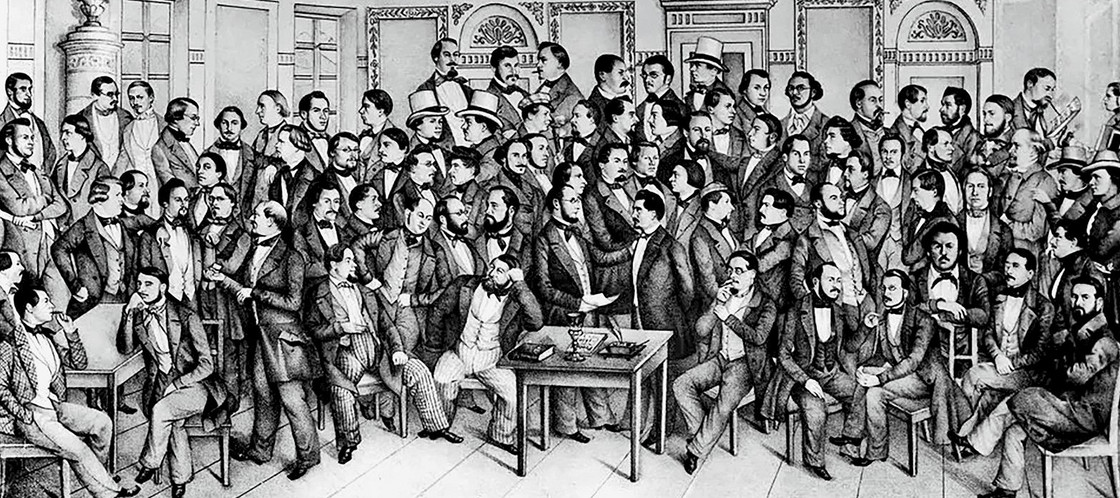
The Société de Chant de la Ville de Fribourg were feared (and harassed) by Fribourg’s cantonal government. Picture provided
In the 19th century, choirs were more than just a way to make music. They gained political clout at a time of tension between liberals and conservatives, and the Reformed and Catholic Church. The federal Swiss state was born in 1848, one year after the Sonderbund War. It was Europe’s first-ever modern democracy. “Male voice choirs helped to further political awareness during the infancy of the Swiss state,” explains Hauck, who has conducted a pioneering in-depth study of the choral scene in the cities of Berne and Fribourg, relying on commemorative publications, association records, membership lists, written correspondence, concert programmes, and press articles as sources of information.
Political agenda
Hauck found over 100 choirs in Berne and Fribourg. Notable examples included French-speaking Switzerland’s first-ever secular men’s choir, the Société de Chant de la Ville de Fribourg, founded in 1841, and the Berner Liedertafel, established in 1845. Both choirs espoused liberal-radical views – unlike the Catholic and conservative-leaning Fribourg Cecilian Society men’s choir founded in 1877. The Société de Chant made its stance clear, singing revolutionary pieces like “Au bord de la libre Sarine”, composed by Jacques Vogt, the choir’s founder.
The progressives enjoyed their hour of triumph in 1848, but the 1850s saw the conservatives regain the upper hand in Fribourg. The government feared the influence of the Société de Chant and tried to restrict the choir’s activities. It was not until 1871 that the group was able to organise another cantonal singing festival – inviting the Berner Liedertafel to the event. This reputable choir from Switzerland’s new capital city had close links to politics, with federal councillors among its non-active members. The Bernese singers supported their Fribourg counterparts in solidarity – but also “out of patriotic duty” to strengthen unity within the fledgling Confederation.
Singing for the fatherland
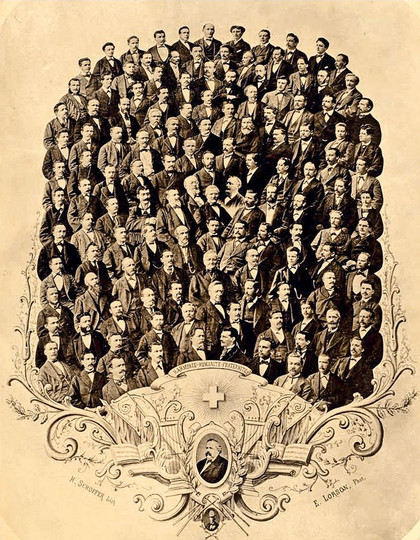
“Despite language and religious differences, the two choirs maintained close ties across the Rösti divide,” says Hauck. Their lively correspondence bears testimony to this. Male choirs not only offered men a platform to sing together and express political views, but the groups were also interested in cementing national unity. The big federal singing festivals that regularly took place from 1843 celebrated this sentiment in much the same way as Switzerland’s gymnastics and shooting festivals.
Repertoires included patriotic pieces like “O mein Heimatland, o mein Vaterland”, written by Gottfried Keller and put to music by Wilhelm Baumgartner. Folk songs and songs about nature were also popular, while the Berner Liedertafel attempted challenging compositions by Franz Schubert and others. Mixed and female choirs already existed in the 19th century. “Some women’s choirs took part in cantonal singing festivals, achieving top marks,” Hauck notes. Yet male choirs dominated the narrative, reflecting the gender politics of the day.
Spanning the social strata
Zurich composer and publisher Hans Georg Nägeli was a pioneer of Swiss choir music who promoted musical education for the people. He founded the first non-ecclesiastical singing institute in 1805, which gave birth to the first-ever secular male choir in 1810. Choirs spanning the social strata were a 19th-century innovation. Known in Europe as the “father of singing”, Nägeli was an influential teacher of music in German- and French-speaking Switzerland. “Many choirs still refer to him in their credits,” says Hauck.
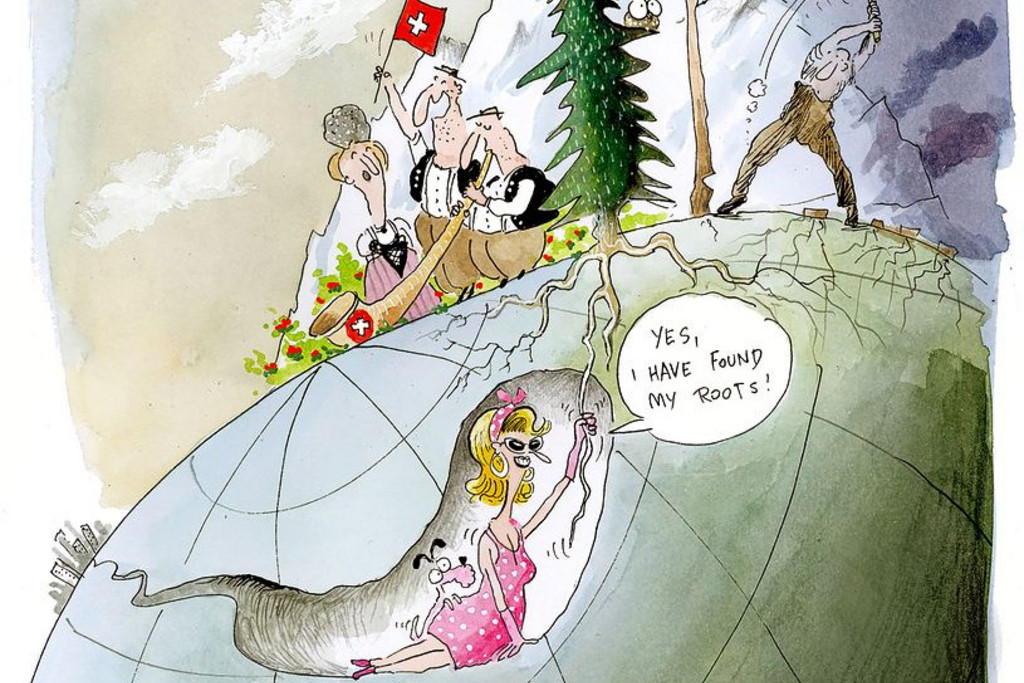
Originally from Brazil, Hauck has been living in the canton of Vaud since 2017. Why is she interested in such a previously neglected topic? “I was fascinated by choir music as a student in São Paulo,” she replies. Hauck has sung in choirs herself and recently conducted the Lausanne police male choir. She has found an effective way to communicate her findings, publishing the comic book “Three Swiss choristers in the 19th century” in collaboration with the cartoonist Julien Cachemaille. The book is available online in French and German.
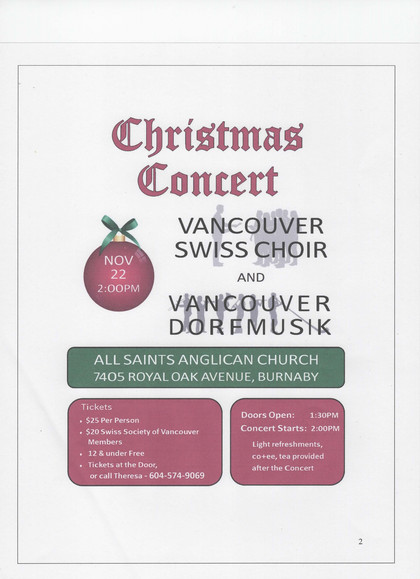
Swiss choir culture is also spreading abroad... Here an invitation from the “Vancouver Swiss Choir” and the “Vancouver Dorfmusik” for a Christmas concert in December 2025. Photo provided
Between tradition and change
The Berner Liedertafel remained a male choir until it disbanded in 2018 due to a lack of young singers. The Société de Chant de la Ville de Fribourg was discontinued in 2000. It is normal for choirs to come and go, says Hauck. As early as the 19th century, complaints about irregular rehearsal attendance appear in records, and choirs broke up due to dwindling numbers. But new choirs have sprung up ever since in a wide diversity of styles. Hauck: “Choral music is thriving in Switzerland and bringing generations together.” Political debate now plays less of a role, even if choirs continue to take a stand – on behalf of the queer community, on feminism, or as groups consisting of locals and asylum seekers.
Choir organisation has changed significantly. Some choirs still meet one evening a week, but looser arrangements are now common. “Plenty of people want to sing, but not everyone wants to be tied to a specific choir,” says Anna-Barbara Winzeler of the SCV. Winzeler, who is studying music at the Lucerne University of Applied Sciences and Arts, conducts chorisma in Schaffhausen, a choir with singers aged between 18 and 35. She believes that young people will pass on the choir tradition.
The comic book “Three Swiss choristers in the 19th century” communicates the results of Caiti Hauck’s study in French and German. It is available free of charge at www.clefni.unibe.ch.
Listen to choirs We have put together some audio recordings of Swiss choral music. Visit www.revue.link/choirs
Thank you for your comment. Your Comment Added Successfully.
Thank you for your comment. Comments are approved within one to three days.
Oops! Something went wrong, please try again later.
Comments :
Thank you for your comment. Your Comment Added Successfully.
Marie-Anne Moeschlin, France/Mulhouse 24.12.2025 At 14:44
Article sur le chant choral: la guerre du Sonderbund a eu lieu en 1847; la petite erreur de frappe m'a permis de réviser! L'article est très intéressant, merci.
Show Translation
Thank you for your comment. Your Comment Added Successfully.
Joëlle Python, Haute-Savoie, France 24.12.2025 At 10:05
Très intéressant et très valorisant pour notre patrie. Le chant, la musique s'élèvent et aident à nous élever. Même à ressusciter parfois de belles choses enfouies qui nous donnent du beaume au cœur. Et oui du courage et de la joie.









![[Translate to English:]](/fileadmin/_processed_/c/d/csm_283259_b411da83c0.jpg)

Comments
Comments :
L'article est très intéressant, merci.
Très intéressant et très valorisant pour notre patrie. Le chant, la musique s'élèvent et aident à nous élever. Même à ressusciter parfois de belles choses enfouies qui nous donnent du beaume au cœur. Et oui du courage et de la joie.