Swiss folk dress | Like wearing a piece of Switzerland
24.04.2026 – Denise Lachat
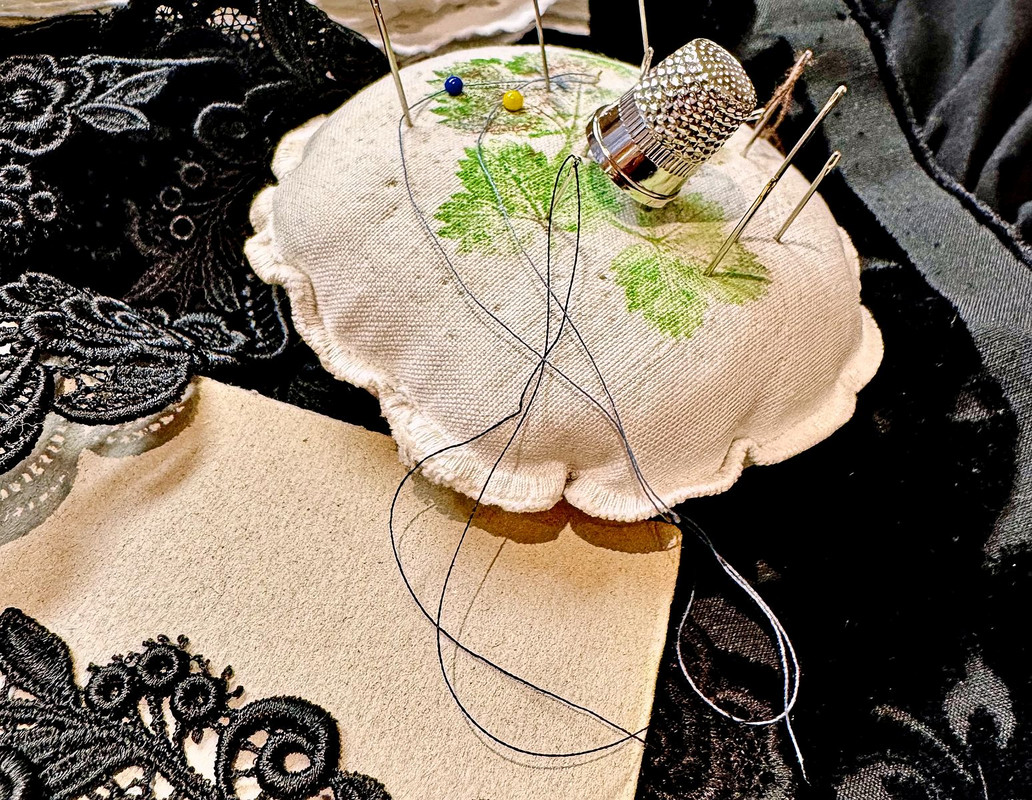
Armed with needle and thread, Monika Bögli spends many hours at a time preserving a Swiss tradition at her Neuenegg workshop in the canton of Berne: she creates made-to-measure women’s folk garments by hand.
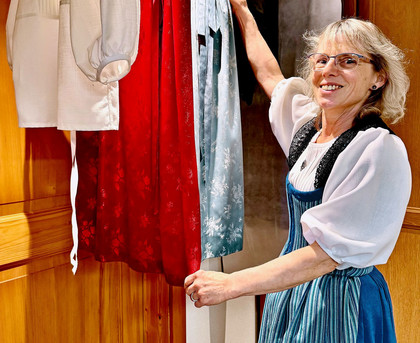
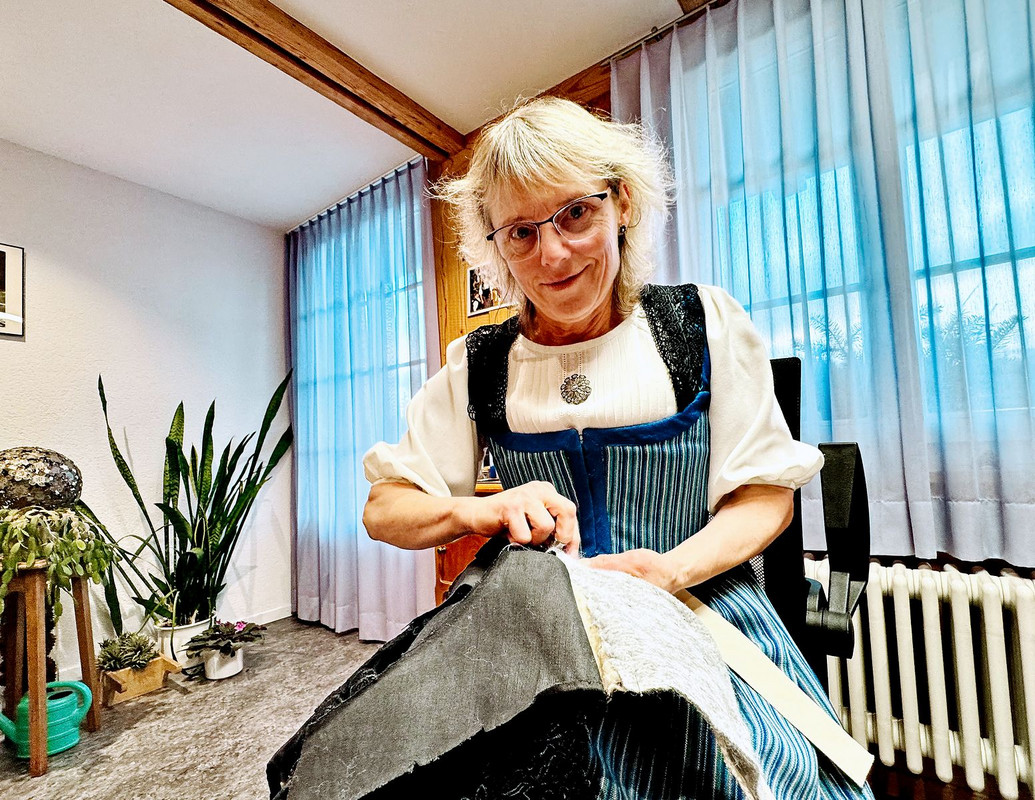
Monika Bögli in her everyday Bernese folk dress. The red and blue aprons on the hanger are made of damask silk – part of a Bernese festive ensemble. Photo: Denise Lachat
Monika Bögli’s skirt flashes bright blue as she opens the door to her workshop in Neuenegg with a flourish. She would never call it a skirt – “gown” is the correct term. A blue-and-green striped apron covers it at the front. Bögli has a white blouse under the bodice, with a filigree brooch attached to it in the centre. Around her neck is a black band of exquisitely meshed silk. You would be forgiven for thinking that this dainty woman is dressed for an occasion. Far from it. Bögli is wearing her everyday Bernese folk garments. “This is how women in rural areas used to dress for work,” she grins. Farming families would use wool or linen – home-produced materials robust enough to withstand countless washes.
Hand-made with pride
Bögli’s attire mainly consists of handwoven half linen and takes many hours to create by hand – 50 to 70 hours, she calculates. The bodice is a particular challenge to make, with its three layers – wadding, lining, fabric – and additional trimming. With the effort that goes into it, not to mention some of the fine, handcrafted materials used (e.g. silk), the finished ensemble does not come cheap: around 2,200 Swiss francs for a brand-new everyday garment and 3,000 francs for a festive dress, with the additional silver jewellery costing at least another 3,500 francs. Put one of these outfits on and you feel like a different person. The lining in the bodice alone changes your whole posture. Bögli is proud and honoured to be wearing hers. “It just fits perfectly. You feel properly dressed.”
The invention of a tradition
Pride and honour are closely intertwined with the sense of carrying on a tradition dating back to medieval times. People in Switzerland almost stopped wearing traditional dress completely at one stage. Economic growth following the birth of the federal Swiss state in 1848 fuelled the rise of industry, transport, technology and trade, as machines took over work once done by hand. Swiss men and women, particularly in the cities, increasingly looked abroad for fashion trends to follow. Grassroots customs and traditions only regained popularity at the end of the 19th century, with old costumes being acquired, documented and reproduced.
Three specific milestones then played a role. The Swiss Heritage Society was founded in 1905 to protect the nation’s cultural heritage, i.e. not only Switzerland’s historic buildings, but also its traditional forms of dress. At around this time, people in various cantons began handcrafting folk garments again based on old designs. In 1926, this movement set up its own representative body in Lucerne called the STV, or Swiss traditional costume association, which is celebrating its 100th anniversary this year. The STV wanted to rehabilitate traditional dress as a timeless, simple, unifying element in everyday life. Finally, the 1939 national exhibition in Zurich showcased folk garments from all corners of the country – to project the image of a strong, independent Switzerland in uncertain times and symbolise national belonging, unity and identity.
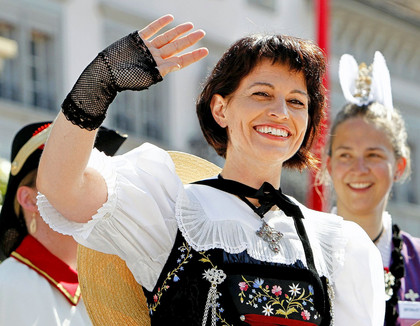
Former President of the Swiss Confederation Doris Leuthard in her traditional Aargau dress at the 2010 Swiss National Costume Festival. Photo: Keystone
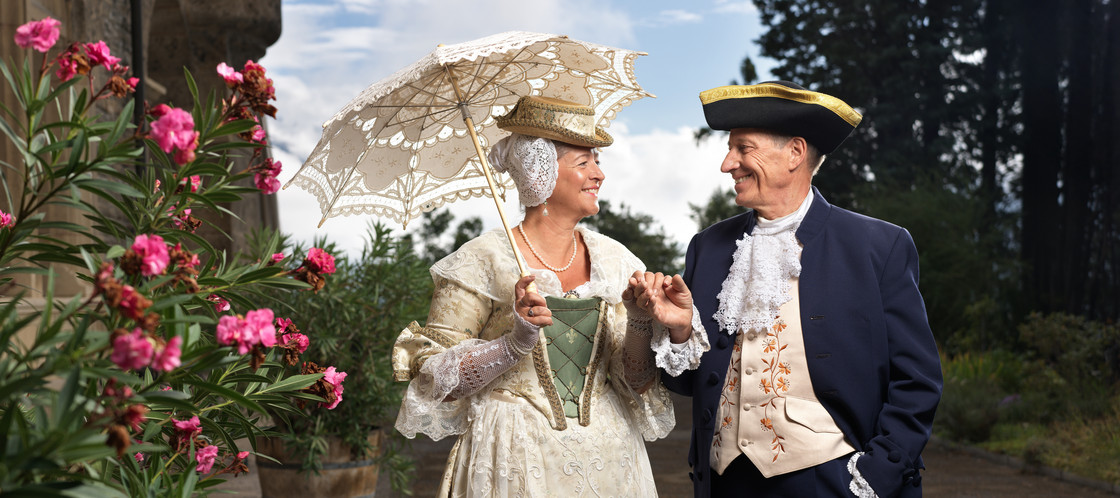
Such clothes are no longer commonly worn, except on special occasions. Folk costume festivals, variety shows, weddings and christenings, says Bögli. And official functions. As guest of honour at the 2010 Swiss National Costume Festival in Schwyz, then Federal Councillor Doris Leuthard wore a traditional dress from her home canton of Aargau.
A sense of belonging
We again live in uncertain times. After folk costume and traditional dancing and yodelling clubs lost members during Covid, folk costume tailors from various cantons now report revived interest among young people. Traditional garments are now given as confirmation gifts, while hoteliers like to deck their children out in regional costume. Generally speaking, a lot of the purchases are made by people in rural areas. Monika Bögli also has young female clients, who have often inherited their grandmother’s dress and want her to adjust the size for them. Or customers who want to mark a significant birthday with something beautiful.
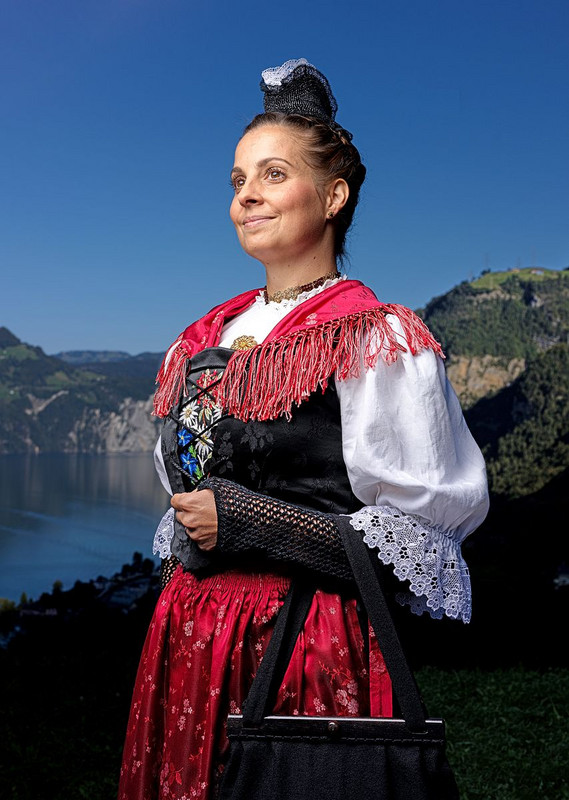
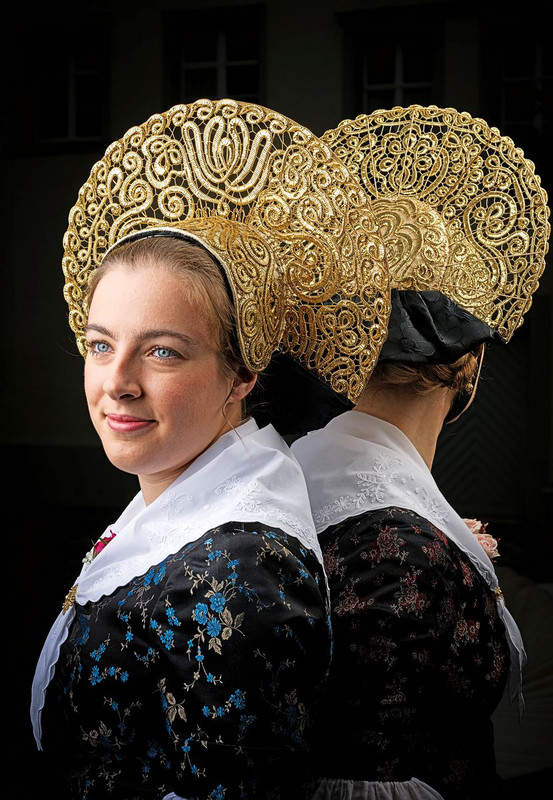
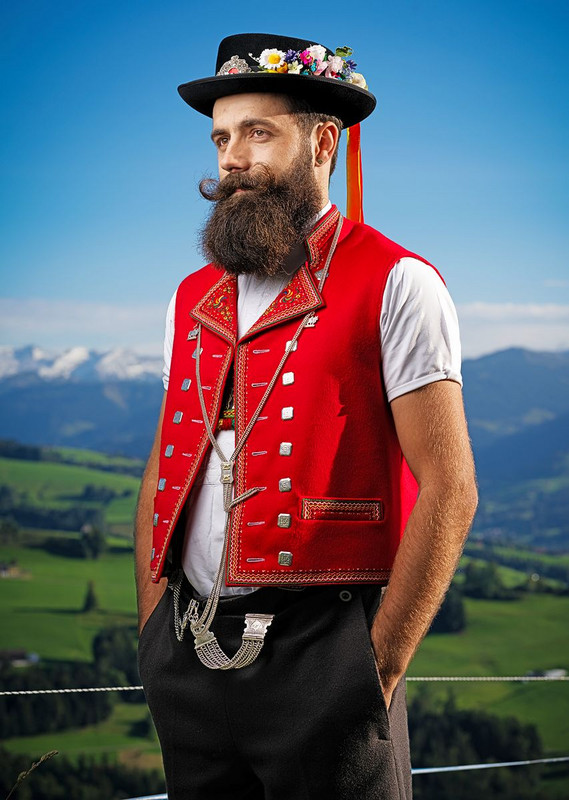
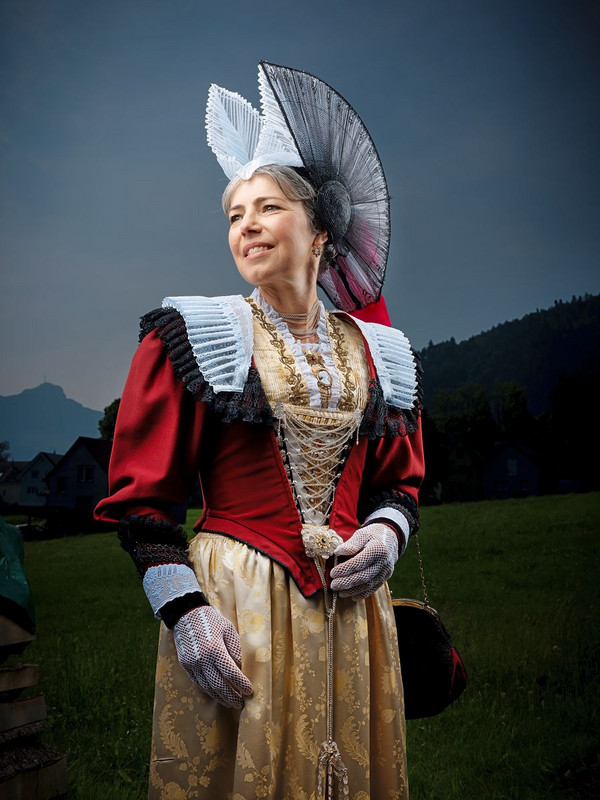
Bögli used to wear traditional dress herself as a little girl. She would go folk dancing and later joined a group of folk costume enthusiasts – like her mother and grandmother before her. For her, wearing traditional dress shows that she belongs – to her family and to her region. “These clothes are part of my culture,” she says. “They express regional identity.” Indeed, not only does every Swiss canton have its own specific traditional costume, there are dozens of local variations that vary in colour, tailoring and ornamental detail. No fewer than 700 different costumes have been identified around Switzerland.
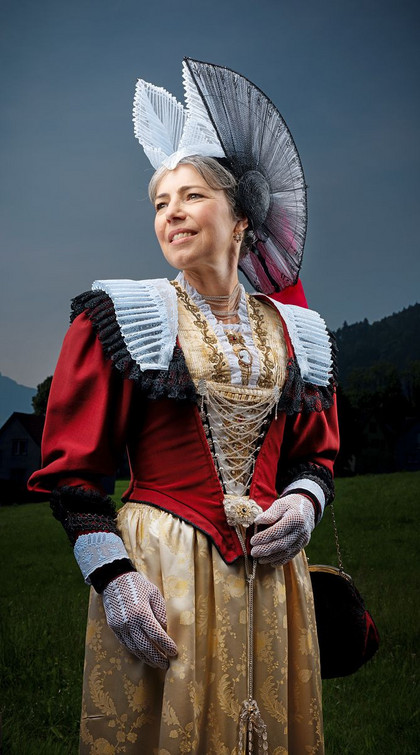
Some 700 different traditional costumes are worn around Switzerland, varying in colour, tailoring and ornamental detail: Canton of Appenzell Innerhoden Photo: provided/Silvan Bucher
An expression of a diverse culture
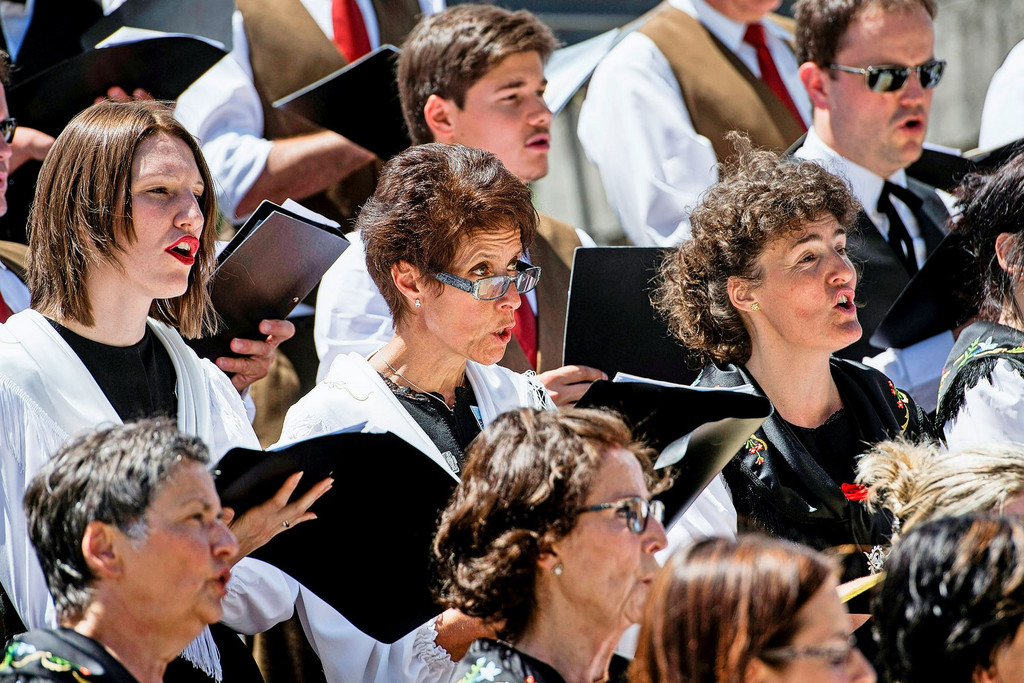
Some dresses are similar, says Sissi Sturzenegger, who chairs the STV’s folk costume committee. But those with a discerning eye recognise the differences. For example, a wheel‑ shaped bonnet called a “Radhaube” is worn in the cantons bordering Lake Constance – but also on the other side of the Swiss border. To mark its own anniversary, the STV wants to showcase the rich diversity of Swiss traditional dress to a wider public – at events like the Schweizerisches Trachtenchorfest (Swiss folk costume choir festival) on 5 and 6 June in Sursee (canton of Lucerne), but also in the form of a lavishly illustrated book showing styles from all the cantons. They say that folk costume is a “certificate of origin that you wear over your body”. This also rings true far beyond Switzerland’s borders: during her training, Bögli was involved in making dresses for two Swiss Abroad who live in Canada.
Bögli only produces costumes from the Bernese Mittelland, the Emmental Valley and Oberaargau – she would never consider garments from any other regions or cantons. All her fellow tailors follow this same principle. Little room for artistic interpretation is allowed anyway: every costume has its own template detailing the respective cut and accessories. You can only choose the colour and maybe also the patterns yourself, says Bögli, pointing to a whole stack of folders containing patterned fabrics and costume descriptions. “It was a real hotchpotch before the 1930s. Then things improved.”
“These clothes are part of my culture. They express regional identity.”
Monika Bögli
One day a week
Bögli trained for three years as a garment designer and did a further two years of specialist training. There are still plenty of people who want to follow this same path, she says, but apprenticeship opportunities are becoming rare. It is now possible to do modular training in the canton of Berne, with specific courses on making bodices and blouses, for example. “But families are key to passing on the tradition.” For a start, Bögli’s own children enjoy wearing traditional costumes. Her three daughters, aged 26, 28 and 30, were only three years old when they first appeared in folk dress at family celebrations and other important events. And they still wear folk dress on such occasions to this day.
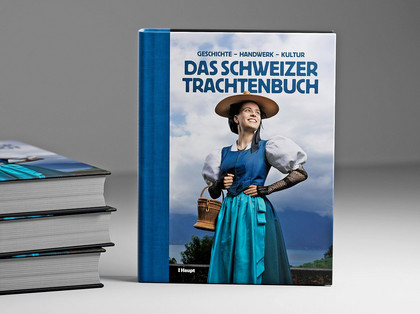
“Das Schweizer Trachtenbuch” contains more pictures like the ones on page 13. It will be published on 15 June 2026 to mark the 100th anniversary of Switzerland’s traditional costume association.
Bögli still has other things to do today – and disappears briefly into an adjacent room to change. She normally spends one day a week in her workshop, and the rest of the time taking care of the livestock and the shop at the family farm in Neuenegg. Bögli returns in her decidedly 21st-century jeans and blouse, her Bernese folk dress now safely under wraps until next time.




![[Translate to English:]](/fileadmin/_processed_/c/d/csm_283259_b411da83c0.jpg)

Comments