Tracey Jones and Pete Thalmann, both from the US, sought professional help to trace their family roots back to Switzerland. They were deeply moved by what they discovered. Both their cases illustrate how important tracing ancestry can be for those who live far away from the homes of their forebears.
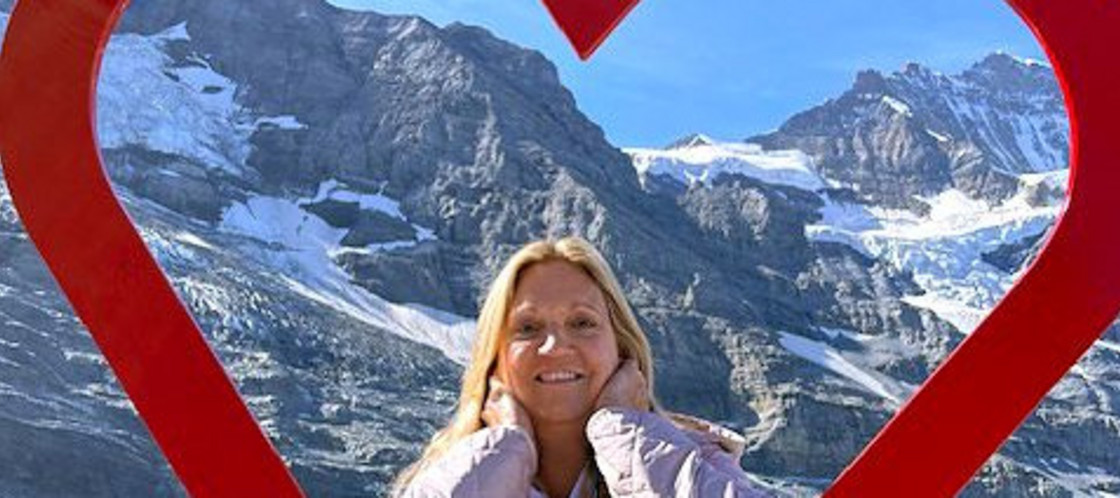
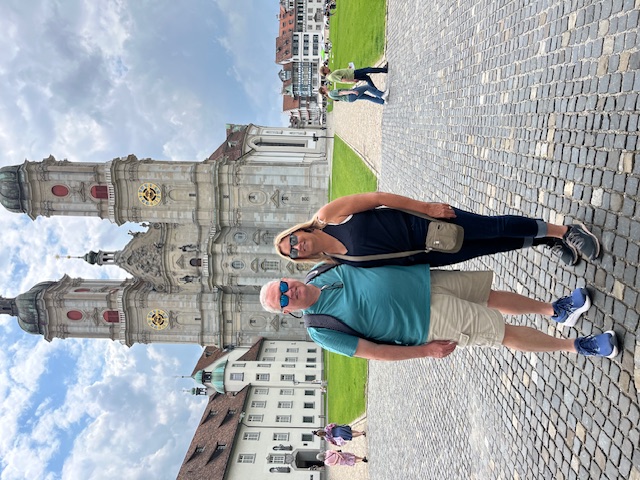
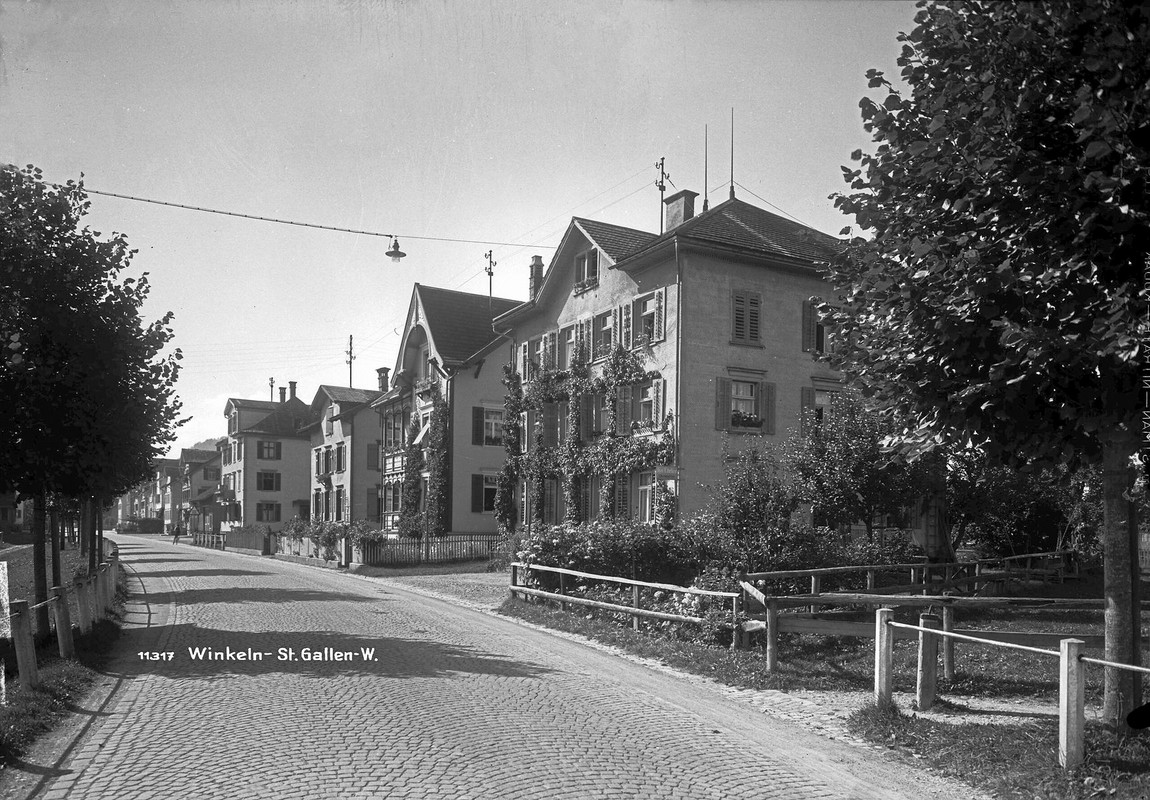
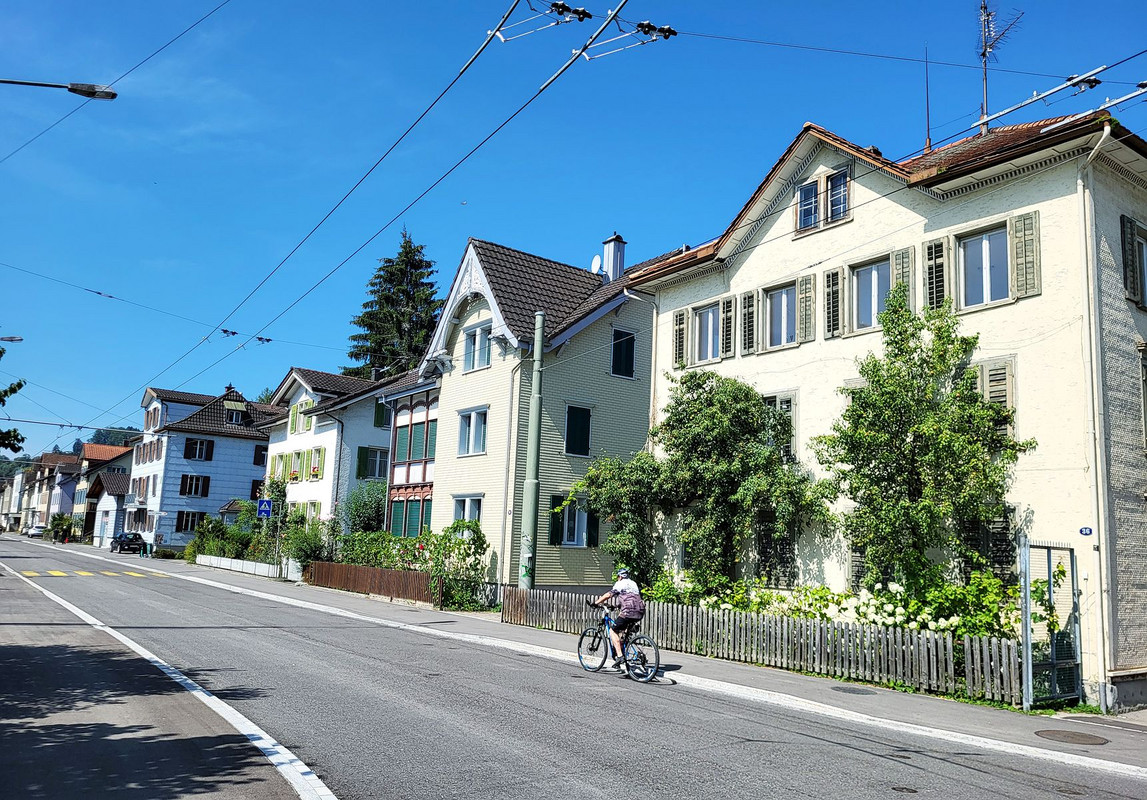
Tracey Jones (56) lives close to Philadelphia and works at a school. She visited Switzerland with her husband last year. In St Gallen, she discovered one of the houses in which her grandmother had lived as a child. She was deeply moved by the experience, she tells us.
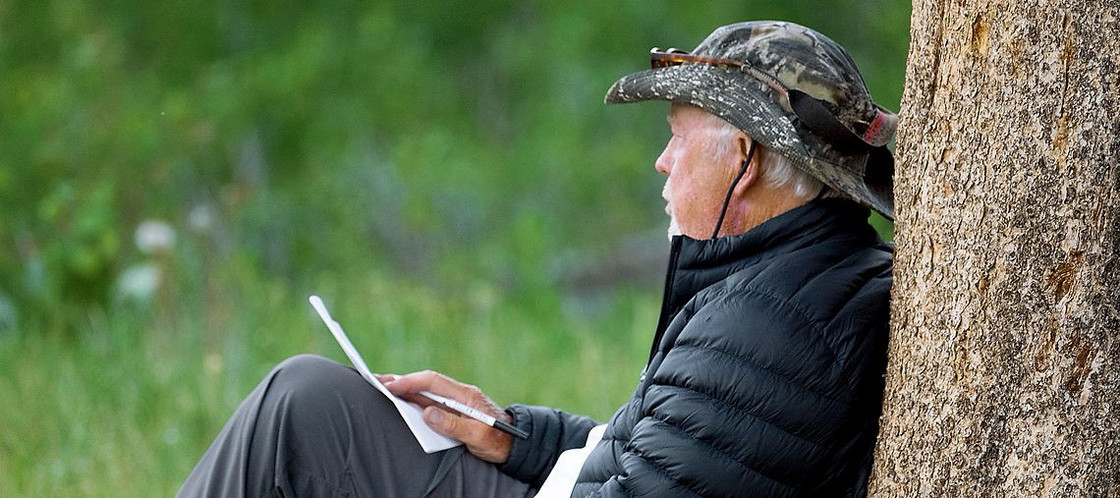
Pete Thalmann (80) lives in Holliston near Boston. The former electrical engineer spends his summers on the Cape Cod peninsula. He wants to travel to Switzerland this autumn. His itinerary will include the hamlet of Eggetsbühl near Wängi (canton of Thurgau), where his great-grandparents lived.
Jones and Thalmann have a few things in common. Both have been interested in history and, in particular, the history of their respective families since they were teenagers. Both wanted to trace these family roots – doing the groundwork, pursuing leads and overcoming hurdles along the way. Both also know Kurt Münger.
Genealogist Kurt Münger keeps receiving more enquiries from people abroad who are taking an interest in their Swiss ancestors. Photo provided
Münger, 74, is the president of the Swiss Society for Genealogical Studies (SSGS). He says that the SSGS receives more and more inquiries from people abroad who are interested in their Swiss ancestors. “We try to help them as much as we can in our voluntary capacity.”
Münger grew up in eastern Switzerland and lives in Gossau, but his family originated from the canton of Berne. In around 1900, many Bernese farmers moved to Thurgau to start a new life. Migration also plays a big role in Münger’s family history, albeit on a smaller geographical scale.
He says he regards himself as an inquisitive soul who wants to understand as well as discover. Münger studied chemistry and wrote a doctoral thesis on specific molecules. People who up sticks to start afresh elsewhere remind him of what molecules do.
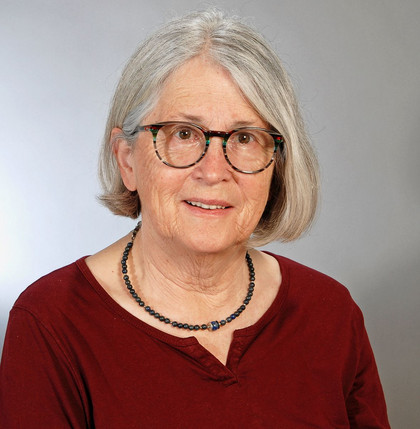
Genealogist Therese Metzger finds that people who live in a country with a short history that has been marked by immigration are often particularly interested in their own family history. Photo provided
Curiosity and perseverance
All genealogists are driven by curiosity, he adds. A healthy, not a lurid curiosity. It can take you far, provided you keep persevering: “The investigations are not always easy.”
Tracey Jones did her initial research online, delving through various archives until she stumbled upon Kurt Münger. The SSGS president referred her to a genealogist with local knowledge, who provided her with the decisive leads. Jones then travelled to Switzerland.
She says her grandmother never reminisced much about her childhood or teenage years, although she was very proud of where she came from. “To see where she grew up and which houses she lived in was extremely moving.” Her father had never been to Switzerland and was overjoyed when she was able to show him photos of her visit. “Moments like that are priceless.”
Pete Thalmann would agree. His priceless gift from the past was an article written by his grandfather that appeared in a newspaper in Baltimore. John J. Thalmann left home after learning to become a dressmaker. He met the love of his life, Mathilde Bos, in Paris. The couple then emigrated to Baltimore. But tragically, six of their children died. “Baltimore was a hellhole back then,” says Thalmann. For fear of losing all their children, his grandparents returned to St Gallen for a while.
Thalmann’s father was two at the time. Thalmann would have liked to have found out where his father later went to school. “But I hit a dead end.” He is all the more intrigued as to what his ancestors were like as human beings. “My grandfather and my father were gentle souls, but they didn’t shy away from taking risks,” he says. “I am just the same.” Thalmann built up his own business and was a go-getter. “And life dealt me heavy blows, like it did them.” He lost one of his daughters – and his wife.
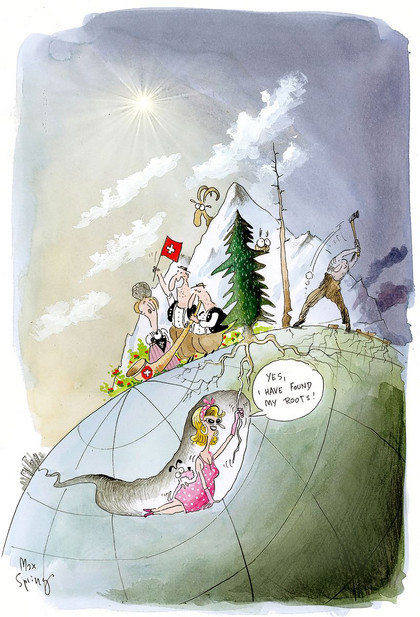
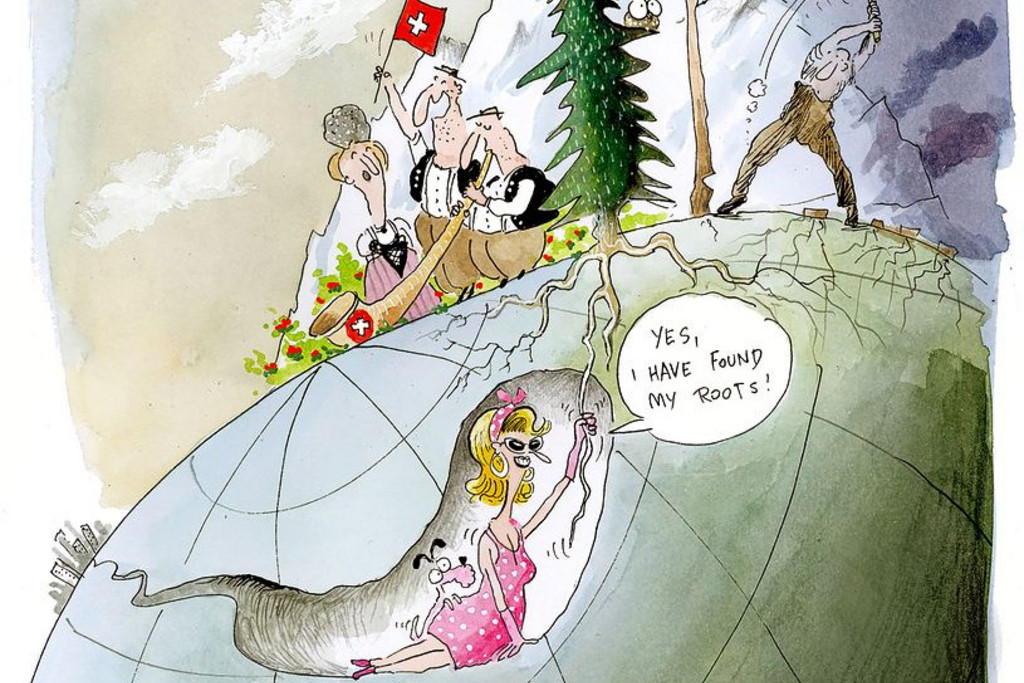
Genealogy! – Max Spring draws exclusively for “Swiss Review”
Mistakes are easy to make
It is much easier these days to search your ancestry than it used to be. Everything is digitalised; even old church records are available online. There are also people happy to do the heavy lifting for you – provided you cough up enough money for their services.
This is where Münger urges caution. Mistakes are easy to make if the research is done in a hurry. For example, what if there are two possible male ancestors who have the same name? Pick the wrong gentleman and you mess up the entire family tree. If you are unsure, you will have to look for proof. That takes a lot of patience. Or help from experts like Therese Metzger.
Aged 79, Metzger lives in Münsingen near Berne and is a professional genealogist. She does over 30 assignments a year, two thirds of which come from clients abroad. For around 1,000 Swiss francs, she is able to produce lists of people dating back over 200 years.
A large proportion of her clients come from the US, she says. “There are people who just want to know where their ancestors lived. Once they know that, they are happy.” Some clients will then travel to the place in question. “To stand in a church and know that an ancestor was baptised there is very moving for them.”
Other clients are interested in the detail. One person wanted information about a possible ancestor who lived in the 13th century. “I had to give up.” Being able to look that far into the past is only possible in exceptional cases.
Nor is it easy if the client can only give a name that was very common in the past. “Where do I start to look if the ancestor is called Jakob Meier?” Priests with bad handwriting are another problem. Decoding their scribblings is almost impossible. “Purgatory is the least they deserve,” she laughs.
Migration drives people to trace their ancestry
Metzger used to wonder on occasion why people in countries like the US were so interested in tracing their ancestry. She concluded that the relatively short history of the United States had something to do with it, as did the hugely important role that immigration played in the American story. “I imagine it’s like being an adopted child,” she muses. “They, too, want to know where they have come from.”
Münger takes a similar view. Visiting your ancestors’ home country is much more than just a holiday. “Descendants see it as an emotional journey back to their roots.” They will often view the trip as a lifetime goal or a once-in-a-lifetime experience.
“To see where my grandmother grew up and which houses she lived in was extremely moving. Moments like that are priceless.”
Tracey Jones, USA
Tracey Jones and Pete Thalmann share this sentiment. It is very important for her to hold on to her Swiss roots and pass that knowledge on to her two daughters, says Jones. “I now know exactly where I come from, and this makes me very proud.”
After visiting Switzerland, Thalmann intends to flesh out the family history that he has been writing. The account, already of considerable length, is for future generations to read. “I have six children and eleven grandchildren.” When he read his grandfather’s article for the first time, one thing became clear to him: “Voices from the past are priceless.”
Tips on how to trace your ancestry
Start with the people who are alive; those who are dead can wait. This is the golden rule to remember when you begin your research. Firstly, ask relatives who can provide information by speaking to you. Then start searching for other sources.
There is no need to reinvent the wheel. Other people will often have done research on the same family and drawn family trees. You need to check whether someone has already done this spadework for you.
Contact genealogists in Switzerland. The Swiss Society for Genealogical Studies (SSGS) can provide information directly or pass on inquiries to local genealogy societies. www.sgffweb.ch
Thank you for your comment. Your Comment Added Successfully.
Thank you for your comment. Comments are approved within one to three days.
Oops! Something went wrong, please try again later.
Comments :
Thank you for your comment. Your Comment Added Successfully.
Alexander Gallati, Wien, Österreich 06.10.2025 At 14:15
Ich habe das große Glück, daß mir die Recherche über meine Vorfahren von einem eingeheirateten Familienmitglied, einen Herrn Mogensen-Gallati abgenommen wurde, der eine große Genealogie verfaßt hat. Unser Familie stammt aus Mollis (GL). So habe ich alle Vorfahren lückenlos bis ins frühe14. Jhdt. aufgelistet. Ein schöner Spiegel der Zeit: bei den ersten Generationen steht meistens: geboren (Jahr), gefallen in der Schlacht bei (Ort). Glücklicherweise haben sie zuvor noch Nachkommen in die Welt gesetzt, sonst würde ich nicht existieren.
Show Translation
Thank you for your comment. Your Comment Added Successfully.
Curtis Tugnum, Canada 05.10.2025 At 00:04
Tracing Your Roots to Switzerland. I read this article with great interest. I am well aware of my roots to Switzerland and proud to say I can trace my roots in Graubünden as far back as 1334 with excellent detail. My reason for extensive research and documentation is to ensure the information is available to family that follow me. I am in the "interesting" position of being the oldest living Tugnum... anywhere. We are all in Canada now after literally centuries in Switzerland, specifically in Graubünden, almost exclusively. I am driven for posterity's sake.









![[Translate to English:]](/fileadmin/_processed_/c/d/csm_283259_b411da83c0.jpg)

Comments
Comments :
Ich habe das große Glück, daß mir die Recherche über meine Vorfahren von einem eingeheirateten Familienmitglied, einen Herrn Mogensen-Gallati abgenommen wurde, der eine große Genealogie verfaßt hat. Unser Familie stammt aus Mollis (GL). So habe ich alle Vorfahren lückenlos bis ins frühe14. Jhdt. aufgelistet. Ein schöner Spiegel der Zeit: bei den ersten Generationen steht meistens: geboren (Jahr), gefallen in der Schlacht bei (Ort). Glücklicherweise haben sie zuvor noch Nachkommen in die Welt gesetzt, sonst würde ich nicht existieren.
Tracing Your Roots to Switzerland. I read this article with great interest. I am well aware of my roots to Switzerland and proud to say I can trace my roots in Graubünden as far back as 1334 with excellent detail. My reason for extensive research and documentation is to ensure the information is available to family that follow me. I am in the "interesting" position of being the oldest living Tugnum... anywhere. We are all in Canada now after literally centuries in Switzerland, specifically in Graubünden, almost exclusively. I am driven for posterity's sake.