Parliament rejected your first motion in 2024. Why are you trying again?
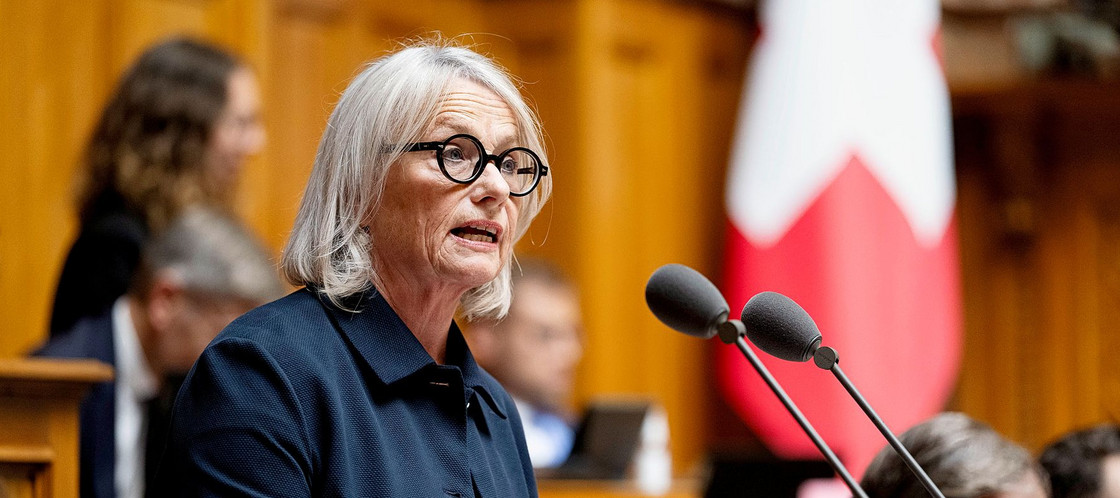
Elisabeth Schneider-Schneiter: as a member of the Council of the Swiss Abroad (CSA) and a politician who works in foreign affairs and travels around the world, I can see that the problem has not gone away. Indeed, more and more elderly Swiss now live outside the EU/EFTA area. They no longer have mandatory health insurance cover and are unable to secure equivalent healthcare in their country of residence. Switzerland’s Health Insurance Act, which dates back to the 1990s, fails to take account of this reality, which is why I am again proposing that expats be allowed to opt in to Swiss health insurance voluntarily.
Your original motion lost out by only six votes.
Yes, that’s right. We didn’t do enough lobbying in 2024. But here’s the thing: I am not asking the Federal Council for ready-made solutions. All I want it to do is focus on the issue. The government owes it to those affected.
What new arguments will you use to convince your parliamentary colleagues?
There is a systemic gap in healthcare coverage – we are not merely talking about a few individual cases. Unfortunately, many National Councillors are unaware. I also want to put more emphasis on the economic arguments. People living abroad normally don’t draw any supplementary benefits or rely on expensive care infrastructure. This lessens the burden on our welfare system. If Swiss Abroad in non-EU/EFTA countries had proper health insurance, they would seek treatment locally even if their needs were complex.
“Swiss Abroad have often paid into our system for decades.”
Has the issue become more pressing?
Yes, it has. International mobility has increased. More and more people who emigrate do so because they struggle to live off their state pension in Switzerland. They move to places with a lower cost of living and cheaper healthcare, often after having paid into our system for decades. There are also growing numbers of people moving abroad to work for a few years.
What model do you envisage?
We still have to find one. There are various approaches; we need to analyse them and then define a clear framework. Who exactly should be entitled to health insurance? How much should policyholders pay? What benefits should be included? And how will the costs be spread? We want a fair solution that also works for health insurers. The idea is not simply to transplant the Swiss system to other countries.
Does this mean collaboration between the public and private sectors?
Yes. I have been speaking to health insurers, who agree that a legal framework is necessary.
How much money could Switzerland save if there were less medical tourism?
I don’t have any official figures, but I hear physicians say that many Swiss Abroad return to Switzerland for expensive operations. After re-registering in the country, some depend on welfare assistance and claim supplementary benefits. They leave Switzerland again as soon as their medical procedure is over.
Does no one know how many such cases there are?
No, because no one keeps track of them. What you can do is compare things like the price of medicine. Drugs cost significantly more or less depending on which country you are in. This is precisely the type of data that we need. It would be an important basis for any political debate. All the letters I receive relate to individual cases. I want to bring these cases into context and fundamentally improve the current system.
“Swiss Abroad should not be treated as second-class citizens.”
The Federal Council has always stressed that a person’s place of residence dictates eligibility for health insurance.
The government should acknowledge that a different situation applies to Swiss Abroad. Other countries do. For example, the Caisse des Français de l’Étranger offers French expats the opportunity to take out voluntary cover while maintaining continuous rights to French social security. There is currently a lack of appreciation here in Switzerland of what is at stake. Not enough people know that access to public healthcare in countries like Thailand, Costa Rica, Brazil, or the Philippines is not automatically guaranteed.
Critics frame emigration as a voluntary choice against Swiss insurance. What is your view?
This is a flawed argument. If you have a Swiss passport, you can return to Switzerland for an expensive procedure at any time. People who are seriously ill choose to exercise this right. It is a strain on our system.
Has sentiment towards the Swiss Abroad deteriorated overall?
Yes, it has. I have been working on the CSA for the last 15 years and have noticed that the mood has turned. “If you move abroad, it’s your own fault if your benefits are no longer covered” is a phrase I hear increasingly. This worries me. Broadly speaking, a “now it’s my turn” attitude has become more prevalent. People forget that the 838,600 or so Swiss Abroad also have rights. Expats should not be treated as second-class citizens. Elderly people are leaving Switzerland because they can no longer afford to live there. They deserve a fair deal.
How likely do you think it is that your motion will succeed?
There are politicians in every party who are sensitive to the interests of the “Fifth Switzerland” – so I am confident. But it could still take months before they start debating the motion. What matters, I think, is that the issue remains on the political agenda.
If your motion were to fail, would the issue be off the table for you?
I will stay politically engaged and continue to talk to private health insurers. The authorities should provide more information, as I said before. Many expats underestimate how difficult and expensive it can be to get health insurance. Consulates and the Organisation of the Swiss Abroad also need to give advice.
A CSA working group has been looking at the issue for a long time. What is it currently doing?
We are thinking of commissioning our own study and are speaking to a number of universities. But ideally, it should be the government’s job to get the facts right.
Losing basic health cover
If you live in Switzerland, you must have health insurance in Switzerland – regardless of nationality or residence status. Anyone who moves abroad – except government employees or individuals posted abroad by their employer – loses this mandatory insurance cover.
Bilateral agreements mean that expats can often get equivalent healthcare coverage in EU and EFTA countries. The situation is trickier in non-EU/EFTA countries like Brazil or Thailand, where Swiss Abroad barely have any access to public healthcare. These expats have no other option but to take out private health insurance. Younger people without previous medical issues usually have no problem doing so. But insurers are wary if someone has already reached a certain age or has existing issues. They have little interest in taking on a new customer who could generate substantial healthcare costs. They will, in such cases, exclude certain benefits or reject an application outright. Generally, they will also adjust their premiums based on individual risk and have the right to terminate insurance policies at any time.
“Older Swiss Abroad, in particular, can be left in a desperate situation,” says the Centre Party National Councillor Elisabeth Schneider-Schneiter. Despite paying into a mandatory basic health insurance scheme for decades, many of them will no longer have adequate cover after leaving Switzerland. In the worst case, they can be refused medical treatment. “This goes against any notion of fairness.” Around 838,600 Swiss were living abroad at the end of 2025, of whom 357,063 were residents in countries outside the EU/EFTA area.










Comments
Comments :
Yes, very glad to read about Mrs Schneider-Schneiter‘s campaign and grateful to her for her efforts. I can confirm the real concern having paid fairly high premiums for Swiss health insurance for myself and my family for more than 20 years, and having made light use of the Swiss health system during that time, to now be outside this system at a later stage in life when it is very difficult to obtain equivalent insurance. I would welcome the opportunity to continue to pay into Swiss health insurance on a voluntary basis. Indeed, I had tried to continue with my health insurer of 20 years but was told this is not possible. I suppose the ideal case for them! I look forward to a more equitable approach.
38 Jahre bei der Publica versichert, nur einmal für sieben Tage stationär im Spital, ansonsten wenige Male ambulant beim Arzt (Check etc.), wollte ich bei meiner Ausreise zur «KPT International» wechseln. Ein Anwalt der KPT schrieb mir einen schnudrigen Standardbrief, das Risiko sei zu hoch für die KPT. Für mich war dies völlig unverständlich und widerspricht dem Grundsatz: «Eine für alle, alle für einen», welchen ich immer mit mir trug und froh war, bei robuster Gesundheit das Krankensystem möglichst wenig zu belasten. Meine Einzahlungen übertrafen haushoch meine Bezüge und halfen bei, den Führungspersonen wie Anwälten ein fettes Jahresgehalt zu sichern und in Palästen zu wohnen. Im Ausland, namentlich in Thailand ist es sehr schwierig eine ädäquate und im Alter zahlbare Krakenversicherung zu finden. – Besten Dank, Frau Nationalrätin Schneider-Schneiter, für Ihren Einsatz für die Auslandschweizer aber auch für die Schweiz.
Die Bemühungen von Nationalrätin Elisabeth Schneider-Schneiter sind zu bewundern und zu verdanken. Generell befasst sich die politische Schweiz viel zu wenig mit den Problemen der Auslandschweizer und -schweizerinnen, weil der umittelbare Einfluss auf die Parteilandschaften nicht oder kaum ersichtlich sind. Obwohl, wie im Artikel erwähnt, gute Lösungen dieser Probleme im finanziellen Interesse von Bund und Kanton wären, kurz- und langfristig.
Es wäre auch wünschenswert, dass ASO und ähnliche Organisationen ihre «Lobby»-Bemühungen rasch verstärken. Ein Ziel um sechs Stimmen zu verpassen spricht Bände!
Ich habe in der Schweiz über 35 Jahre in der Pflege gearbeitet. Vor zwei Jahren bin ich nach Thailand ausgewandert. Ich habe mich vorgängig sehr genau und umfassend über die Versicherungsmöglichkeiten informiert - die Ernüchterung war gross. Mit einer Vorerkrankung (Stent), die schon 15 Jahre zurückliegt und keine Probleme oder Beschwerden verursacht, wurde ich bei diversen Kassen (internationalen und thailändischen) abgewiesen, respektive wäre nur unter Ausschluss dieser versichert worden. Ich stimme allen Punkten des Postulats vollumfänglich zu. Danke an Frau Schneider-Schneiter für den erneuten Vorstoss und das Engagement. Ich hoffe sehr, dass der Bundesrat diesen ganzheitlich und fair prüft!
Wenn jemand in unserer Familie erkrankt, sind wir gezwungen, in die Schweiz zurückzukehren. Der Grund dafür ist, dass trotz hoher lokaler Versicherungsprämien das Risiko besteht, dass Behandlungen vor Ort nicht übernommen werden oder die Prämien anschliessend so stark steigen, dass sie für uns nicht mehr tragbar sind. Dabei liegen die Behandlungskosten hier – wie in den meisten Ländern ausserhalb der Schweiz und mit Ausnahme der USA – deutlich tiefer. Die Spitalkosten sind beispielsweise rund 60 % niedriger. Diese Situation ist weder wirtschaftlich sinnvoll, noch nachvollziehbar: Durch die erzwungene Rückkehr in die Schweiz entstehen letztlich massiv höhere Kosten, obwohl die Behandlung vor Ort deutlich günstiger wäre. Wir würden gerne in der Schweiz versichert sein, während wir im fernen Ausland leben.
Sehr geehrte Frau Schneider-Schneiter, nachdem meine ecuadorianische Frau über zwanzig Jahre mit mir in der Schweiz gelebt hat, lebe ich nun als Rentner schon fast drei Jahre im südamerikanischen Ecuador. Mein Ziel ist es, die zwanzig Auslandjahre meiner Frau ebenfalls erreichen zu können. Nachdem wir von der einzigen schweizerischen Versicherungsgesellschaft noch vor der Abreise von einer Auslandschweizerversicherung ausgeschlossen worden sind, sind wir gezwungen, das Kranken- und Unfallversicherungsrisiko privat abzudecken. Gott sei Dank, sind hier die Arztkosten auch in Privatkliniken noch wesentlich tiefer als in der Schweiz. Wobei die Arztleistungen in den Privatkliniken den Leistungen eines Kantonsspitals in der Schweiz durchaus gleichwertig sind. Für einen anstehenden operativen Eingriff werden wir aus den im Beitrag beschriebenen Gründen aber gezwungen sein, den Wohnsitz für den Eingriff kurzfristig in die Schweiz zu verlegen. Das kann doch nicht sein. Wir hoffen, dass ihr erneuter Vorstoss im Parlament diesmal erfolgreich sein wird. Vermutlich Tausende Auslandschweizer dürften Ihnen dafür dankbar sein.
Liebe Frau Schneider-Schneiter, ich bin Ihnen dankbar für Ihren wertvollen Vorstoss betreffend einer freiwilligen Weiterversicherung der Krankenkasse. Bin seit 2009 in Indonesien und war vorher bei der AXA-Winterthur krankenversichert. Als ich mich hier lokal versichern wollte (AXA Indonesien), wurde mir erklärt, dass man ab dem 60. Altersjahr keine Versicherung mehr abschliessen könne. Ich gehöre genau zu jener Gruppe, welche von der AHV lebt und mir deshalb keine internationale Krankenversicherung leisten kann. Ich drücke Ihnen (und mir) beide Daumen, damit ihr Vorstoss durchkommt!
Also ich lebe auch seit 2009 in Indonesien, war aber problemlos möglich eine private Krankenkasse abzuschliessen. Frag mal bei Globality nach, ist in Luxemburg ansässig.
Das ist genau so. Ich kenne mehrere Fälle, die zurück in die Schweiz gingen für grössere Operationen. Auch das Risiko ist sehr hoch, dass die ausländischen Krankenkassen die Verträge künden. Ab einem gewissen Alter wird man nicht mehr aufgenommen. Wir brauchen einen seriösen, zahlbaren Schutz. Haben unser Leben lang in der Schweiz einbezahlt. Und die Kosten sind massiv günstiger hier. Nur schon eine Inhouse-Versicherung, ohne ambulant, wäre eine super Lösung.
Excellent article. Merci à Mme Elisabeth Schneider-Schneiter qui se soucie de ce problème. Le jour où je me suis expatrié, je me suis fait du souci pour cela. J'avais contacté une assurance privée, mais cela coûtait autour des 700 fr. suisses. Comment faire avec une rente de 2000 fr., car j'ai consacré mon 2e pilier pour les études de mes enfants. J'ai de la chance de pouvoir me soigner avec des plantes. Pour le reste, je me suis mis dans la tête, à 74 ans, que si je ne peux pas me soigner, faute de moyens, je demande à Dieu de me reprendre, si possible dans mon sommeil, sans souffrir.
Migré el 30 de Marzo 2026 a Buenos Aires por razones económicas, e.o. la contisación del seguro de sanidad suizo cual pesó mucho. A penas acá se inflamó mi intestino. Primer rumbo: el hospital público, sin costo: larga espera con dolores, terapia no adecuada. Segundo rumbo: hospital suizo, particular. Primero hay que pagar, sigue la consulta, terapia eficaz, Fr. 1000.-. Querían guardarme 5 días, renuncié por no tener seguro. La inflamación se redujó rápidamente. Un seguro hubiera sido agradable.
Yo poseo un seguro medico con el Hospital Alemán aqui en Buenos Aires que me consume casi la mitad de mi Jubilacion. Actualmente tengo 93 años de edad.