Around 55 per cent of the electorate rejected the SVP’s “No to a Switzerland of 10 million” initiative on 14 June. An overwhelming 70 per cent of expatriate voters dismissed the proposal. The majority of Swiss are evidently unwilling to jeopardise freedom of movement.
The two sides ploughed a combined total of 15 million francs into a fiercely contested voting campaign.
The aim of the immigration-sceptical SVP’s “No to a Switzerland of 10 million” initiative was to have a population cap enshrined in the constitution. This would have meant Switzerland’s resident population not being allowed to exceed 10 million before 2050. There are currently 9.1 million people in Switzerland. The authorities would have had to have curbed migration sharply once the population reached the 9.5-million threshold – which it will in the next five to 10 years, forecasts say. In tabling the initiative, the SVP ultimately wanted Switzerland’s agreement with the EU on the free movement of people to be terminated (see Swiss Review 2/2026). The proposal failed to gain traction among 54.8 per cent of voters and a majority of cantons, after the government and parliament argued that the “radical” initiative was a danger to Swiss prosperity.
The vote polarised debate, driving 58.9 per cent of the electorate to the polls. This is the highest turnout since Switzerland gave its verdict on the 13th state pension payment. The two sides ploughed a combined total of some 15 million Swiss francs into the voting campaign – the biggest outlay since the entry into force in 2022 of a law obliging political parties and stakeholders to disclose details of their funding. Opponents of the initiative had more money to play with – nine million francs compared to the six million francs that the yes camp had at its disposal.
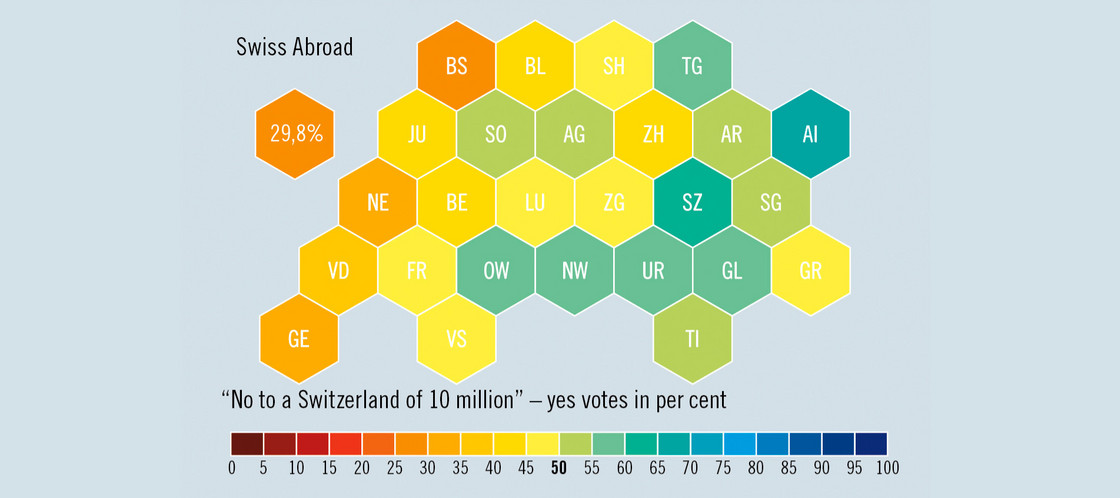
The “No to a Switzerland of 10 million” initiative was particularly unpopular in French-speaking Switzerland and in towns and cities in general, whereas it attracted significant support in central and eastern Switzerland (see map). The biggest yes vote (65.9 per cent) came in the canton of Appenzell-Ausserrhoden, the lowest in the canton of Basel-Stadt (26.5 per cent). Approval was almost as low among the Swiss Abroad (29.8 per cent), after the Council of the Swiss Abroad publicly rejected the initiative.
The two sides ploughed a combined total of 15 million francs into a fiercely contested voting campaign.
Federal Council: “voters give thumbs-up to the bilateral approach”
The Federal Council believes the result is “a sign of stability, openness and reliability”, Justice Minister Beat Jans (SP) told the media in Berne, adding that it was a thumbs-up to the Swiss-EU bilateral approach from voters who want stability at a geopolitically and economically uncertain time. In Brussels, European Commission President Ursula von der Leyen responded to the result with diplomatic reserve. “The EU and Switzerland share deep ties and a strong partnership. We will continue working together to modernise and deepen our cooperation,” she wrote on X.
Both sides are currently in the process of ratifying the negotiated set of Swiss-EU agreements. The Swiss parliament will debate the package in autumn, before voters again have the final say.
Meanwhile, the SVP has lost out again – only six years since its “For moderate immigration” initiative was rejected by around 57 per cent of voters. Its latest attempt to convince voters was considered to have a greater chance of success. Indeed, the “No to a Switzerland of 10 million” slogan found widespread resonance, given the drawbacks that have come with rapid population growth (from seven to nine million inhabitants in the last 25 years). The ensuing housing shortage, for example, has seen high demand push up the price of rents (see Swiss Review 2/2026).
A no vote “will not solve a single problem”, warned SVP President Marcel Dettling moments after the result. The issues highlighted by the initiative would continue to dog Switzerland in the months and years to come, he said. The government takes the arguments of the yes camp seriously, Federal Councillor Jans insisted, citing the action plan to combat the housing crisis as one of a number of measures already taken.
The SVP is now focused on scuppering the Swiss-EU package of agreements, which it has consistently dubbed the “subjugation treaty”. Furthermore, parliament will soon debate the so-called “border protection initiative” that was submitted by the SVP in autumn 2025. Switzerland’s biggest party says it wants to tighten border security and “stop asylum abuse”, so that only 5,000 “genuine” refugees are let into the country every year.
Tightening access to civilian service
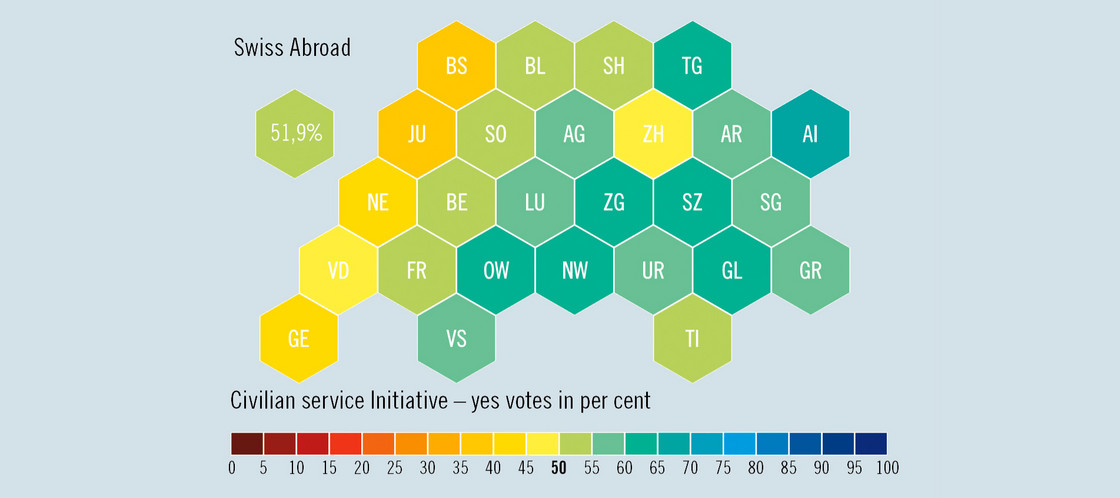
A separate item also appeared on the 14 June ballot sheet, with a narrow majority of 52.5 per cent (Swiss Abroad: 51.9 per cent) endorsing a legislative amendment that tightens access to civilian service. The aim of the reform is to keep more young men in the armed forces. In particular, it will now become less appealing for soldiers to switch to civilian service at a later stage, because they will be faced with a much longer service stint if they do so.
A left-green alliance called the referendum, opposing what it regarded as an unnecessary impediment that will not make the army automatically more attractive. It is concerned that those affected could exempt themselves from military service by taking medical discharge – instead of doing civilian service for the benefit of society.
“No to a Switzerland of 10 million” – rejected
A nationwide minority of 45.2 per cent voted in favour of the initiative. Support for the proposal among the Swiss Abroad was much lower (29.8 per cent). The majority of cantons, likewise, rejected the SVP’s bid to limit Switzerland’s population to 10 million.
Civilian service – legislative amendment approved
A 52.5 per cent majority voted yes to a change in the Civilian Service Act that will make civilian service less attractive as an alternative to mandatory military service. The majority of expatriate voters (51.9 per cent) also voted in favour. A simple majority of the electorate was sufficient to effect the legislative amendment – no cantonal majority was necessary.
Thank you for your comment. Your Comment Added Successfully.
Thank you for your comment. Comments are approved within one to three days.
Oops! Something went wrong, please try again later.
Comments :
Thank you for your comment. Your Comment Added Successfully.
Elisabeth Welti, Ternitz, Österreich 20.07.2026 At 12:21
Eine kurze Frage: viele sagen NEIN zu 10 Mio. Einwohnern in der Schweiz, aus Angst. Wie verhält sich dann die Zivildienst-Regel gegenüber zum "nein"? Leisten all die Ausländer dann auch Zivildienst?
Show Translation
Thank you for your comment. Your Comment Added Successfully.
Redaktion «Schweizer Revue» 06.08.2026 At 13:25
Die Schweiz kennt keine Dienstpflicht für Ausländer. Sie sind vom Militärdienst ausgenommen. Somit steht ihnen auch der Zivildienst nicht offen, der eine Alternative zum Militärdienst ist (Anmerkung der Redaktion).
Show Translation
Thank you for your comment. Your Comment Added Successfully.
Kurt Fehlmann, Hervey Bay, QLD, Australia 19.07.2026 At 05:55
It all sounds idealistic to have freedom of movement and a multicultural society and to some extent this is good for everyone. However, why would one jeopardize the heritage of the culture, risk overpopulation, increased levels of crime and subsequently the pristine environment just for a bit of personal gratification. Have a look at other countries and what free people movement has done to them.
In my view other people's problems are not fixed by relocation and bringing these problems into your home, is not what is wanted. The question remains as follows, are all the people who voted yes willing to accommodate these immigrants in their home or are the standing back and make others solve the mess they voted yes for?













Comments
Comments :
Eine kurze Frage: viele sagen NEIN zu 10 Mio. Einwohnern in der Schweiz, aus Angst. Wie verhält sich dann die Zivildienst-Regel gegenüber zum "nein"? Leisten all die Ausländer dann auch Zivildienst?
Die Schweiz kennt keine Dienstpflicht für Ausländer. Sie sind vom Militärdienst ausgenommen. Somit steht ihnen auch der Zivildienst nicht offen, der eine Alternative zum Militärdienst ist (Anmerkung der Redaktion).
It all sounds idealistic to have freedom of movement and a multicultural society and to some extent this is good for everyone. However, why would one jeopardize the heritage of the culture, risk overpopulation, increased levels of crime and subsequently the pristine environment just for a bit of personal gratification. Have a look at other countries and what free people movement has done to them.
In my view other people's problems are not fixed by relocation and bringing these problems into your home, is not what is wanted. The question remains as follows, are all the people who voted yes willing to accommodate these immigrants in their home or are the standing back and make others solve the mess they voted yes for?