Taxation of married couples – another vote to take place
02.10.2026 – Theodora Peter
How should married couples be taxed in Switzerland? Only eight months after the vote on individual taxation, Switzerland must revisit the issue on 29 November 2026, when a fresh initiative is put to the people.
The verdict from Swiss voters on 8 March 2026 was actually quite clear: every married person should fill out their own separate tax return in future. A majority of 54 per cent said yes last spring to the introduction of individual taxation for all, thereby ending tax discrimination against married couples – the so-called “marriage penalty” – at federal and cantonal level. Married couples have been taxed jointly until now, meaning that they have had to pay higher taxes when adding up two incomes. The new tax regime will see every person being taxed individually, regardless of their marital status. According to a follow-up survey conducted by gfs Bern, an institute specialising in political and opinion research, a large majority of people who voted yes did so because they also want equality to be reflected in the tax system.
Nevertheless, it remains to be seen whether the result can be fully implemented. This is because the Centre Party is still pushing ahead with a proposal that it submitted back in 2024. Referred to as the “Fairness Initiative”, this proposal would oblige married couples to continue filling out a joint tax return – although the federal tax authorities would then have to ensure that spouses are not penalised for doing so.
The initiative is clearly at odds with the introduction of individual taxation for all, which was approved at the ballot box. Although it concedes that the 8 March 2026 result was clear “in principle”, the Centre Party insists that voters are still entitled to make up their mind about this separate proposal, which would benefit single-income households. The SVP is the only other party backing the Centre Party initiative.
“Nitpicking”
The FDP, SP, Greens, and Green Liberals, on the other hand, call the proposal “nitpicking”, arguing that its main objective – no tax discrimination against married couples – has already been met. These parties formed the female-led cross-party alliance that paved the way for individual taxation in the first place – first in parliament, then at the ballot box on 8 March 2026.
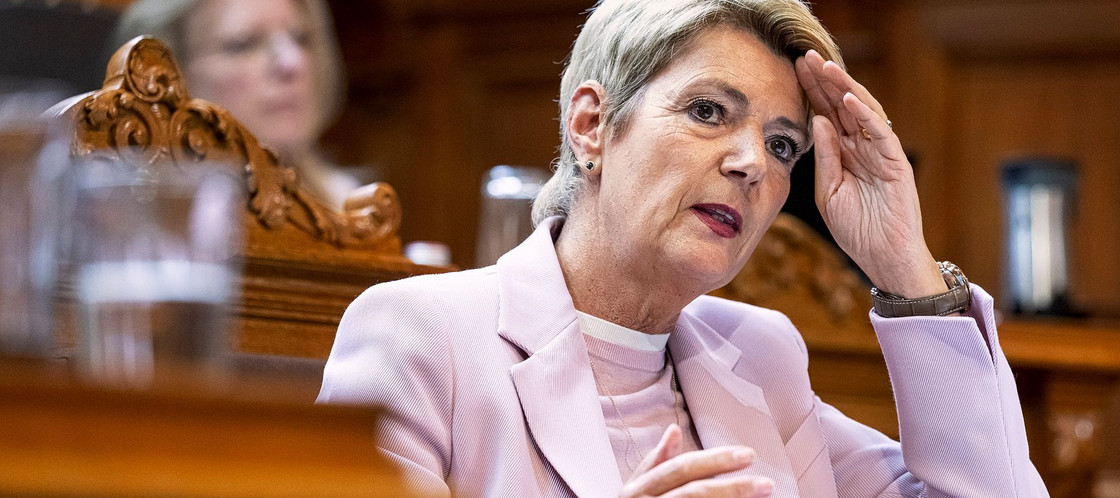
The Federal Council also opposes the initiative. Speaking in parliament, Finance Minister Karin Keller-Sutter (FDP) noted the contradiction that would arise if the initiative was accepted, given that the proposal only concerns direct federal taxation. “The Federal Act on Individual Taxation would continue to apply at cantonal level,” she warned.
This would complicate matters: married couples would only be taxed jointly at federal level, while cantons and municipalities would tax spouses individually. If it wanted to avert this discrepancy, parliament would have to make legislative amendments, Keller-Sutter said. “And this, in effect, would mean parliament trying to override the vote of the people.”
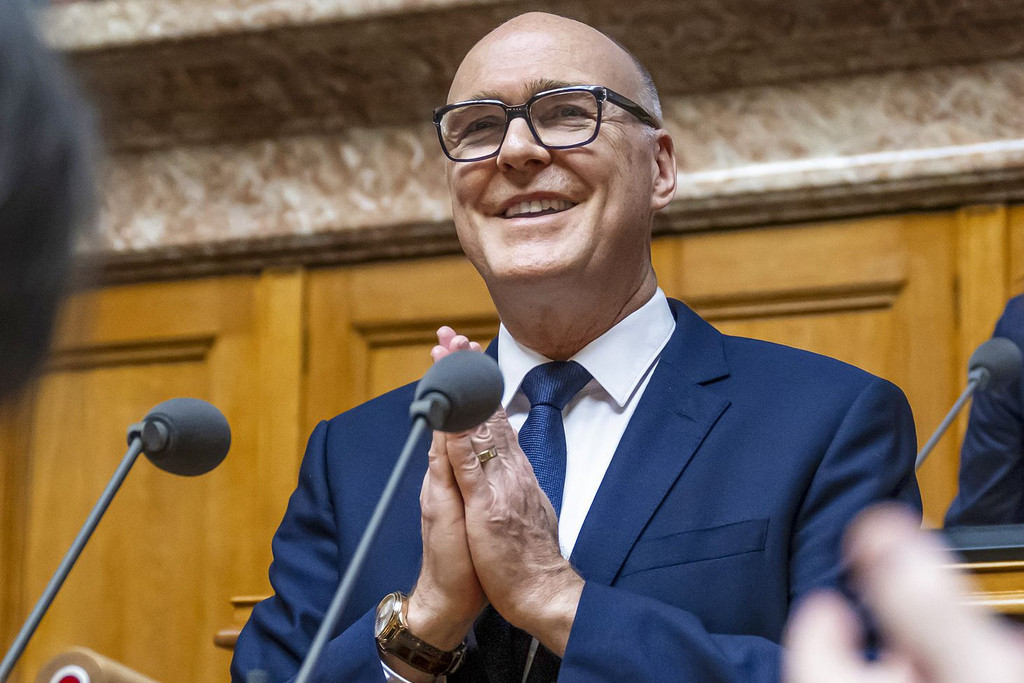
In media interviews, the Centre Party chair Philipp Matthias Bregy rejected claims that the proposal would plunge the tax system into chaos. “Laws have to be amended all the time when we have votes,” he told the German-language public broadcaster SRF, adding that parliament would have to ensure that “a coherent and sensible solution is reached”. On 29 November 2026, voters and cantons will decide whether we get that far in the first place.
We will review the results of the popular votes of 27 September 2026 in the next edition of our magazine.
Thank you for your comment. Your Comment Added Successfully.
Thank you for your comment. Comments are approved within one to three days.
Oops! Something went wrong, please try again later.
Comments :
Thank you for your comment. Your Comment Added Successfully.
Peter Schwerzmann, Bangkok, Thailand 08.10.2026 At 11:27
Früher reichten 10% Steuern aufs Nettoeinkommen, heute reicht gar nichts mehr. Ich frage mich, wieso der Staat immer mehr Geld braucht? Es steht schon in der Bibel: Man soll dem Kaiser 10% geben – und nicht mehr. Es ist eine Ungerechtigkeit, dem Volk das hart verdiente Geld aus den Taschen zu ziehen und ohne schlechtes Gewissen die Gelder irgendwo in ein Loch zu versenken. Unsere Finanzpolitiker handeln ungerecht.










Comments
Comments :
Früher reichten 10% Steuern aufs Nettoeinkommen, heute reicht gar nichts mehr. Ich frage mich, wieso der Staat immer mehr Geld braucht? Es steht schon in der Bibel: Man soll dem Kaiser 10% geben – und nicht mehr. Es ist eine Ungerechtigkeit, dem Volk das hart verdiente Geld aus den Taschen zu ziehen und ohne schlechtes Gewissen die Gelder irgendwo in ein Loch zu versenken. Unsere Finanzpolitiker handeln ungerecht.