Parliament rejected your first motion in 2024. Why are you trying again?
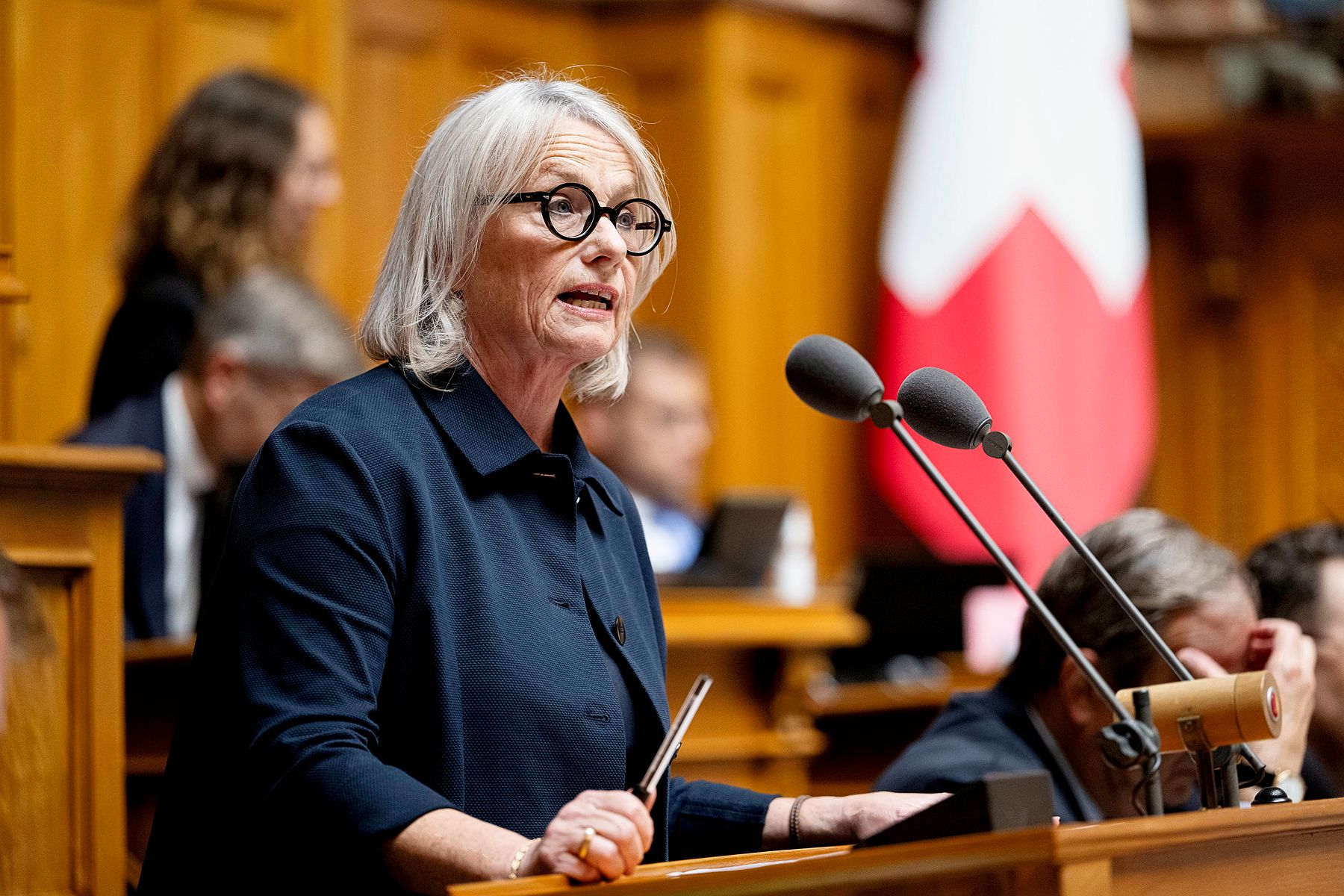
Elisabeth Schneider-Schneiter: as a member of the Council of the Swiss Abroad (CSA) and a politician who works in foreign affairs and travels around the world, I can see that the problem has not gone away. Indeed, more and more elderly Swiss now live outside the EU/EFTA area. They no longer have mandatory health insurance cover and are unable to secure equivalent healthcare in their country of residence. Switzerland’s Health Insurance Act, which dates back to the 1990s, fails to take account of this reality, which is why I am again proposing that expats be allowed to opt in to Swiss health insurance voluntarily.
Your original motion lost out by only six votes.
Yes, that’s right. We didn’t do enough lobbying in 2024. But here’s the thing: I am not asking the Federal Council for ready-made solutions. All I want it to do is focus on the issue. The government owes it to those affected.
What new arguments will you use to convince your parliamentary colleagues?
There is a systemic gap in healthcare coverage – we are not merely talking about a few individual cases. Unfortunately, many National Councillors are unaware. I also want to put more emphasis on the economic arguments. People living abroad normally don’t draw any supplementary benefits or rely on expensive care infrastructure. This lessens the burden on our welfare system. If Swiss Abroad in non-EU/EFTA countries had proper health insurance, they would seek treatment locally even if their needs were complex.
Has the issue become more pressing?
Yes, it has. International mobility has increased. More and more people who emigrate do so because they struggle to live off their state pension in Switzerland. They move to places with a lower cost of living and cheaper healthcare, often after having paid into our system for decades. There are also growing numbers of people moving abroad to work for a few years.
What model do you envisage?
We still have to find one. There are various approaches; we need to analyse them and then define a clear framework. Who exactly should be entitled to health insurance? How much should policyholders pay? What benefits should be included? And how will the costs be spread? We want a fair solution that also works for health insurers. The idea is not simply to transplant the Swiss system to other countries.
Does this mean collaboration between the public and private sectors?
Yes. I have been speaking to health insurers, who agree that a legal framework is necessary.
How much money could Switzerland save if there were less medical tourism?
I don’t have any official figures, but I hear physicians say that many Swiss Abroad return to Switzerland for expensive operations. After re-registering in the country, some depend on welfare assistance and claim supplementary benefits. They leave Switzerland again as soon as their medical procedure is over.
Does no one know how many such cases there are?
No, because no one keeps track of them. What you can do is compare things like the price of medicine. Drugs cost significantly more or less depending on which country you are in. This is precisely the type of data that we need. It would be an important basis for any political debate. All the letters I receive relate to individual cases. I want to bring these cases into context and fundamentally improve the current system.
The Federal Council has always stressed that a person’s place of residence dictates eligibility for health insurance.
The government should acknowledge that a different situation applies to Swiss Abroad. Other countries do. For example, the Caisse des Français de l’Étranger offers French expats the opportunity to take out voluntary cover while maintaining continuous rights to French social security. There is currently a lack of appreciation here in Switzerland of what is at stake. Not enough people know that access to public healthcare in countries like Thailand, Costa Rica, Brazil, or the Philippines is not automatically guaranteed.
Critics frame emigration as a voluntary choice against Swiss insurance. What is your view?
This is a flawed argument. If you have a Swiss passport, you can return to Switzerland for an expensive procedure at any time. People who are seriously ill choose to exercise this right. It is a strain on our system.
Has sentiment towards the Swiss Abroad deteriorated overall?
Yes, it has. I have been working on the CSA for the last 15 years and have noticed that the mood has turned. “If you move abroad, it’s your own fault if your benefits are no longer covered” is a phrase I hear increasingly. This worries me. Broadly speaking, a “now it’s my turn” attitude has become more prevalent. People forget that the 838,600 or so Swiss Abroad also have rights. Expats should not be treated as second-class citizens. Elderly people are leaving Switzerland because they can no longer afford to live there. They deserve a fair deal.
How likely do you think it is that your motion will succeed?
There are politicians in every party who are sensitive to the interests of the “Fifth Switzerland” – so I am confident. But it could still take months before they start debating the motion. What matters, I think, is that the issue remains on the political agenda.
If your motion were to fail, would the issue be off the table for you?
I will stay politically engaged and continue to talk to private health insurers. The authorities should provide more information, as I said before. Many expats underestimate how difficult and expensive it can be to get health insurance. Consulates and the Organisation of the Swiss Abroad also need to give advice.
A CSA working group has been looking at the issue for a long time. What is it currently doing?
We are thinking of commissioning our own study and are speaking to a number of universities. But ideally, it should be the government’s job to get the facts right.
“Swiss Abroad should not be treated as second-class citizens.”
Losing basic health cover
If you live in Switzerland, you must have health insurance in Switzerland – regardless of nationality or residence status. Anyone who moves abroad – except government employees or individuals posted abroad by their employer – loses this mandatory insurance cover.
Bilateral agreements mean that expats can often get equivalent healthcare coverage in EU and EFTA countries. The situation is trickier in non-EU/EFTA countries like Brazil or Thailand, where Swiss Abroad barely have any access to public healthcare. These expats have no other option but to take out private health insurance. Younger people without previous medical issues usually have no problem doing so. But insurers are wary if someone has already reached a certain age or has existing issues. They have little interest in taking on a new customer who could generate substantial healthcare costs. They will, in such cases, exclude certain benefits or reject an application outright. Generally, they will also adjust their premiums based on individual risk and have the right to terminate insurance policies at any time.
“Older Swiss Abroad, in particular, can be left in a desperate situation,” says the Centre Party National Councillor Elisabeth Schneider-Schneiter. Despite paying into a mandatory basic health insurance scheme for decades, many of them will no longer have adequate cover after leaving Switzerland. In the worst case, they can be refused medical treatment. “This goes against any notion of fairness.” Around 838,600 Swiss were living abroad at the end of 2025, of whom 357,063 were residents in countries outside the EU/EFTA area.











Comments