The Federal Council wants to ban couples in Switzerland from adopting children abroad, arguing that it is the only way to prevent illegal practices. It is a highly charged issue.
From the 1950s, the received wisdom among couples in Switzerland who wanted to adopt children was that they were giving someone the chance of a better life, not least if the child came from a poor country and a seemingly deprived background. It was seen as a humanitarian act. Interstingly, this positive spin persisted for a long time, says Andrea Abraham, professor at the Berne University of Applied Sciences. Reported abuses of the system barely registered in public debate. In Switzerland, experts, let alone the general public, have only started addressing the issue in recent years – unlike their foreign counterparts. Abraham: “This is astounding, given that child adoption has such a real-life impact.”
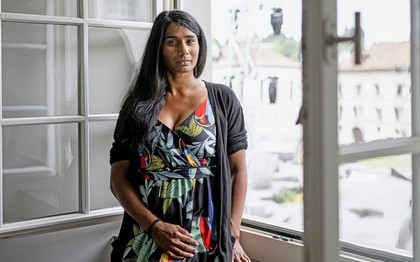
Sarah Ineichen made irregular adoptions into a widely debated topic. The issue concerns her personally: “I still do not know who my biological mother is.” Photo: Keystone
“This wound will remain”
Sarah Ineichen has played a key role in bringing the international adoption process under much greater scrutiny. Ineichen arrived in the canton of Nidwalden from Sri Lanka as a baby in 1981. When delving into her past many years later, she discovered that what she had been told about her roots was wrong. Instead of meeting whom she thought was her biological mother at her place of birth, Ineichen was confronted by a woman who had merely given her name to secure the necessary adoption papers. “I still don’t know who my biological mother is,” says the 44-year-old. She has no idea why she was given away as a baby, and whether her biological mother gave her away of her own accord. “This deep wound will remain with me until I die.”
Ineichen went public in 2017, one of the first adoptees to do so. She and others founded Back to the Roots – an organisation that advocates for the rights of Sri Lankan adoptees in Switzerland. Newborns used to be snatched from their mothers and sent for adoption, she says. Some babies were even surreptitiously swapped for stillborn babies in hospital and handed over to adoptive parents. “They picked the children for the parents, not the other way round.”
Officials turned a blind eye
The international adoption process played on Western couples who were desperate to have children. Studies by Abraham and numerous others prove this, documenting illegal practices in 11 countries of origin from 1973 to 2002. They refer to suspected child trafficking, forged documents, missing declarations of consent from biological mothers, and cases of Swiss officials who turned a blind eye to systematic lawbreaking. Around 700 babies from Sri Lanka and 2,280 babies from India were adopted during that time. Orphanages and women’s refuges in both countries played an active role in the international adoption process. These organisations would help expectant mothers to keep their pregnancy and the birth of their child secret. In particular, they would assist pregnant women who faced stigma because they were destitute or had conceived out of wedlock or as a result of rape. It was also not uncommon for them to organise the necessary adoption papers and coordinate the handover of newborns to mainly Western adoptive parents.
The adoption process moved abroad
From 1973, more and more couples from Switzerland would arrive in these countries. Due to social factors and changes in the law, it was now easier for people who wanted to adopt children to do so abroad. Few were unduly worried by this. As one of the studies recounts: “It was like reproductive medicine today, in that it was socially acceptable back then to say that adoptive parents were entitled to have children, full stop.” Self-interest was conveniently hidden under the veneer of altruism.
Responsibility now lies with the federal government and the cantons, says Ineichen. “They were the ones that tolerated and even facilitated this shabby trade for decades.” By not doing enough to protect children and their biological families from exploitation, an entire generation of adoptees now have to suffer the consequences. “We expect an apology for the wrong that was done to us as well as targeted support to help us uncover our past.” DNA tests in the countries of origin to help uncover falsified adoption papers are one example of what can be done.
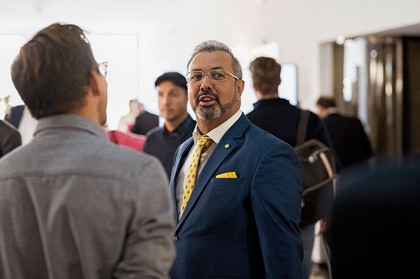
Nik Gugger is fighting against tight restrictions. Born in India and adopted by Swiss parents, he talks about his luck: thanks to this adoption, he was “able to grow up in a loving family”. Photo: Keystone
Gaps in information
It is heart-wrenching to discover that there are gaps in information or parts of your story that are actually downright lies, says Andrea Abraham. People have to live with this incomplete biography. It affects their sense of identity and belonging. “There are still thousands of adults in Switzerland who have unanswered questions.”
The Federal Council wants to ban international adoption. “It is the only way to fully prevent abuses of the system,” Justice Minister Beat Jans argues. Monitoring what happens in the countries of origin is extremely difficult and time-consuming. The Hague Adoption Convention, which came into force in Switzerland in 2003, is an example of the significant progress that has already been made, but there are limits to its scope, he adds. The Federal Council intends to flesh out its plans by the end of 2026. A ban could come into force by 2030 at the earliest.
Among those directly affected some are vehemently opposed to the government’s plan. “Without international adoption, I probably would never have grown up in a loving family,” says EVP National Councillor Nik Gugger, who was adopted from India as a young boy. Within a month, he collected over 10,000 signatures for a petition to prevent a blanket ban. Gugger believes that the Hague Convention already has effective safeguards in place – but that a high bar should also be set for countries of origin, with professional support provided in Switzerland. “The practices of yesteryear are no longer possible,” says Centre Party National Councillor Stefan Müller-Altermatt, who is the adoptive father of a boy from Armenia. Full documentation and transparency are essential today, he points out.
A ban would stigmatise those directly affected, say opponents. Adopted children would start thinking that they actually should not be in Switzerland. It would imply that adoptive parents are in the wrong. This is unfair and does not reflect reality. And the consequences for orphans and abandoned children would be devastating, they warn.
The reform will have no impact as far as the Swiss Abroad are concerned. “They can continue to adopt children in accordance with the laws of their country of residence,” says Joëlle Schickel-Küng from the Federal Office of Justice. Foreign adoptions will, in principle, be recognised in Switzerland if they take place in the country where the adoptive parents live.
Thank you for your comment. Your Comment Added Successfully.
Thank you for your comment. Comments are approved within one to three days.
Oops! Something went wrong, please try again later.
Comments :
Thank you for your comment. Your Comment Added Successfully.
Maurice de Coulon, Deutschland 30.10.2025 At 07:32
Als Vater eines Adoptivsohnes aus Vietnam hat mich der Artikel über den Handel mit potentiellen Adoptivkinder aus dem Ausland auch sehr angesprochen. Zum „Glück“ gehört unser Sohn (gleiche Generation wie der ehemalige deutsche Vize-Kanzler Philip Rösler) zu den echt bedürftig gewesenen, noch vor Ende des Vietnamkrieges ausgesetzten Mischlingen, um deren Adoption sich die Organisation Terre des Hommes damals intensiv bemüht hat. Terre des Hommes hatte auch eine sehr professionelle Auswahl der adoptionswilligen Eltern eingerichtet, damit möglichst alle Voraussetzungen für eine gelingende Adoption und ein gelingendes Leben der Adoptierten in ihrer neuen Heimat erfolgen kann. Leider sind doch relativ viele Adoptionen in Deutschland nicht geglückt, weshalb Terre des Hommes Deutschland vor längerer Zeit die Vermittlung von Auslandsadoptionen ganz aufgegeben hat.


![[Translate to English:]](/fileadmin/_processed_/c/d/csm_283259_b411da83c0.jpg)

Comments
Comments :