Switzerland’s youngest municipality is a satellite of Lausanne
06.02.2026 – Stéphane Herzog
With an average age of 34.4, Chavannes-près-Renens (Vaud) is the youngest municipality in Switzerland. This hub to the west of Lausanne is attracting migrants from all corners and is seeking to preserve its quality of life.
Higher, farther, faster, more beautiful? In search of somewhat unconventional Swiss records Today: the Swiss municipality with the lowest average age
Renens, a small town to the west of Lausanne with a major railway junction, is well-known in Switzerland. But does anybody know Chavannes-près-Renens? This municipality, which is the youngest in Switzerland, is just down the road from Renens station. The first building of note is the railway chapel, which is soon to house a bookshop and a literary gathering café, according to mayor Loubna Laabar. To the right is the Citadelle, a residential building dating from the 1960s. One of the entries to the building is in the municipality of Ecublens, which is home to the Swiss Federal Technology Institute of Lausanne (EPFL). Some of its apartments are on the other side of the municipal border. The Rue Centrale, with its small houses and allotments set up by the SBB, bears witness to the town’s railway past.
Sustained growth
Chavannes is a welcoming place. Its population in 2000 was 6,000. It officially became a town in 2025, when it reached 10,000 inhabitants. Immigration here is largely European, with a mixture of blue and white-collar workers. The municipality houses over 110 nationalities; 56 percent of residents are foreign nationals and 40 percent are aged between 20 and 39. The number of schoolchildren in the area more than doubled between 1990 and 2024.
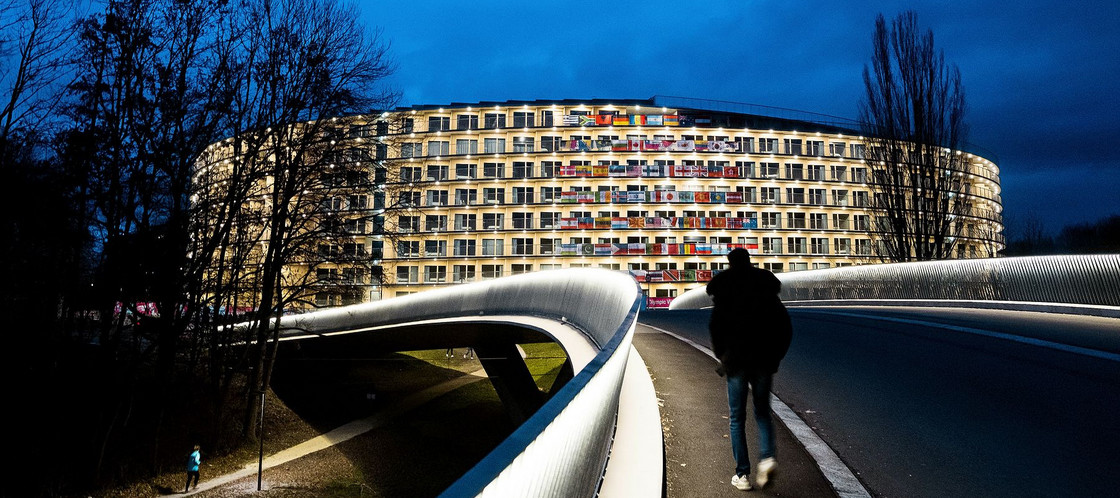
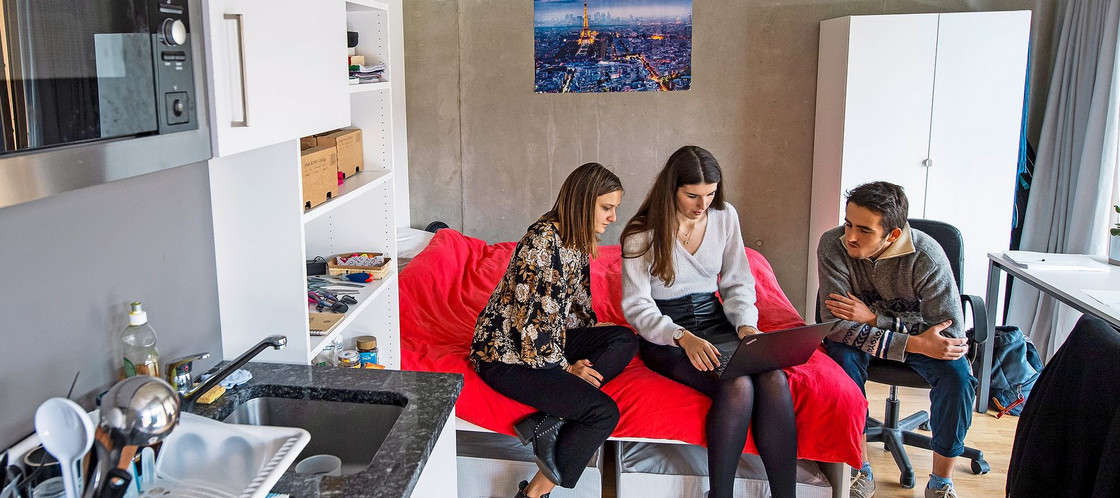
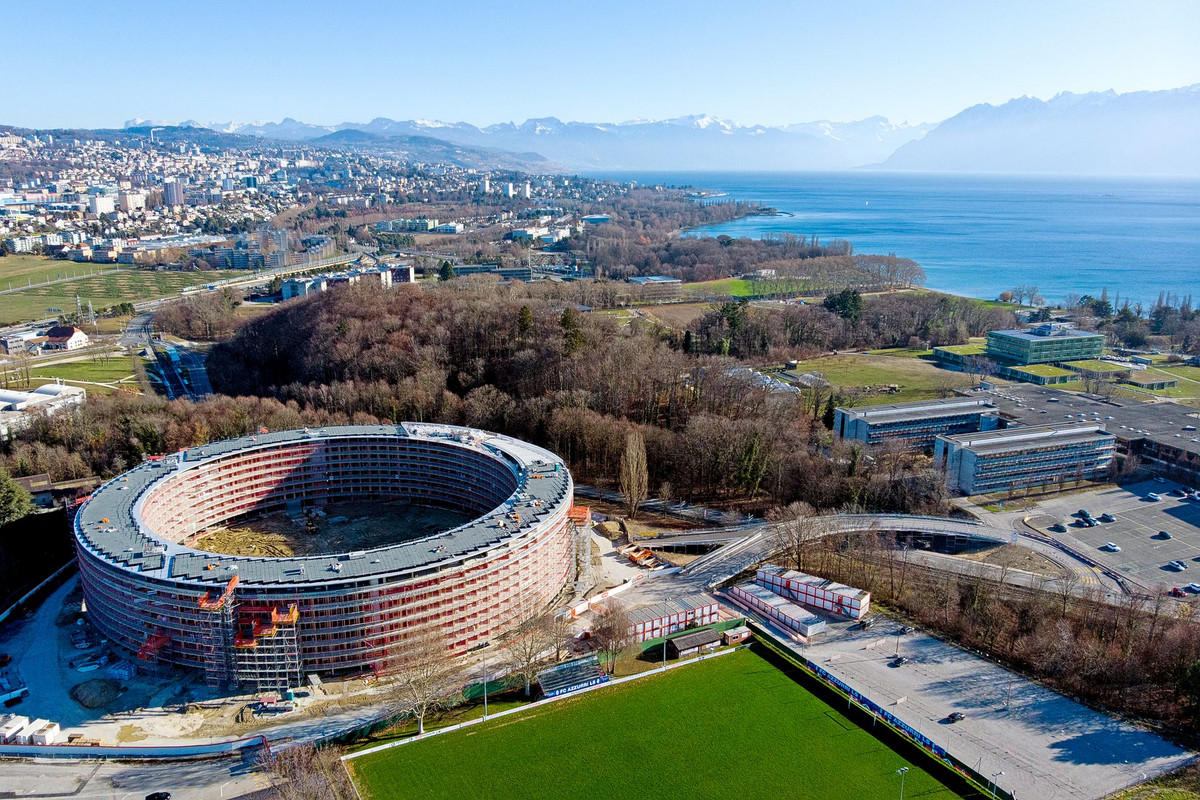
The growth is due to two factors, the first of which is student accommodation. The Vortex, a circular building a stone’s throw from the EPFL (in Ecublens), houses over 1,000 students, out of an estimated total of 2,000. The other factor is immigration. “Between 2015 and 2035, the number of West Lausanne region inhabitants will have risen by 50 percent, with 40,000 people settling here, which is enormous for Switzerland,” remarks Benoît Biéler, director of SDOL (Stratégie et développement de l’Ouest lausannois [West Lausanne Strategy and Development]). Furthermore, these new arrivals are settling at the right time to start a family. The foreign population is therefore boosting the birth rate. “They still think having kids is worth it,” the mayor says with a smile.
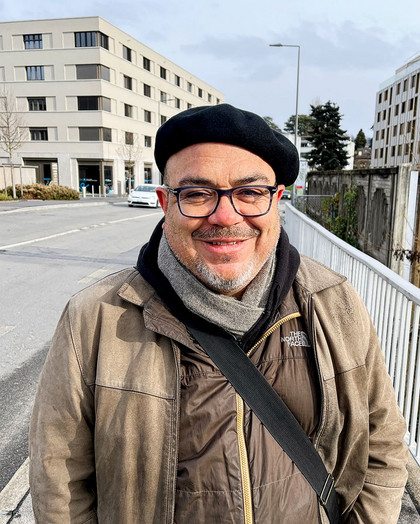
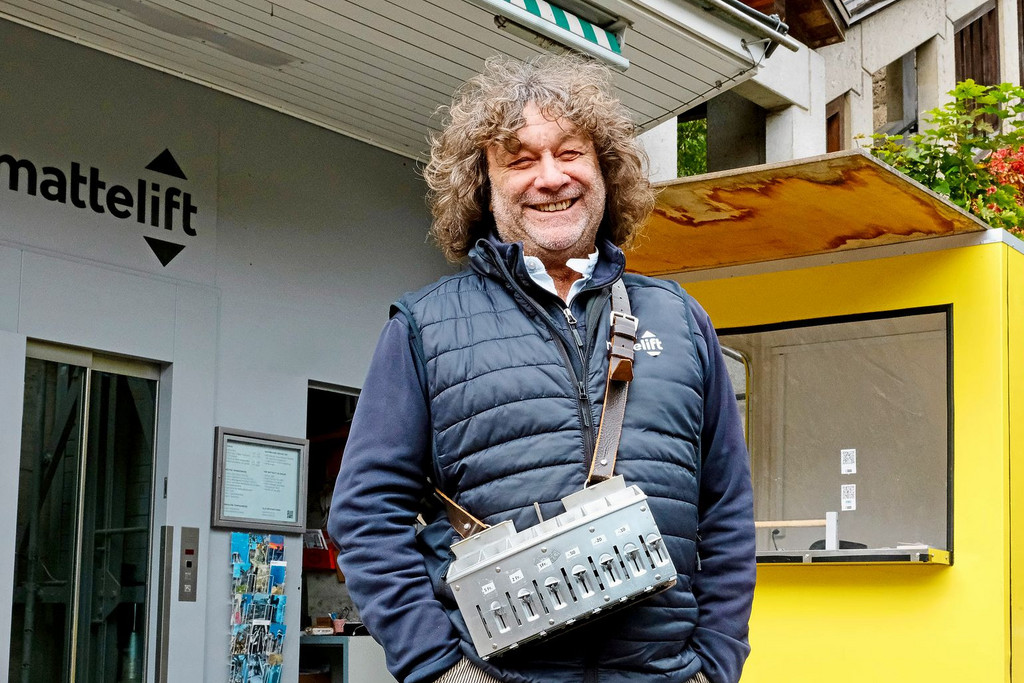
Eduardo Camacho-Hübner moved to Chavannes to study, then decided to stay. He is now a member of the town council. Photo: Stéphane Herzog
A town without a centre
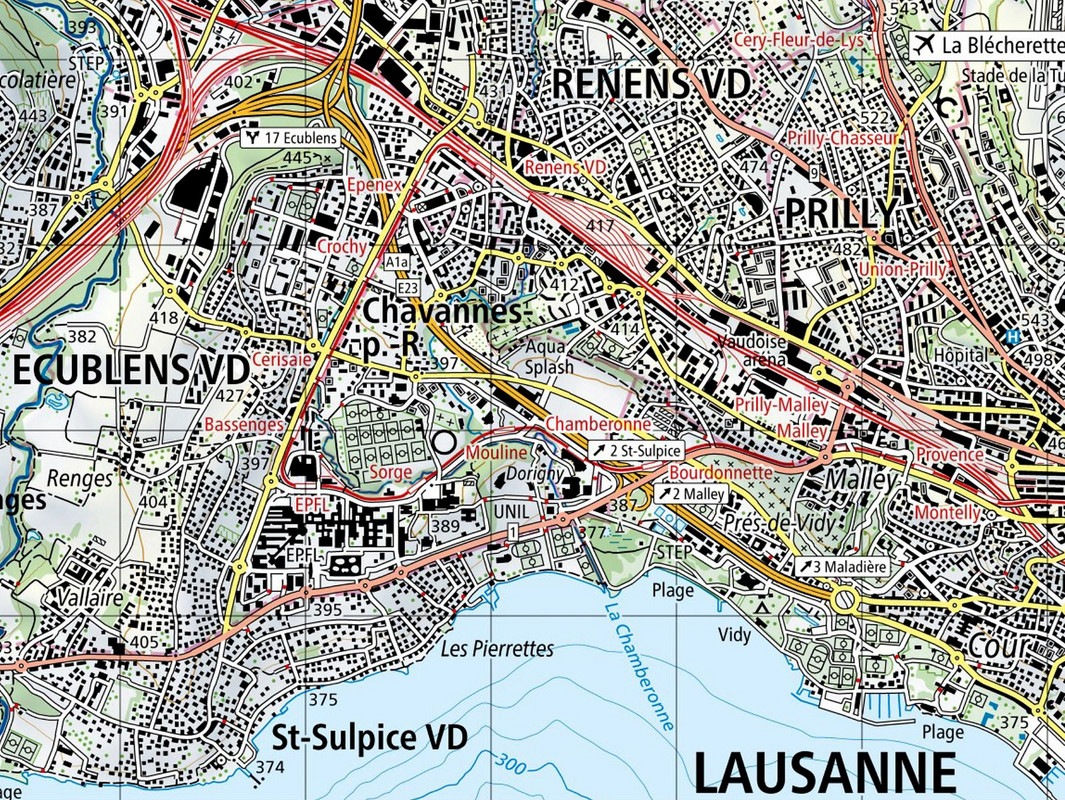
You can walk around Chavannes all day and never find an actual town centre. You will discover an area criss-crossed by major roads, a metro line and a motorway. You will also see forests and a massive sports complex owned by Lausanne City Council. “The hamlet of Chavannes (to the south) was undermined by Renens train station, which was built at some distance from it,” says Biéler. The entire history of this plot of land is summed up by the way it is divided between a rail and industrial zone to the north and marshy plains to the south. “In the past, the yokels from the south used to brawl with the louts from the north,” Christian Vernez, a local teacher, quips in his book about Chavannes, cited by town councillor Eduardo Camacho-Hübner. The latter, a Franco-Bolivian engineer who moved here as a student at EPFL in 1993, has since put down roots. His former apartment looked out over an emblematic location of the municipality’s industrial past: the Perrier plant, opened by the manufacturer in 1925, which used to produce “têtes de nègre”, the chocolate and marshmallow confectionary whose racist name was banned in 1992. Living nearby led him to devote a book to the subject. Contrary to other industrial sites in West Lausanne, which were destroyed to make room for activities or housing, the Perrier factory was transformed into a cultural and crafts hub.
A welcoming place
Buildings are being constructed left, right and centre. One particularly audacious project is a 36-storey tower with a planted roof in the Les Cèdres district, in the south of the municipality, on the other side of the motorway. This district should house 1,700 inhabitants. To the south-east, a medical campus is planned, hosting 4,000 students in 500 residences. On either side two new districts are being planned that will house around 2,500 people. With its excellent transport links, closeness to Lausanne and Lake Geneva and its affordable housing, Chavannes is an appealing location.
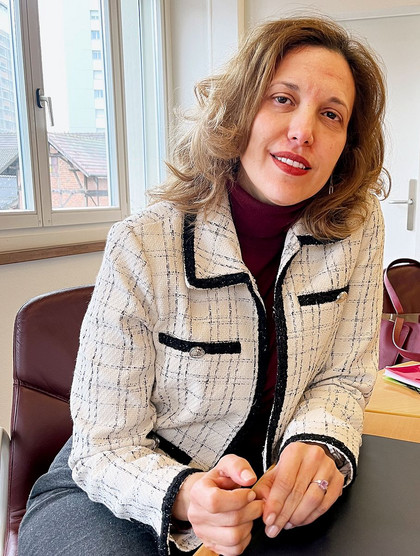
Maintaining quality of life amid a burgeoning population is one of mayor Loubna Laabar’s biggest concerns. Photo: Stéphane Herzog
This growth meets the urban planning objectives of the Federal Act on Spatial Planning, which seeks to tie in urban development with transport routes. “We are under pressure from the canton to achieve a high land use coefficient,” says Laabar, whose planned future in Chavannes is also linked to the EPFL, where her husband studied. This development involves ongoing effort to create infrastructure: water collection tanks, roads, schools and public facilities. Quite the challenge for a small municipality. Chavannes is home to plenty of students, but few wealthy taxpayers and only a handful of companies and has hardly any properties for sale. Intermunicipal equalisation is also heightening the financial imbalance. The mayor accepts the challenge, but the Chavannes administration is keen to preserve the region’s quality of life.
A motorway with a 60 km/h limit
For example, the municipality intends to set limits of 30 km/h on six of its major roads. Four already have this limit. It also recently decided to withdraw from a convention signed with the Federal Roads Office and the canton of Vaud for the creation of a bypass road in Chavannes. It emerged that traffic on this road was lighter than anticipated. The municipality’s proposal was to abandon this bypass, divide the number of the motorway’s lanes by two (since it is a dead end) and reduce speed to 60 km/h. “This junction was the last straw: Chavannes is not a major source of traffic and has the lowest number of cars in the canton of Vaud,” the mayor explains. Not to mention the noise pollution affecting a large number of neighbourhoods.
Chavannes-près-Renens is the Swiss municipality with the lowest average age, at 34.4. It also holds the record for the youngest district in West Lausanne, which has an average age of 38.5, and in the canton of Vaud, where the figure is 40.6.
What is it like to live in the area? Lisa Bonard is the owner of the Café de Chavannes, located in the heart of the former village. She dreams of festive events, new bars, a cinema and a town square. “We build all these big apartment blocks but the population live their lives elsewhere,” she says. In fact, her restaurant acts like a kind of town square. Several populations rub shoulders there: students, teachers and factory workers. The Lausanne native is very active, organising artists’ markets and natural wine-tasting events and serving inventive cuisine in her restaurant, such as a homemade chicken cordon bleu with a light cheese mousse and pickles. This draws in clients from far and wide.
The need for a town square
The municipality is aware of these needs. On the one hand, it does organise activities for its residents. For example, it runs a one-week summer camp – for 100 Swiss francs – attended by around a hundred children each time. On the other hand, it is also looking for urban planning solutions. Chavannes has invested ten million francs in building a bicycle and pedestrian walkway over the motorway, connecting Place de la Gare with the Les Cèdres neighbourhood. “This ties the north and the south parts of the territory together,” Loubna Laabar explains. The municipality also intends to create a large public square at the foot of its future tower. To do this, it will rely on a system of shared ownership that will allow it to create public squares or play areas whose management ultimately falls to the council. “Chavannes is a unique place where life is good,” concludes the socialist politician, who is originally from Morocco and came to the region in 2008.





Comments