No form of public transport in Switzerland offers a shorter route from A to B than the Matte Lift in Berne. But this elevator has a long history. “Lift boy” Peter Maurer is familiar with it.
Higher, farther, faster, more beautiful? In search of somewhat unconventional Swiss records This edition: The shortest public transport route in Switzerland
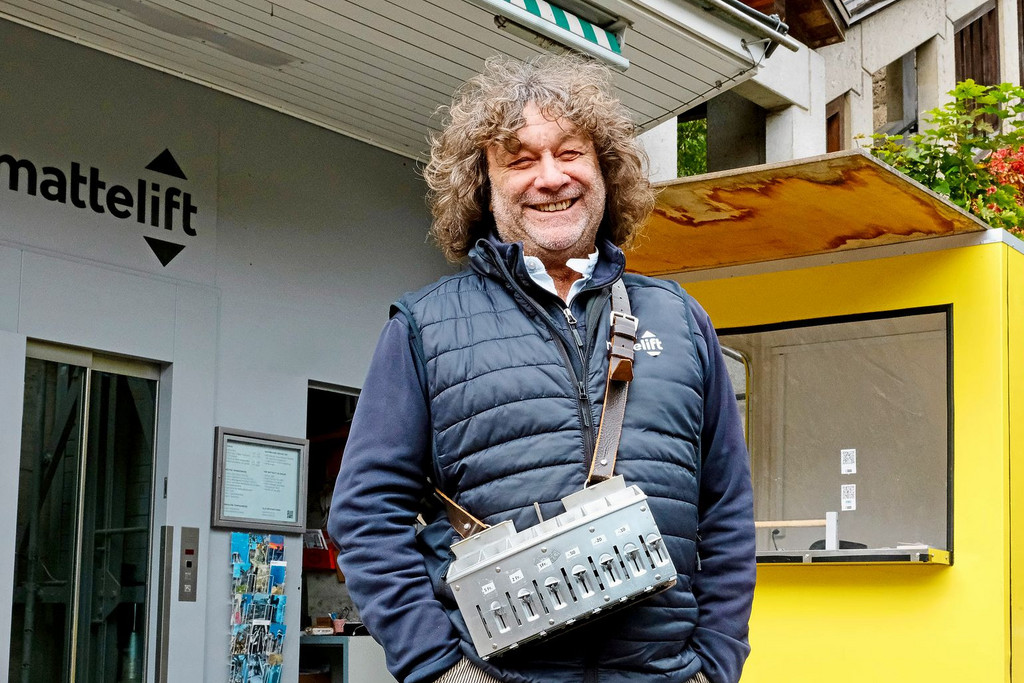
“You can take the stairs, if you want,” says Peter Maurer. Two women have just arrived at the yellow ticket kiosk. Both of them laugh. They know he is joking. Maurer, 69, is a retired radio journalist who works as the Matte Lift conductor. He refers to himself as a “lift boy”.
Observe Maurer around other people and you soon realise that he is a master of dry humour. “You can keep your hat on,” he mutters to one elderly gentleman, who smiles.
The Matte Lift is somewhat peculiar. Inside, you see the same buttons that are common to any lift. But the difference is that you cannot simply walk in and use it – even if you theoretically could. You first need a ticket, because the Matte Lift is a licensed, managed and subsidised mode of public transport.
This elevator also covers the shortest public transport route in Switzerland: 30 metres, or less than the length of a tram.
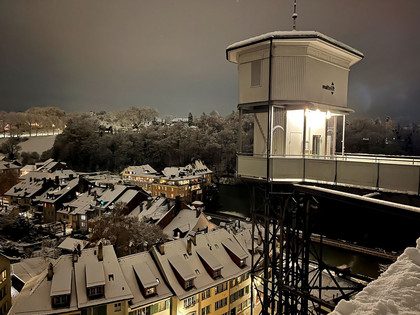
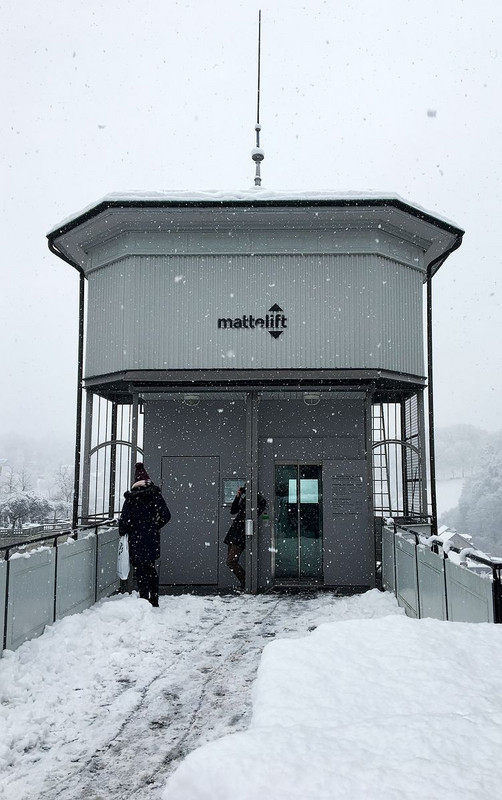
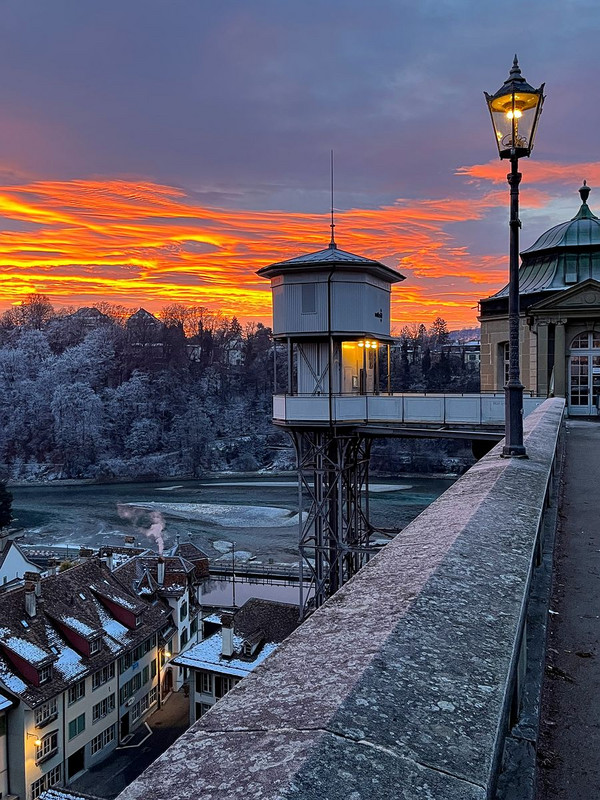
The Matte Lift “mountain station” towers high about Berne’s Matte district. The trip up and down originally took passengers from one end of the social pyramid to the other. Photo: Peter Maurer
A joint-stock company manages the lift. “In legal terms, we are a cable car,” says its chair Marc Hagmann. “But we are indeed a lift, I hasten to add.” When the Matte Lift opened in 1897, it was regarded as a pioneering project. Over 700 people now use it every day, amounting to more than 20,000 passengers a month. A trip costs 1.5 Swiss francs – for dogs and bikes as well as people. Certain public transport travel cards are accepted. Operating the lift barely generates any profit, but the elevator is important for people here, says Hagmann, who believes that what they are doing has a social purpose.
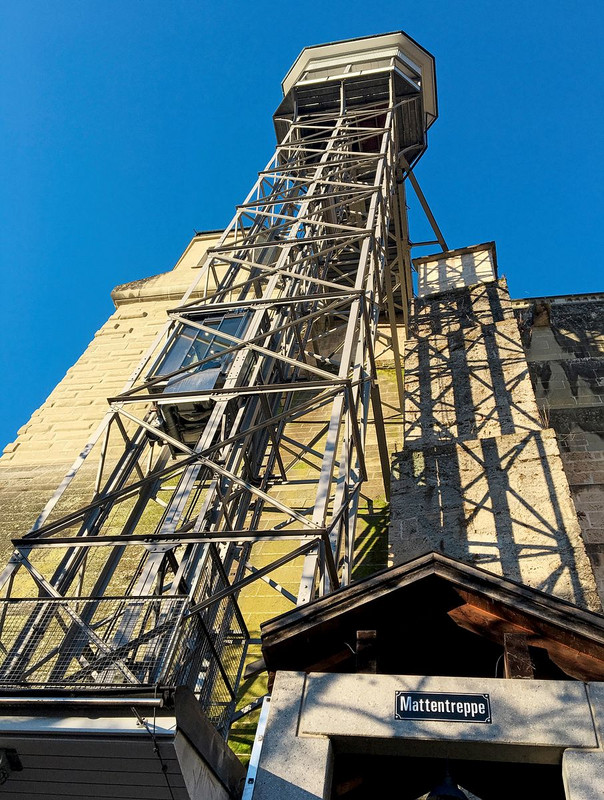
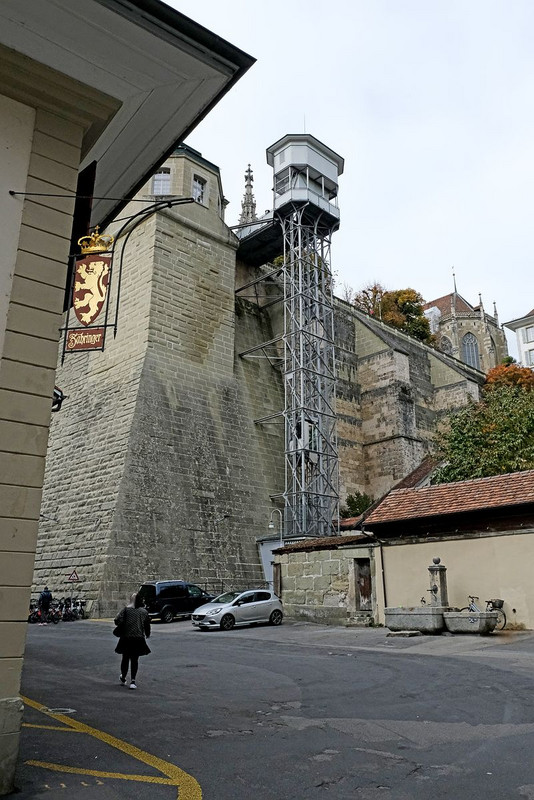
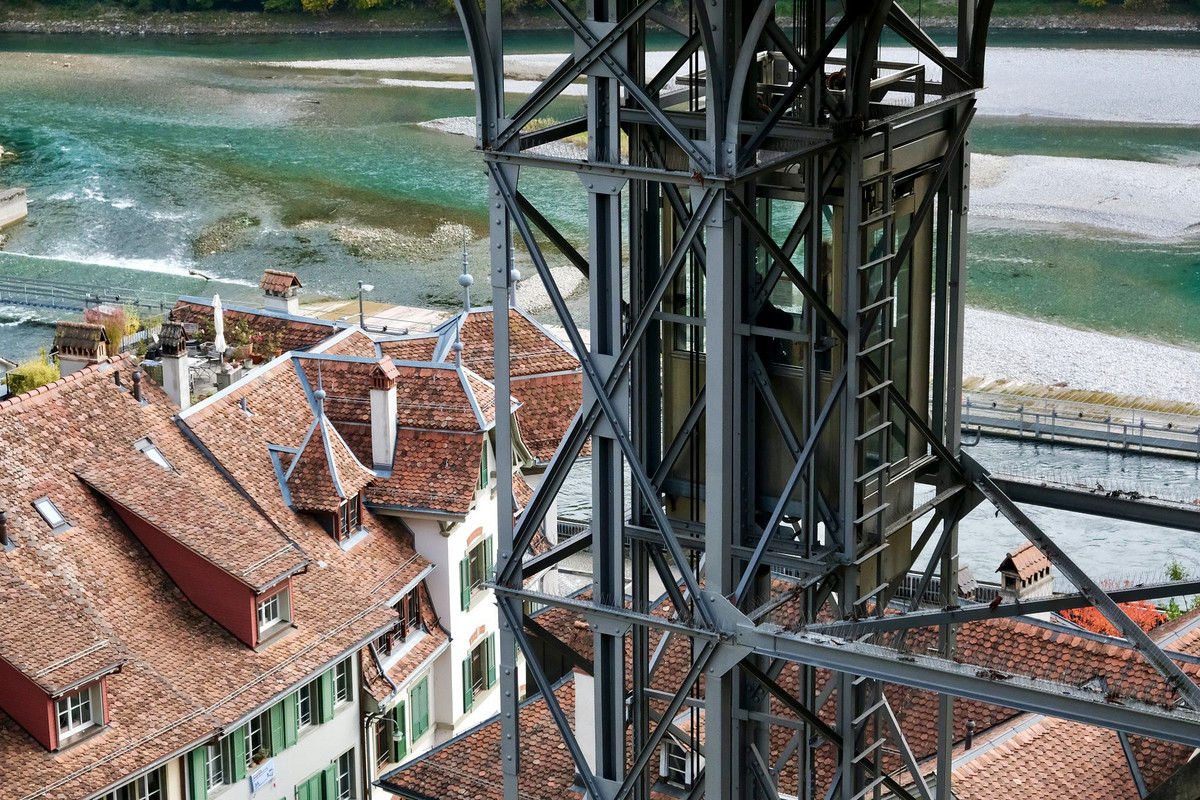
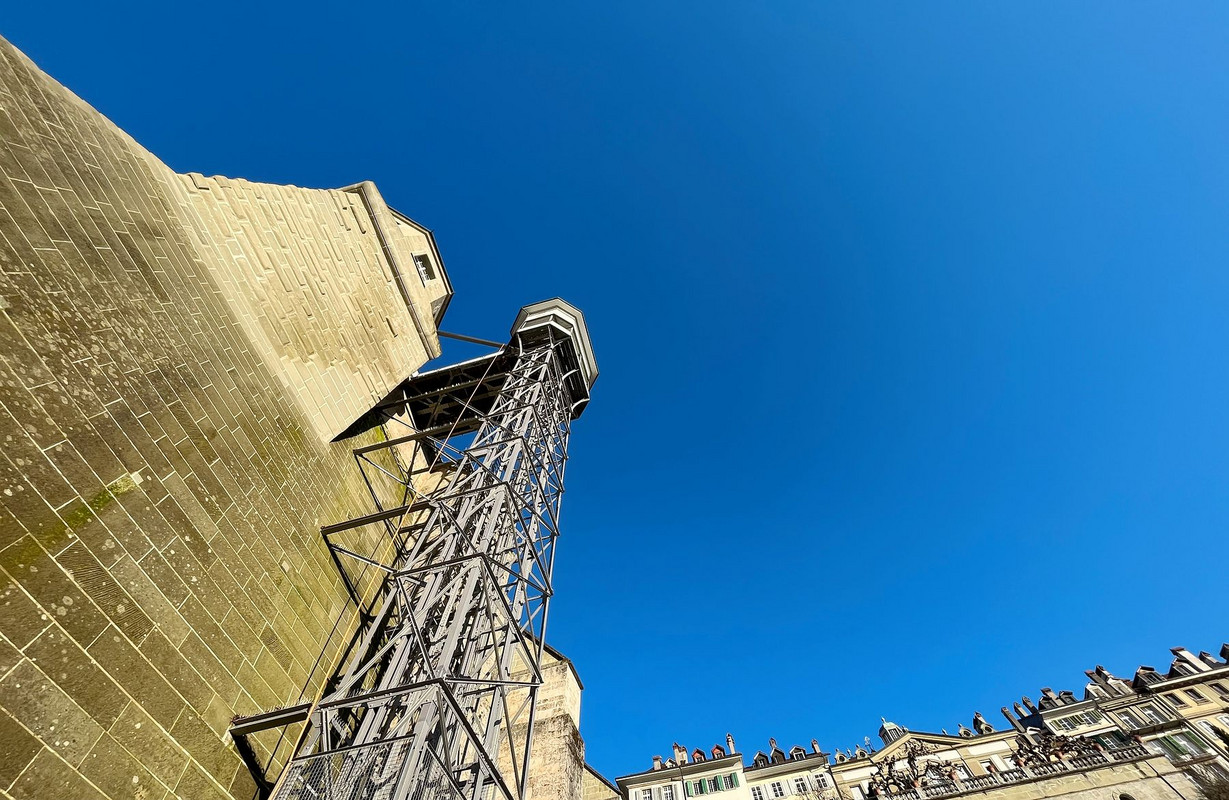
It was Switzerland’s first publicly accessible electric passenger lift – and is comparable to Europe’s highest outdoor lift, the Hammetschwand Lift on Lake Lucerne. The Matte Lift is also situated outdoors. Instead of being contained within a building, it is attached to the outside of a wall. At the top of the wall is the Minster Terrace, the beautiful space situated on the southern side of Berne’s biggest and most important church.
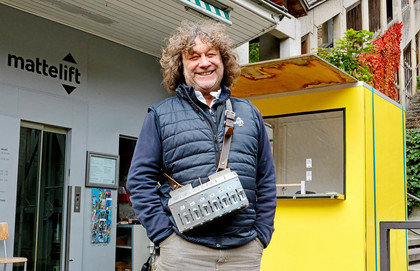
The Matte Lift is “much more than just a lift”, says Peter Maurer – who, for many local people, is more than just a lift conductor. Photo: Marc Lettau
The distance from top to bottom is only 30 metres – or 183 stairs. But the journey up and down originally took passengers from one end of the social pyramid to the other, explains Peter Maurer. Berne’s wealthy families resided up in the old town, while the poor – tanners, boatmen and rafters – lived down below in the Matte district. According to Maurer, some addresses on Badgasse used to be official bathhouses but had turned into brothel-like establishments over time. “The rich opposed construction of the lift because they didn’t want anyone from Matte encroaching on their lofty perch.”
There may be some truth to this. Historian Stefan Weber wrote about the early days of the Matte Lift in his master’s dissertation, describing how much opposition there was to the project. The idea that the burghers of the old town looked down – literally and figuratively – on those who lived in the Matte district is by no means far-fetched, he says, although the wealthy never explicitly voiced such a sentiment, instead expressing concern that the lift would ruin the appearance of the terrace wall and “spoil” the ambience.
Those times are long gone. People were grateful for the Matte Lift once it was built, viewing it as a symbol of progress. Levels of inequality have fallen dramatically since then, says Maurer. Affluent locals also live in houses at the bottom of the elevator these days. “Thanks to gentrification,” he says wryly.
“We are the only people with whom some of them regularly come into contact.”
Peter Maurer, the “lift boy”
Maurer began working as the lift conductor five years ago. “There are seven lift boys and two lift girls. All of us are retired.” He does seven to eight daily shifts every month. He has always enjoyed talking to people. As a journalist, he was used to striking up conversations. “Now people talk to me instead.” The Swiss magazine “Beobachter” interviewed him once.
Maurer has a philosophical air about him. The story of the Matte Lift is very much a metaphor for real life, he says. There will be ups and downs. He has had his fair share of misfortune – his wife died ten years ago. But lucky breaks too. Maurer, a single father, found his current job by pure coincidence. One day, while swimming in the River Aare, he spotted an old colleague on the river bank who said he was now working as a conductor on the lift. “It sparked something,” says Maurer, who decided that very evening to become one himself.
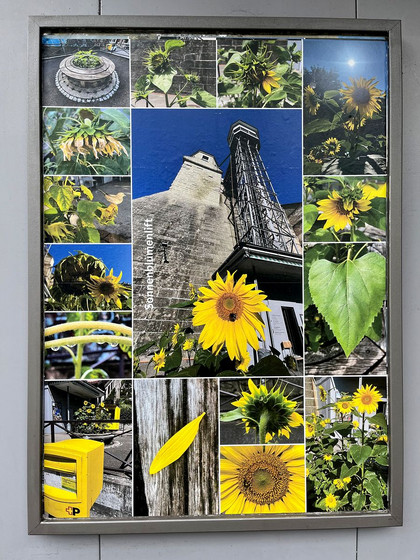
Creative space – pictures by amateur photographers grace the Matte Lift throughout the year. Photo: Peter Maurer
He found his calling. But the lift also found him. The job seems to suit him perfectly. “It is more than just a lift,” he says. “Much more.” And as if he cannot quite believe his eyes, he has started photographing it in his spare time. At all times of the day and the year, from every possible angle. He produces a poster every few months. The latest one, called “Sonnenblumenlift” (Sunflower lift), is situated at the bottom of the lift.
More than a lift. Just ask those who live in the Matte district and make frequent use of it. Some of the elderly residents like chatting to the conductors, says Maurer. “We are always happy to talk. We are the only people with whom some of them regularly come into contact.”
He and his colleagues can tell how people are doing just by engaging with them. Whether they are happy or have a lot on their mind. And if someone is not having their best day, Maurer will happily carry their shopping bag a few metres for them.
The lift is a beacon for people here, he says. Particularly in winter when it is still dark in the morning. When they open at 6 a.m., a light comes on at the top of the lift. “That is when they know that one of us is here.”





Comments
Comments :
Erinnerung an eine vergangene Zeit! Liebe Grüsse in die schöne Schweiz!