Fixed price?
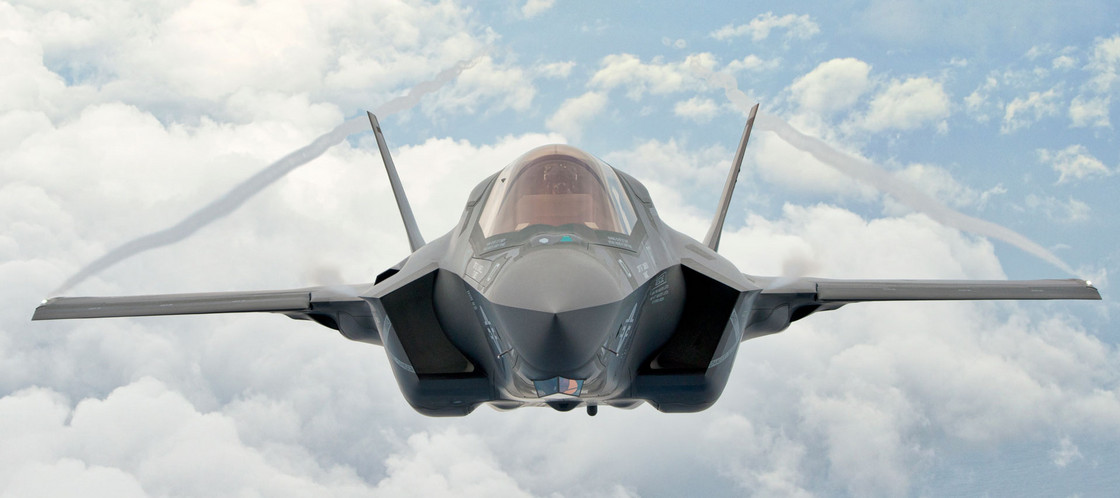
Getting a fixed price had become a mantra during the procurement process, with Pfister’s predecessor Viola Amherd and the DDPS promising for years that the F-35s would cost no more than six billion francs. The fixed price would also take inflation into account.
Not everyone was so sure, including journalists. The Swiss Federal Audit Office (SFAO) issued a clear warning in 2022, suggesting that the fixed price was not a foregone conclusion. The SFAO earned a sharp reprimand from the DDPS for this intervention. Questioning the deal would seriously jeopardise Switzerland’s interests, the DDPS claimed. Those in charge at the SFAO back then have expressed irritation at the DDPS for having so readily ignored the misgivings of legal experts. The DDPS could have removed all legal ambiguity by resuming negotiations, they said. The contract had not been signed at that point.
A short time later, the US embassy in Switzerland stated that the procurement of the F-35s would involve a fixed price. The DDPS sought legal advice on the matter. According to the US law firm Arnold & Porter, there was little risk of the price increasing. Arnold & Porter noted that written correspondence between Switzerland and the US had made explicit reference to fixed prices that take account of inflation. The US government could only change tack in exceptional circumstances – and the risk of this happening was low, it said, given that the jets had been fully developed and Switzerland’s specifications were unchanged. The DDPS had good reason to feel confident, based on this assessment.
Borrow more money – or order fewer jets?
But the report also included a warning: under US law, additional costs can be passed on to Switzerland. It was unclear whether the Swiss government could still pay a fixed price if such an eventuality arose. This is because the contract precluded any dispute being settled by a court of arbitration. Disagreements would probably have to be resolved through diplomacy. But unfortunately, diplomacy has now run its course.
The Federal Council intends to go ahead with the purchase, regardless of additional costs. It will evaluate various options before the end of November. One is to buy fewer jets in order to stick to the six-billion cap approved at the ballot box. Another is to ask parliament for an additional loan, which may or may not have to go to a public vote, said Pfister.
It looks like the final chapter of this story is still far from completion.
Related topic: Switzerland in the wake of Trump’s verdict: more than a tariff shock







Comments
Comments :
In view of the 39% tariff imposed by Trump and the unwilligness to confirm the initial fixed-price deal on the F35 fighter jets, could some leverage be obtained by considering the purchase of European aircraft instead? 6 billion Swiss francs seems a powerful bargaining tool and suggests to me that any trade imbalance could well be in favour of the USA, especially taking into account the continuing cost of maintaining these complex aircraft.
Pourquoi ne pas acheter des Rafales? Surtout si lon veut se rapprocher de l 'Europe.
Je ne comprends pas cet acharnement à vouloir acheter des avions aux USA qui passent leur temps à nous imposer des droits de douane faramineux. Il y a de très bons avions en Europe et même à notre frontière, alors pourquoi acheter des avions qui ont la réputation de n’être pas fini avec des verrous du constructeur afin de ne pas pouvoir les utiliser à 100%?