This Swiss Abroad, who was modest and remains little known to the general public, brought hope and humanity in times of war.
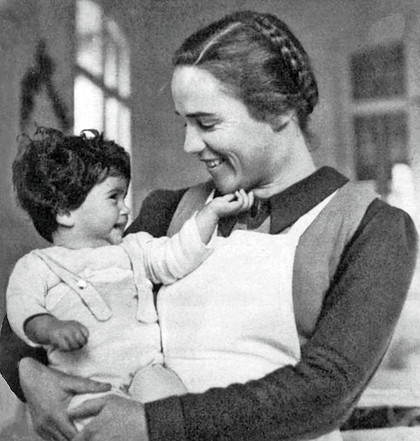
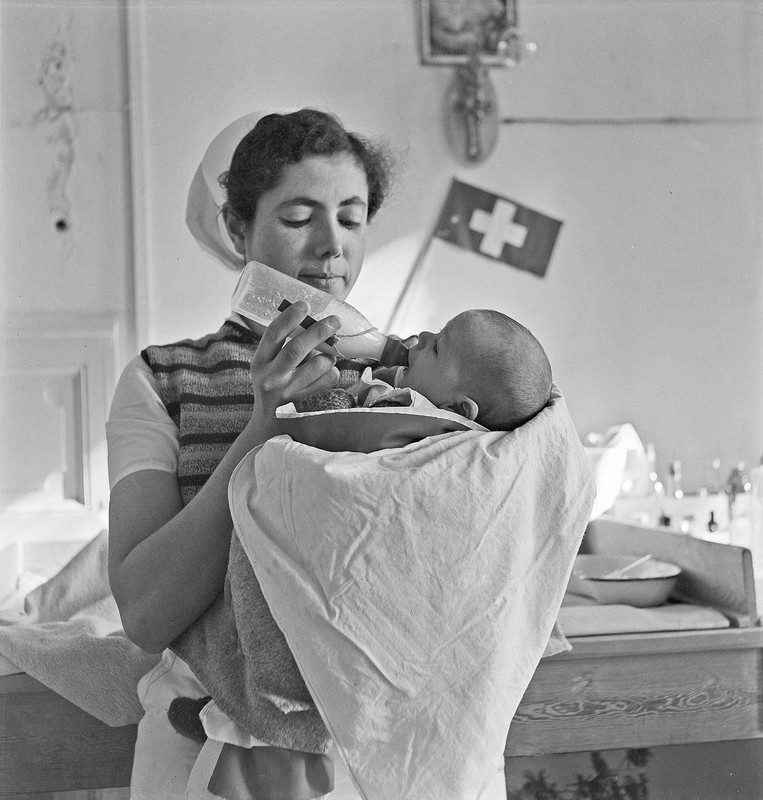
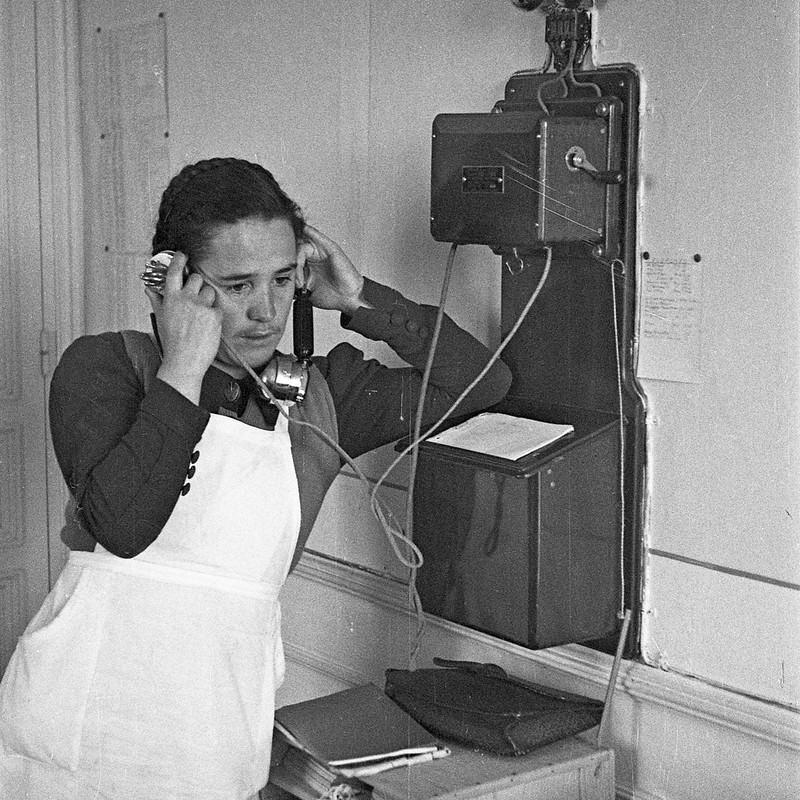
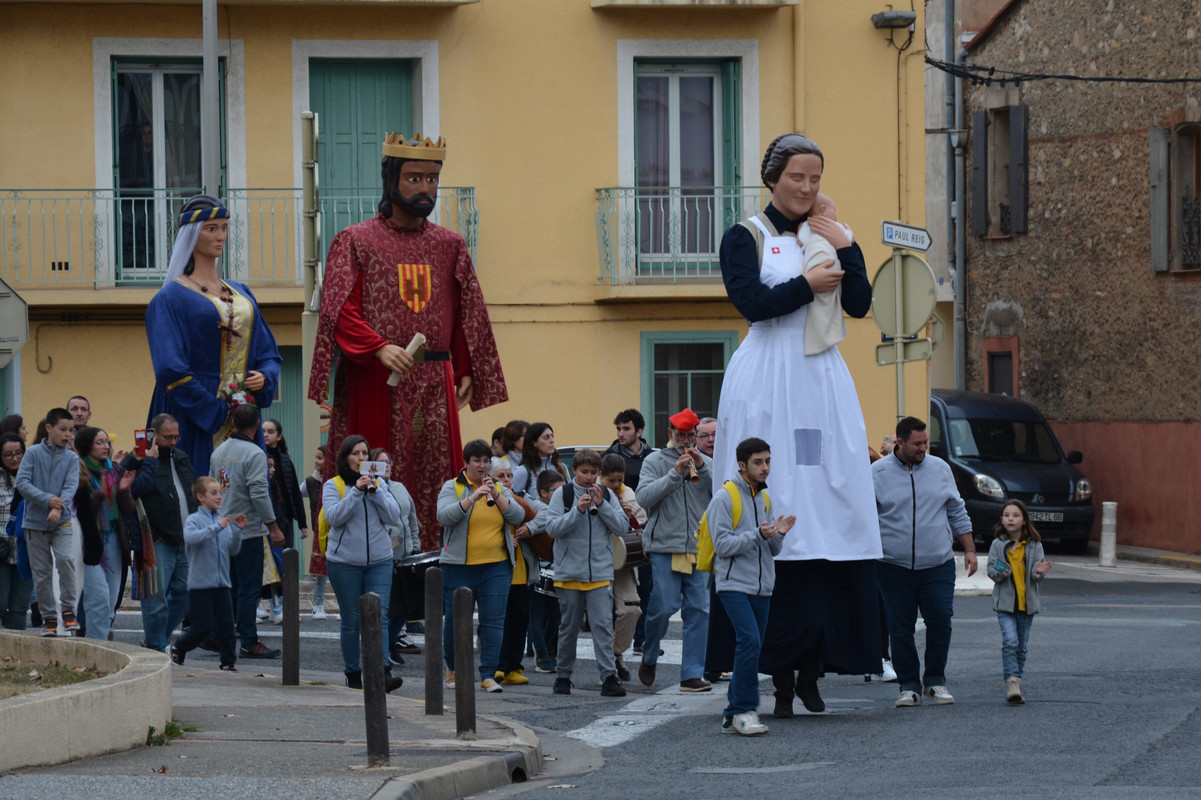
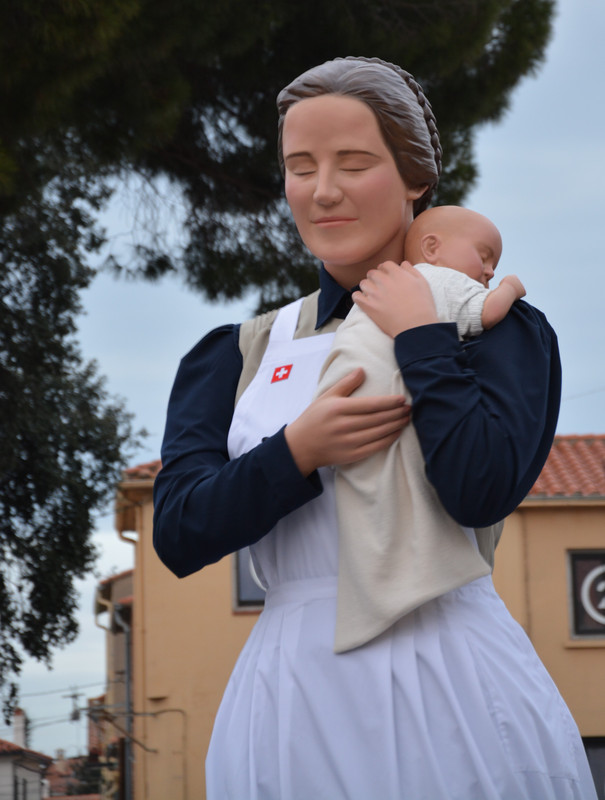
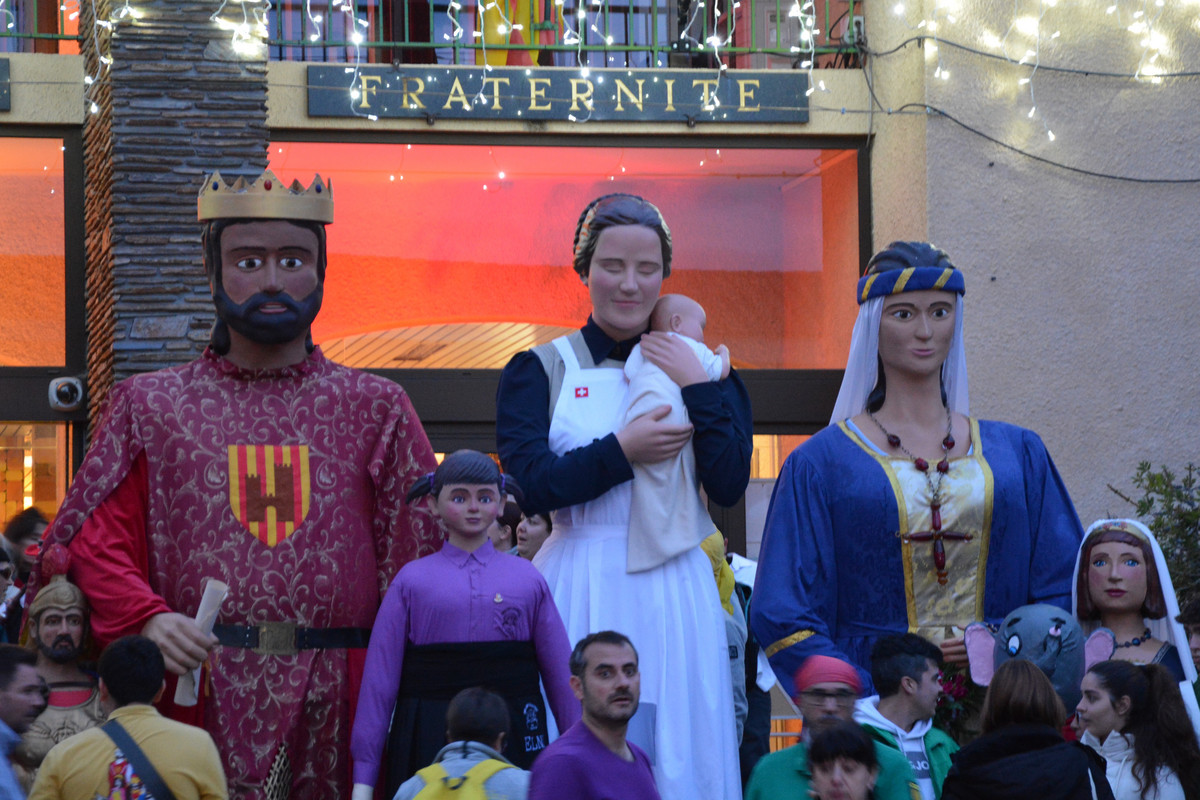
In the maternity hospital in Elne (France), the lives of women and children of many nationalities and religions were saved as they fled from Franco’s dictatorship or then had to flee the Gestapo. Spanish, Jewish and Romany women were hidden here, in spite of orders from the Swiss Red Cross to follow Vichy’s racial laws. Around 200 Jewish babies are believed to have been saved. Elisabeth Eidenbenz took in and cared for those seen as ‘undesirable’. Thanks to her determination and sometimes her disobedience, 600 babies escaped certain death via a Swiss maternity ward.
Born in Wila (Zurich) in 1913 to pastor Johann Albrecht Eidenbenz and Marie Eidenbenz, née Hess, she was the third of six children. Elisabeth trained as a teacher. She attended Zurich Youth College from 1929 to 1933 and the School of Domestic Economy in Neukirch an der Thur in 1934. She began her career as a teacher in working-class neighbourhoods in Winterthur and Zurich.
Elisabeth was first recruited as an aid worker by the Service Civil International in 1938, during the Spanish Civil War, and initially looked after the employees of the Swiss Aid Committee for the Children of Spain, otherwise known as Ayuda Suiza, in Burjassot in the province of Valencia.
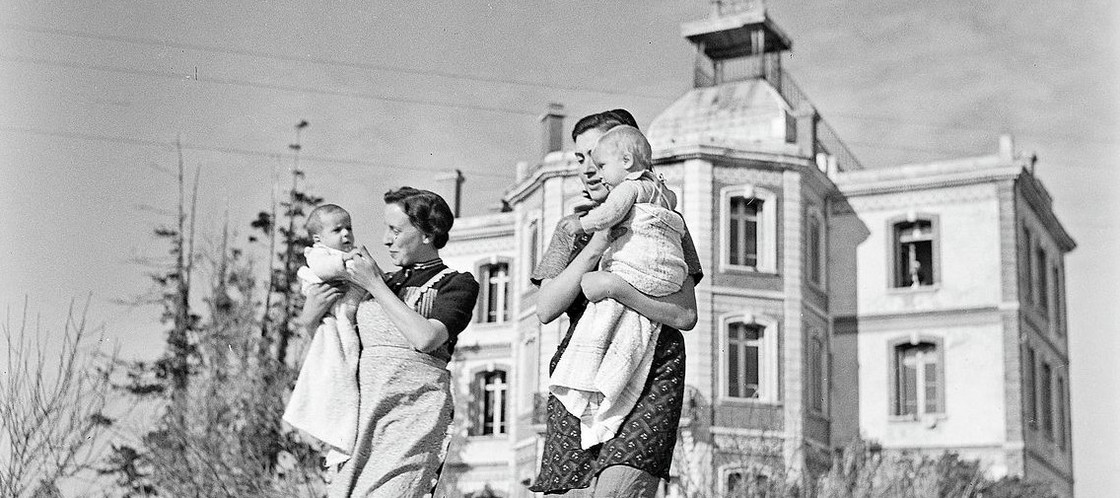
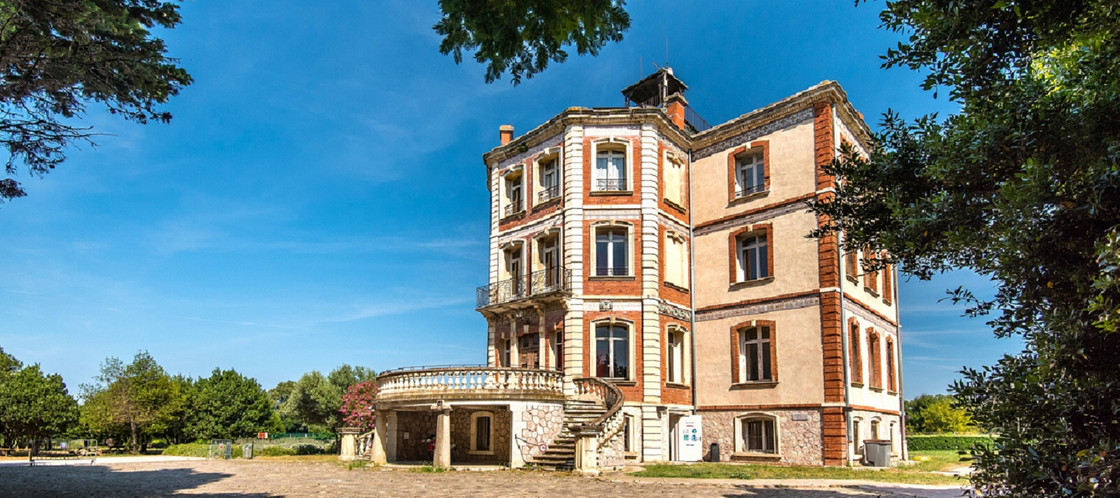
In January 1939, when Catalonia was conquered by the Francoists, she was dispatched to the South of France to set up a maternity and rest home for refugee women and their children in Brouilla, near the Spanish border. When the home had to be evacuated in late September 1939, Eidenbenz spotted the Château d’En Bardou, in the neighbouring town of Elne. She raised the funds required, and the property was purchased by the Swiss Aid Committee for the Children of Spain. A little renovation work later, and it officially opened its doors as a maternity hospital.
The Mothers of Elne
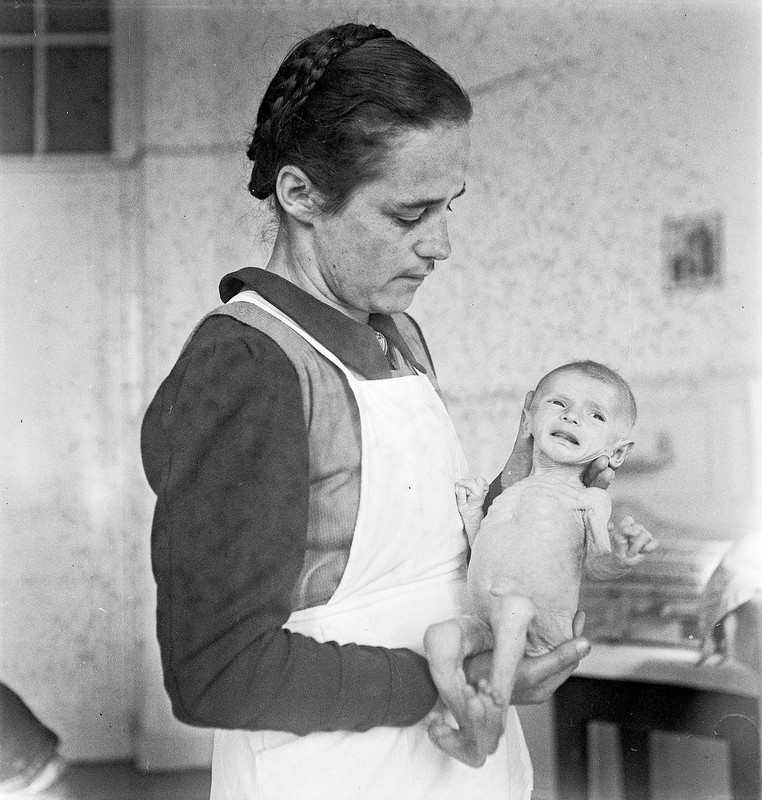
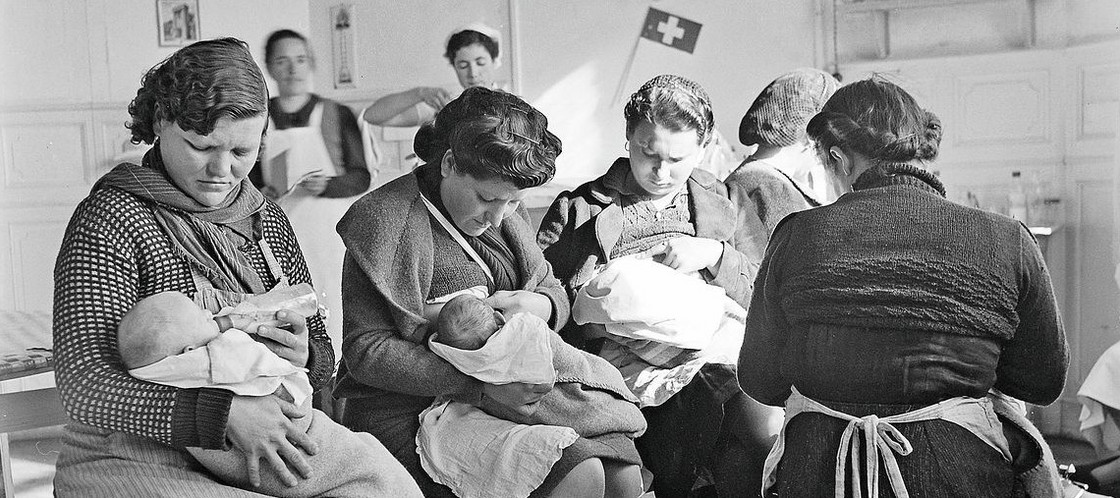
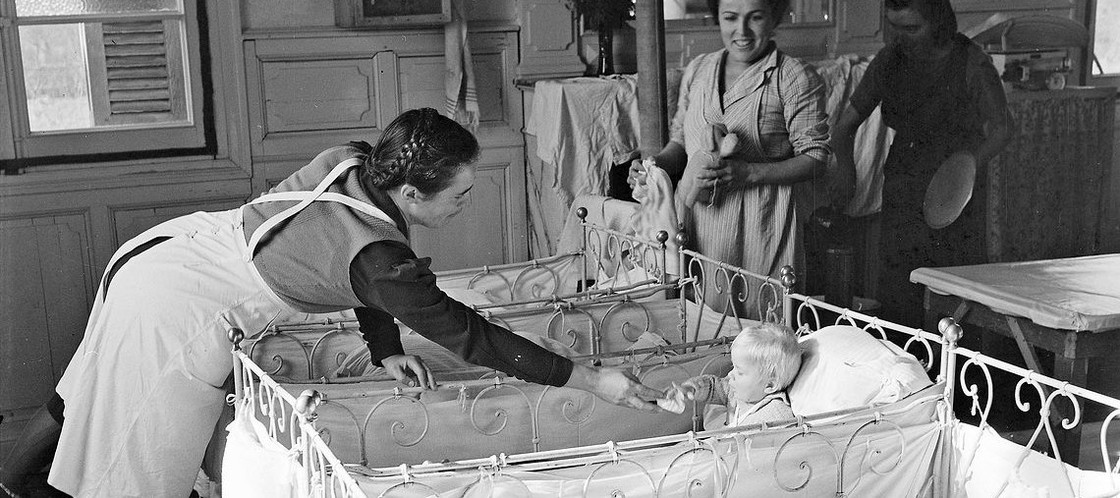
The Mothers of Elne, which was in operation between November/December 1939 and Easter 1944, provided rest and respite for its residents. They came mostly from the camps surrounding Rivesaltes and Argèles and were in a lamentable state when they arrived. The cold, sand, lice, scabies, dysentery and more took the lives of many babies and children in the camps. Mortality rates were atrocious and making it to the maternity hospital gave its residents a ray of hope. A large number of women were unable to bring their older children with them and were forced to leave them in the camps. These moments were genuinely heartbreaking and having to be split up like this was unimaginably traumatic for the families.
Yet, being able to rest out of the wind and the cold, as well as having sufficient food, was an unimaginable blessing for the women and children who ended up in the maternity hospital. The place of refuge offered these uprooted and excluded women a safe haven and support to allow them to concentrate on the experience of motherhood. Some pregnancies were the result of rape, and the resulting psychological damage made the work of helping the women even harder.
Many women were extremely weak by the time they arrived at the maternity hospital and some had young, sick children with them, making it very difficult for them to breastfeed. Gestures of solidarity abounded, and many babies ended up being saved by mothers other than their own breastfeeding them.
Once the mothers had recovered, they had to return to the camps. Elisabeth Eidenbenz nonetheless strove to rescue as many women and children as possible from this fate, by finding them jobs either in the Château or in another branch of Swiss Aid.
At Easter 1944, the Gestapo ordered the maternity hospital to evacuate within three days, and the establishment was permanently closed.
Awards
Elisabeth Eidenbenz received numerous awards, including recognition as Righteous Among the Nations by the State of Israel in 2002, the Gold Cross of the Orden Civil de la Solidaridad Social from the Spanish government in 2006, the Creu de Sant Jordi from the Catalan government in 2006 and the Légion d’Honneur from the French government in 2007.
Elisabeth dedicated all her awards to Lucie, a Jewish woman who had suffered a stillbirth but who stayed at the maternity hospital to breastfeed children whose mothers were too weak to do so themselves. Lucie was arrested by the Gestapo in 1943.
Until now Switzerland has scarcely given any recognition to Eidenbenz. Despite the fact that she looked after and took in so many women in need, without regard for their origin or their faith, her story is still largely unknown and she has as yet received no awards from her own country.
During the final years of her life, Elisabeth lived with a female friend in Austria. She returned to Zurich to live in 2008 and died there in 2011.
The current status of the hospital site
The historic site, which has been converted into a museum and was listed as a historic monument in 2013, is unfortunately in need of financial support. According to Nicolas Garcia, mayor of Elne, it needs renovations to the tune of four million euros.
Assistance from Switzerland appears essential if this place of remembrance is to be preserved and the site is to be restored, says Garcia.
Thank you for your comment. Your Comment Added Successfully.
Thank you for your comment. Comments are approved within one to three days.
Oops! Something went wrong, please try again later.
Comments :
Thank you for your comment. Your Comment Added Successfully.
Maurice de Coulon, Deutschland 30.10.2025 At 07:34
Elisabeth Eidenbenz, von der ich fast beschämt zugeben muss, nichts gewusst zu haben, obwohl sie eine Cousine zweiten Grades meiner Mutter (geb. Eidenbenz) gewesen ist. Sie war also meine etwas entfernte Tante. Ich bin sehr dankbar, durch den Artikel, etwas von ihr erfahren zu haben. Denn in dieser sehr bürgerlichen Familiensippe in der allenthalben streng protestantische „politische correctness“ herrschte, freut es mich sehr, als nicht ganz so politisch Korrekter in meiner Familie, eine solche Verwandte im Geiste gehabt zu haben. Und es fällt mir nicht schwer davon auszugehen, dass es in der Generation meiner Mutter, auch in ihrer anderen Abstammungslinie, ein Wissen um diese Cousine und ihr Werdegang gegeben haben muss, welches aber durch geflissentliche Verschwiegenheit in Vergessenheit geriet und daher nicht weitergegeben wurde, obwohl eine solche Person ein leuchtender Stern in der Familiengeschichte ist.
Show Translation
Thank you for your comment. Your Comment Added Successfully.
Jean-Claude Chabloz, España, Isla Plana, Murcia 09.10.2025 At 13:15
Comme souvent, voir toujours la suisse se retrouve du mauvais côté de l’histoire avec l’excuse de la neutralité. Hier la deuxième guerre mondiale les fonds en déshérence et aujourd’hui la Palestine!




Comments
Comments :
Elisabeth Eidenbenz, von der ich fast beschämt zugeben muss, nichts gewusst zu haben, obwohl sie eine Cousine zweiten Grades meiner Mutter (geb. Eidenbenz) gewesen ist. Sie war also meine etwas entfernte Tante. Ich bin sehr dankbar, durch den Artikel, etwas von ihr erfahren zu haben. Denn in dieser sehr bürgerlichen Familiensippe in der allenthalben streng protestantische „politische correctness“ herrschte, freut es mich sehr, als nicht ganz so politisch Korrekter in meiner Familie, eine solche Verwandte im Geiste gehabt zu haben. Und es fällt mir nicht schwer davon auszugehen, dass es in der Generation meiner Mutter, auch in ihrer anderen Abstammungslinie, ein Wissen um diese Cousine und ihr Werdegang gegeben haben muss, welches aber durch geflissentliche Verschwiegenheit in Vergessenheit geriet und daher nicht weitergegeben wurde, obwohl eine solche Person ein leuchtender Stern in der Familiengeschichte ist.
Comme souvent, voir toujours la suisse se retrouve du mauvais côté de l’histoire avec l’excuse de la neutralité. Hier la deuxième guerre mondiale les fonds en déshérence et aujourd’hui la Palestine!