So what about police training? Switzerland’s six regional police training colleges function according to a model devised by the Swiss Police Institute (SPI). Since 2020, the course has lasted two years: one year at school and one year in the field, culminating in a federal diploma. The theory features chapters devoted to ethics and to minorities. “Ethnic origin must never be the sole reason for stopping someone,” the course materials say. Police examinations are standardised, but recruitment is at a cantonal level.
In Neuchâtel, for example, candidates must first sit basic tests: French, sport, general knowledge and a psychometric test. Around 25 applicants from a total of 300 are accepted per year. Candidates are placed in situations in which they have to exercise their authority. For example, an applicant might be asked to play a ticket inspector confronted with a passenger who is putting his feet on the seats. “If, after asking the person twice to remove their feet, the candidate becomes violent, they are clearly not right for the job,” says Raphaël Jallard, director of the Fribourg, Neuchâtel and Jura Interregional Police Training College (CIFPOL).
We have always said that Savatan is not suitable for training police officers
Mike Berker, Vice-President of the Geneva Judicial Police Union
“You have to build a connection with the person instead of getting into a conflict,” the former commissioner explains. In his view, the police officer “must not be the problem”. In both Fribourg and Neuchâtel, the recruitment process includes in-depth interviews with a psychologist, says Jallard. The primary aim of CIFPOL is “to train civic-minded officers”.
Training seen as too military
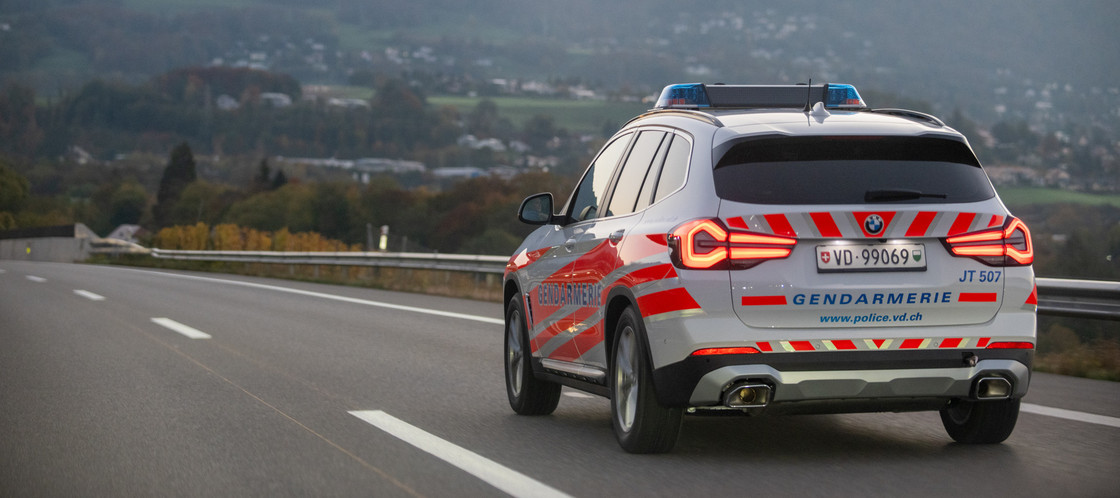
In the canton of Vaud, police go through Savatan Police Academy (VD), where aspiring candidates are trained with their counterparts from Geneva; Valais left the institution this summer. The centre, nicknamed “le Rocher” (the Rock), opened in a former military barracks in 2004 and has faced frequent criticism. The same is true of its director, Colonel Alain Bergonzoli, who was appointed in 2008.
“We’ve always said it: the location is not suitable for training police officers. The training provided is military, patronising and focused on parades,” complains Inspector Mike Berker, vice-chairman of the trade union for police officers Syndicat de la police judiciaire à Genève. He feels that the barrack’s style and remote location make it hard to recruit the right people for the cantonal police. “The candidates are young, and they are trained in an environment where every human encounter is potentially a threat to such an extent that, when they arrive in Geneva, they have to review their whole approach to training,” says Berker.
Frédéric Maillard believes that spending a year “at the Rock” suits certain people very well but recalls that Geneva police officers disliked travelling out there, since the criminal police previously had its own separate training programme for future inspectors. “Before, the Geneva police used to admit university graduates and people from the service sector, where physical fitness was not necessarily the main consideration,” says Maillard. The idea of raising the flag at dawn every morning at the Rock, in the middle of nowhere, is believed to have put off these candidates.
The police officer should in no way be the problem
Raphaël Jallard, director CIFPOL
In 2016, Geneva sociologist Dominique Felder interviewed police commanders from Vaud and Valais. “The martial approach favours intensity over content, obedience over critical thinking and conformity over independence,” her report, cited by RTS, says. The document triggered a wave of reforms.
Savatan to close
Some people trained at Savatan have reported that the instructors there made sexist and racist remarks. Did the atmosphere at Savatan have a negative impact on some of the police officers involved in the Vaud police incidents? “I’ve seen it myself: some candidates have been programmed by their training to see the other person as a threat, even when they are asking for help,” says Frédéric Maillard. According to a person who has visited Savatan as an external agent, the centre tolerated certain words or attitudes which, if they were left unchecked by the police forces, could lead to escalations. The cantonal police forces, for their part, do not seem overly concerned by the methods used at the Rock. “The causal link between the training at Savatan and the WhatsApp groups affair within the Lausanne police is far from being established,” stated Cantonal Councillor Vassilis Venizelos before the Vaud Cantonal Parliament.
In the end, the cantons of Vaud and Geneva will be shifting the training of their police officers back to within their cantons by 2029. Savatan’s bad reputation is apparently not the reason behind this shift. It is more driven by a desire to centralise personnel and by financial considerations, given that the lease on Savatan – which is being rented out from the Swiss Armed Forces – is expiring in any event. The main concern is believed to be ensuring that police officers in French-speaking Switzerland all follow the same training process, since the methods and the culture differ from one canton to another.





Comments