The Federal Council defends the French language
19.12.2025 – Denise Lachat
Education is a tricky area in a country as culturally diverse as Switzerland – not least when it comes to language teaching. The biggest German-speaking canton, Zurich, plans to remove French from its primary school curriculum. This is a step too far for the federal government.
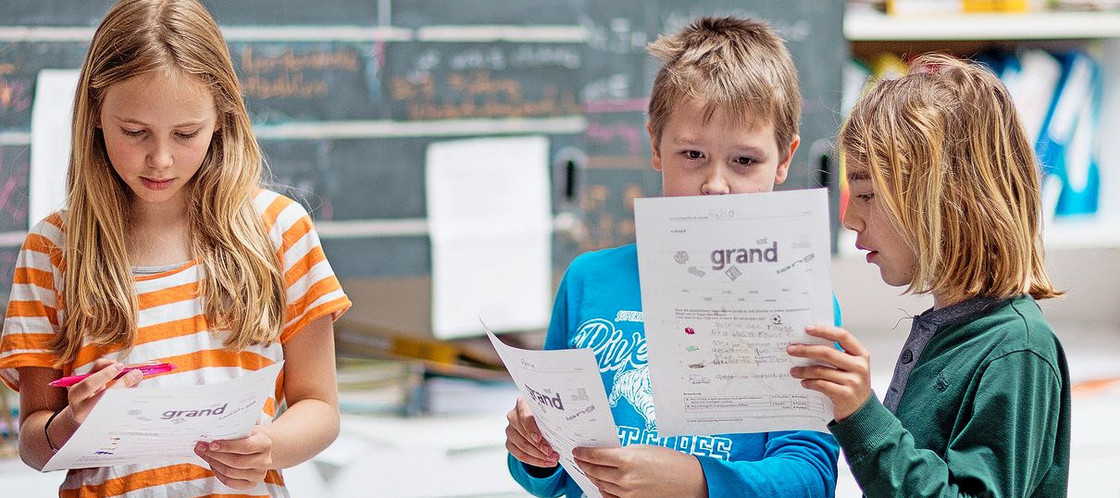
The Federal Council’s reaction was direct and unequivocal. A few weeks before, Zurich’s cantonal parliament had voted to remove French from its primary school curriculum and postpone it until upper school. This decision was a “worrying” development, wrote the federal government in a statement on 19 September 2025. Zurich’s argument was that early French lessons had not been a success, with pupils only picking up a mediocre command of the language. Worse still, the curriculum had become overloaded. Children were no longer achieving the necessary standard in their own school language.
Zurich’s decision has disrupted an uneasy status quo, whereby children start learning one foreign language in year 3 and another in year 5 of primary school. One of these is an official Swiss language, the other English. However, cantons can decide which language comes first. For years, French has had its work cut out in many German-speaking cantons. The cantons that teach English first are Zurich, Lucerne, Uri, Schwyz, Obwalden, Nidwalden, Glarus, Schaffhausen, Appenzell Ausserrhoden, Appenzell Innerrhoden, St Gallen, Aargau, and Thurgau. A good few are considering postponing French until upper school, like Zurich.
The news from Zurich sent shock waves across French-speaking Switzerland, where all the cantons give priority to German as a matter of course and, if anything, are increasing, not cutting, the volume of German teaching. An exasperated Christophe Darbellay, education minister of the canton of Valais and chair of the Swiss Conference of Cantonal Ministers of Education, wondered out loud how the Swiss can live together if they are unable to speak a common language.
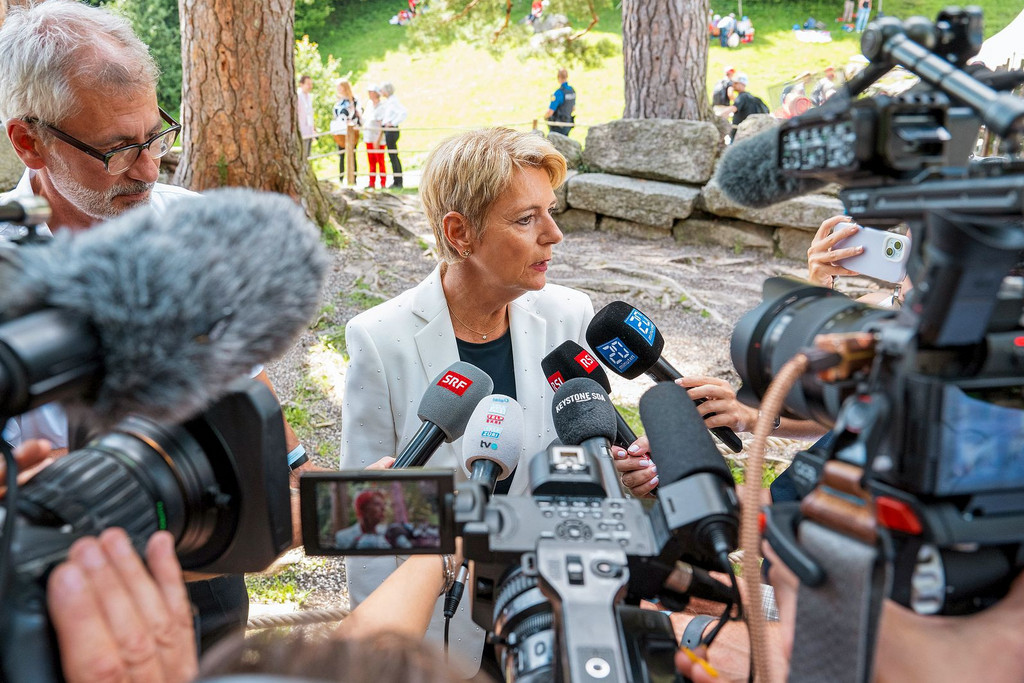
Elisabeth Baume-Schneider, the francophone federal councillor responsible for education, believes, like Darbellay, that national unity is at stake. The many French speakers who make an effort with German would be disappointed to learn that German speakers evidently care less about Switzerland’s other official languages, she said.
It is not as if French-speaking primary school children find German particularly appealing – all foreign languages pale in comparison to the lure of English, the all-pervasive lingua franca. Yet Article 70 of the federal constitution states that the Confederation and the cantons “shall encourage understanding and exchange between the linguistic communities”. Swiss from different language regions must be able to understand each other and want to live together irrespective of linguistic and cultural barriers – because Switzerland is a nation united by choice.
To safeguard multilingualism in compulsory education, the Federal Council wishes to expand the scope of the Languages Act. It sees two options: either enshrine the current consensus – another Swiss language at primary level, plus English – in law, or introduce a minimum requirement that gives the cantons more leeway. The other Swiss language would have to be taught from primary school until the end of lower-secondary level.
Why this flexibility? Since the founding of the Confederation in 1848, education has essentially been a matter for the individual cantons. To iron out differences in curricula, the federal government got the 26 cantons to agree on some key principles around 20 years ago. The idea behind this cross-cantonal accord, which voters also emphatically approved at the ballot box, was that school leavers across the country should have the same basic skills in reading, writing and arithmetic at the end of compulsory education, even if they have moved from one canton to another.
Constitutionally obliged to intervene whenever the spirit of this agreement is breached, the Federal Council can now fire a warning shot to any cantons that may wish to break rank.










Comments