Cäsar von Arx’s play “Der heilige Held” (The holy hero) debuted at Schauspielhaus Zurich theatre on 5 March 1936. Leopold Lindtberg was the director. The production portrayed an episode from the Entlebuch rebellion against the city of Lucerne in 1478. Peter Amstalden, who led the revolt, is to be executed unless his father-in-law Niklaus von Flüe pledges support for Lucerne. Von Flüe, a hermit, rejects the ultimatum, and Amstalden is beheaded – at the very moment that von Flüe is conveying a legendary message that will help to calm the troubles. The message of the play? “Serving others is the key to finding God, and searching for God is the key to serving others.” Despite favourable reviews as well as praise from none other than Thomas Mann, who called the play “quintessentially Swiss”, only three poorly attended performances followed. With Switzerland’s playwrights distracted more by other interests than giving their competitors abroad a run for their money, could the theatre-going public have made the conscious decision to stay away?
Down the rabbit hole of Swiss exceptionalism
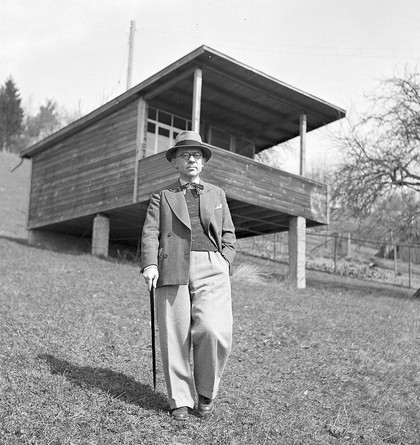
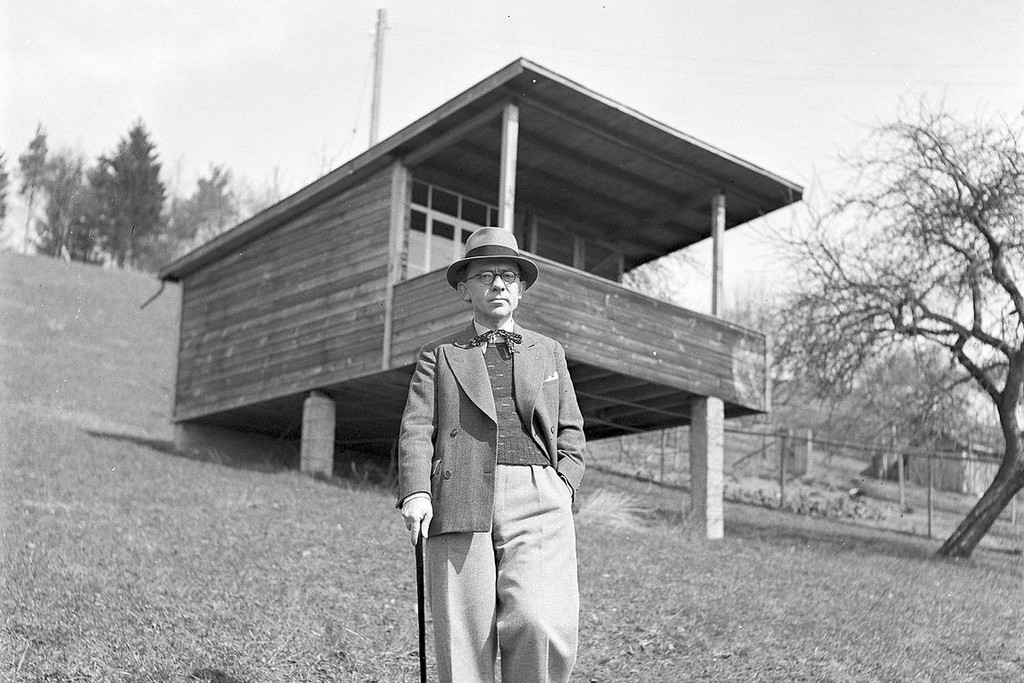
Cäsar von Arx, born in Basel on 23 May 1895, was nevertheless the most famous Swiss dramatist of his era by some distance. But he, too, fell down the rabbit hole of Swiss exceptionalism – the spiritual defence of the nation referred to as “geistige Landesverteidigung”. Taking prompts from Schiller, Shakespeare and Arnold Ott, von Arx never hit the same chords as those of his avant-garde peers. History was his domain. Swiss history in particular. After “General Suter” flopped in Berlin in 1932, he became more entrenched then ever. “Someone else should write for those insolent city-dwelling Jews,” he raged in a letter to his father, before putting pen to paper on three further chapters in Swiss history.
“The ‘normal person’ in this ‘era of electricity’ would laugh at anyone who says that a lit torch is worth preserving as much as the electric light bulb. But what if the power in the light bulb runs out one day? Won’t the torchbearer again become our Prometheus? Why, then, does anyone have the right to deride me or go so far as to call me a dinosaur, just because I cultivate self-knowledge and the uniqueness of personality in this era of technology and individualism? Humans tend to hoist what they deem important onto the pedestal of blessed dogma; it is no longer the torchbearer that they appreciate but the electrician.”
(Excerpt from “Der Fakelträger” [The torchbearer]: Cäsar von Arx: Werke IV, edited by Reto Caluori, Schwabe Verlag, Basel 2008)








Comments