
Menu
stage img
  • Economy

The secret Alpine gold depots

02.10.2026 – Christof Forster

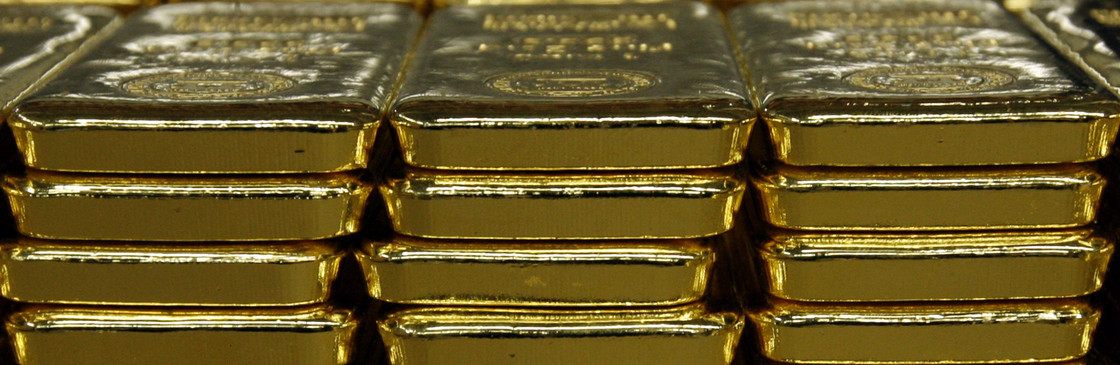
Research at ETH Zurich has uncovered where Swiss banks stashed their gold in theSecond World War – and how this helped to cement Switzerland’s reputation as a secure financial centre. James Bond also played a role.

After the war, banks appropriated the image of the Alps as a safe haven, says architectural historian Ludo Groen. Photo: provided/ETH , Michel Büchel

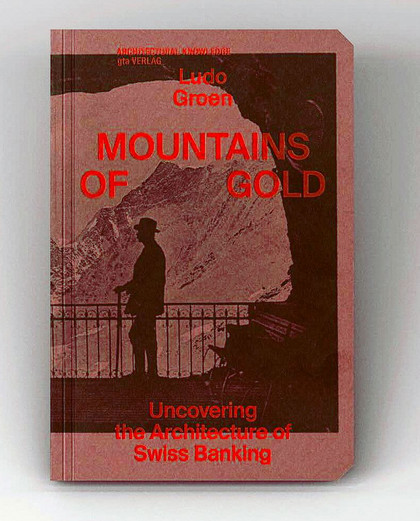
Ludo Groen’s new English-language book “Mountains of Gold” – the result of five years of research at ETH Zurich – is proof that history can be presented in a very lucid, engaging manner. The author describes in great detail how gold was moved from the Swiss National Bank (SNB) bunker underneath Berne’s Bundesplatz to the Swiss army fortification Fort Bühl near Andermatt (canton of Uri) via covert night-time transports.

Guarded by armed bank officials, every convoy started with lorries pulling into Ostermundigen station from the SNB’s Berne headquarters. The bullion would then be loaded onto a goods train counting up to 20 wagons. After reaching Göschenen via Lucerne, the valuable freight would be reloaded onto lorries that then drove up the Schöllenen Gorge to Andermatt. Groen even studied the meteorological records of MeteoSwiss in order to tell the story as accurately as possible. The journeys proved very challenging. During the first one in April 1938, the escort was caught unawares by a heavy snowstorm and unable to leave the fortress via the normal route, as temperatures plummeted to minus 11 degrees Celsius.

Berne was deemed unsafe

Switzerland was an important conduit for gold during the Second World War. Between 1939 and 1945, the SNB bought 1.2 billion Swiss francs worth of gold from Nazi Germany. This included gold looted from Holocaust victims. Switzerland also traded gold from the Allies. Groen sheds new light on the history of gold in Switzerland. “Being an architect, I wanted to approach the history of gold in Swiss banking differently,” he says. Not simply by numbers but through the medium of rooms, buildings and landscapes. Groen is the first person to investigate how Switzerland moved its gold to clandestine Alpine depots during the 1930s and 1940s, establishing banking infrastructure away from the cities.

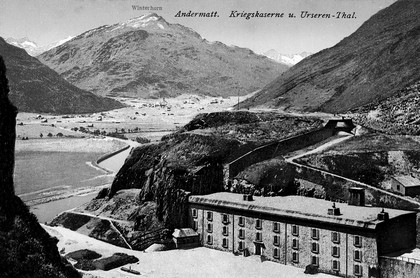
Postcard showing Fort Bühl embedded in the Gotthard massif. This is where the SNB began stashing gold in 1938. Photo: provided/Library Am Guisanplatz, Berne

The evacuation of gold from the federal capital was prompted by the army commander of Berne, who was concerned that an air raid could destroy the city as well as Switzerland’s gold reserves, which were mainly stored there. The army and the SNB subsequently met to brainstorm possibilities of moving the gold to secure locations in the Alps. They were inspired by Fort Knox in the US, which had been opened in 1936 and housed large quantities of US gold in a heavily fortified military facility.

One of the first Swiss gold depositories was built in the heart of the military “redoubt” – the Alpine defence system designed to deter would-be attackers – in the aforementioned Fort Bühl, directly above the Gotthard tunnel. This made sense for both logistical and symbolic reasons, the author says. The Gotthard was not just any other location, “but, like the Jungfrau, one of mythical proportions”. Gold became intertwined with Switzerland’s national defence.

Not long after the war began, General Henri Guisan expressed unhappiness that the SNB only had one depot in the Alps. The general staff of the armed forces suggested, therefore, that one of its munition depots in Interlaken in the Bernese Oberland be made available at short notice for storing gold – which is indeed what happened. Groen again gives a meticulous account of the transports to this second depot – even mentioning receipts for expenses such as the cost of lunch including gratuities.

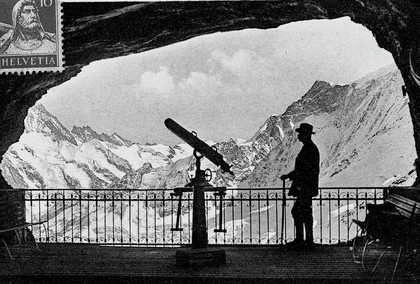
The Eismeer station – situated 3,160 metres above sea level, behind the dreaded north face of the Eiger – was offered as a possible location for the SNB’s gold, but this solution proved too expensive. Photo: provided/ETH Library, Zurich

The author cross-checked his findings with the report of the Bergier Commission, which investigated Switzerland’s role in the Second World War, and with studies on economic history. In doing so, he discovered that the transports coincided with documented gold shipments from abroad. This revealed a pattern: not long after gold arrived in Switzerland, it would be moved onwards to the Alps.

Switzerland’s strategic U-turn

The purpose of the gold depots changed during the course of the war. As Groen explains, Switzerland made a strategic U-turn in 1940: shifting its thinking from military defence to economic cooperation. The gold depots now facilitated economic collaboration with Nazi Germany, through the trade in looted gold. And the depots in Interlaken and the Gotthard were no longer evacuation sites that needed to be camouflaged against bombing raids; they became efficient logistical hubs instead.

Commercial banks like the Schweizerische Kreditanstalt (SKA) and the Union Bank of Switzerland also had plans to move banknotes, securities and gold to the Alps, with deserted grand hotels in Interlaken and Gstaad earmarked as storage sites. According to the author, plans were drawn up to renovate these ageing hotels and install underground strongrooms. But they were never fully executed.

“Mountains of Gold” Ludo Groen, Gta Verlag 2026

The book does not conclude with the war but goes on to reveal the global dimension of the gold trade. A supply chain underpins the gold, says Groen, citing the consequences of gold mining in South Africa – namely, environmental pollution, bad health, and exploitation of workers, particularly during the apartheid regime. Swiss banks played a role insofar as they issued loans to gold mining companies. Switzerland became a key trading point for South African gold.

Alps – the promise of security

Groen’s perspective therefore extends beyond the Second World War. He argues that the priority of defending the nation fed “the mythology of the Alpine fortress”. After the war, the banks appropriated this image to sell the promise of security, using Alpine imagery to convey a message of impregnability, trustworthiness and safety. For example, the 1982 Credit Suisse poster “Incredibly Swiss” depicted the snow-capped Alps. The two Bond movies filmed in the Alps in the 1960s, “Goldfinger” and “On Her Majesty’s Secret Service”, reinforced the image of Switzerland as a safe haven. Groen: “Switzerland’s international image shows how important the Alps were as the nation’s point of reference.”

Comments

×

First name, surname and place/country of residence is required

Enter valid name

Valid email is required!

valid email address required

Comment is required!

Comment rules have to be accepted.

Please accept

* These fields are required.

top