“Killing” the father
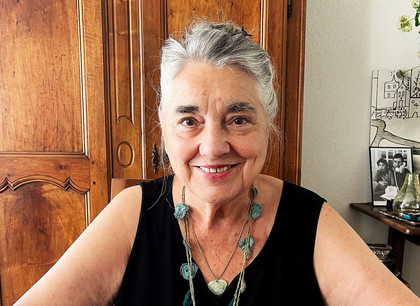
Born in Thun to a Calvinist father, who was a judge and artillery colonel, Jean Ziegler was aware of poverty from a very young age. During the Second World War, “he saw poorly dressed children placed with families. What should we do? he asked his father, who replied: Mach di Sach, which translates as everyone should mind their own business,” recalls Erica Deuber Ziegler. The Calvinist concept of predestination sickened him. Jean Ziegler went on to “kill” his father by converting to Catholicism and becoming a Marxist. This from the man whose maternal grandfather was one of the founders of the Swiss People’s Party.
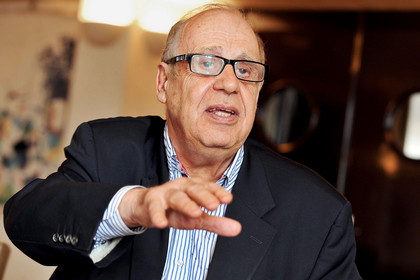
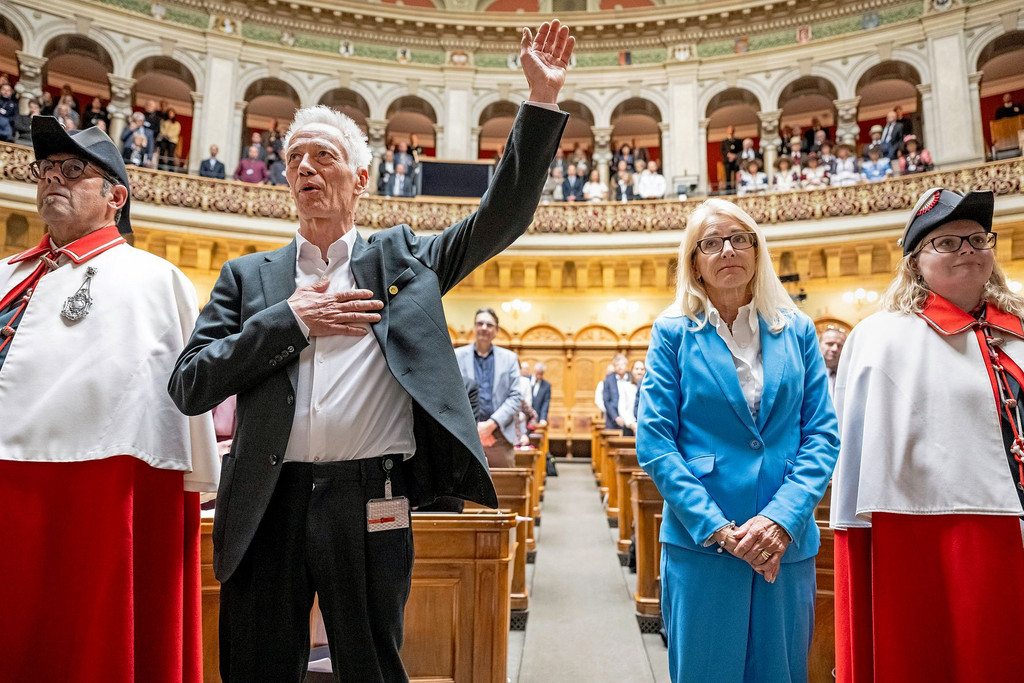
In 1961, after obtaining a doctorate in law and becoming a lawyer, Jean Ziegler travelled to the Congo as a UN special envoy. This would give rise to his interest in decolonisation and his approach of developmental sociology. In Paris, he rubbed shoulders with Sartre and Simone de Beauvoir. Rebellious, audacious and “immune to criticism”, according to his friend, property developer and author Metin Arditi, Ziegler drew the ire of the courts. In 1991, the Swiss Parliament voted to lift his parliamentary immunity, paving the way for nine lawsuits for defamation, which he lost. None of this would prevent the sociologist being re-elected, in the same year, to the National Council. He moved in with his second wife in her house in Russin, where the bailiffs came to call more than once, the art historian remembers.
The “NZZ” called Jean Ziegler “The revolutionary in a bespoke suit”.
A high point of his career was when he met Ernesto Che Guevara in Geneva in 1964. “Jean was called to act as a guide,” his widow recalls. For 10 days, the sociologist, who became vice-chairman of the United Nations Human Rights Council Advisory Committee in 2009, took Che around Geneva and explained the Swiss political system to him. Jean Ziegler offered to accompany him to Cuba. “The head of the monster is here. You need to fight in this city,” Che commanded. “It was as if Christ had spoken to him,” Erica Deuber Ziegler recalls.
Denouncing banking secrecy
One of the criticisms levelled against Jean Ziegler was that he met with revolutionaries who became dictators: Fidel Castro, Robert Mugabe, Muammar Gaddafi, Hugo Chávez. “Jean met Gaddafi three times to ask him about the situation of the populations of the Sahel. He said that was once too many,” his widow says. “He stood with the people living under dictatorships,” comments the former Social Democratic Party Federal Councillor Micheline Calmy-Rey, who praised his courage and his ability to condemn the hypocritical actions of Switzerland. One such example was in 1998, when he appeared before the US Senate Banking Committee to argue the idea that only economic sanctions would force Swiss banks to repay the funds from unclaimed accounts.
“When he denounced banking secrecy, he did the banks a favour, as they realised that they would have to make changes in pursuit of excellence,” believes Metin Arditi. Former FDP Federal Councillor Pascal Couchepin is of a different view: “He saw himself as the representative of the third world, but he picked the wrong heroes. Ultimately, Jean Ziegler bequeathed Switzerland a rather modest legacy,” he stated to the press after Ziegler’s death. The barb brings a smile to Erica Deuber Ziegler’s face as she points out, among other things, that her husband was known all around the world.
On 1 August, in the small municipality of Choulex (Geneva), his son, playwright Dominique Ziegler, made a speech at the invitation of the local authorities. “For the past 10 years, UBS has contributed 211 billion US dollars to projects connected with oil and gas. It’s absolutely insane,” he told the villagers, following in the footsteps of his late father.





Comments
Comments :
«Die Schweiz wäscht weisser»: Ziegler verstand es, die Verbrecher beim Namen zu nennen.