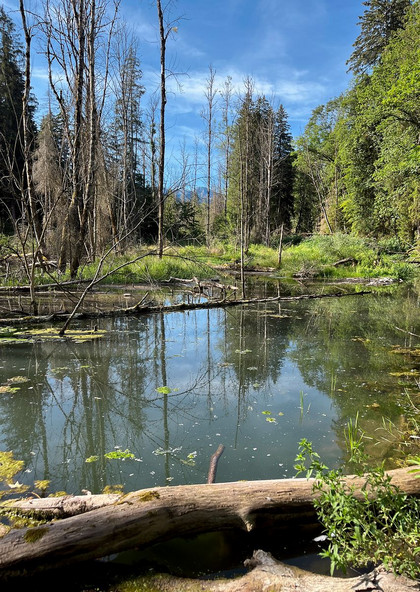
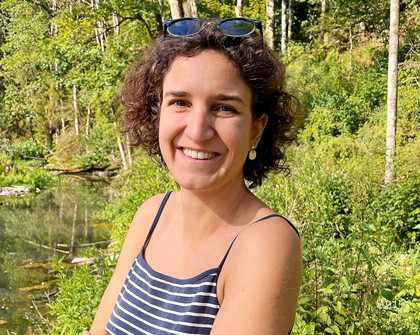
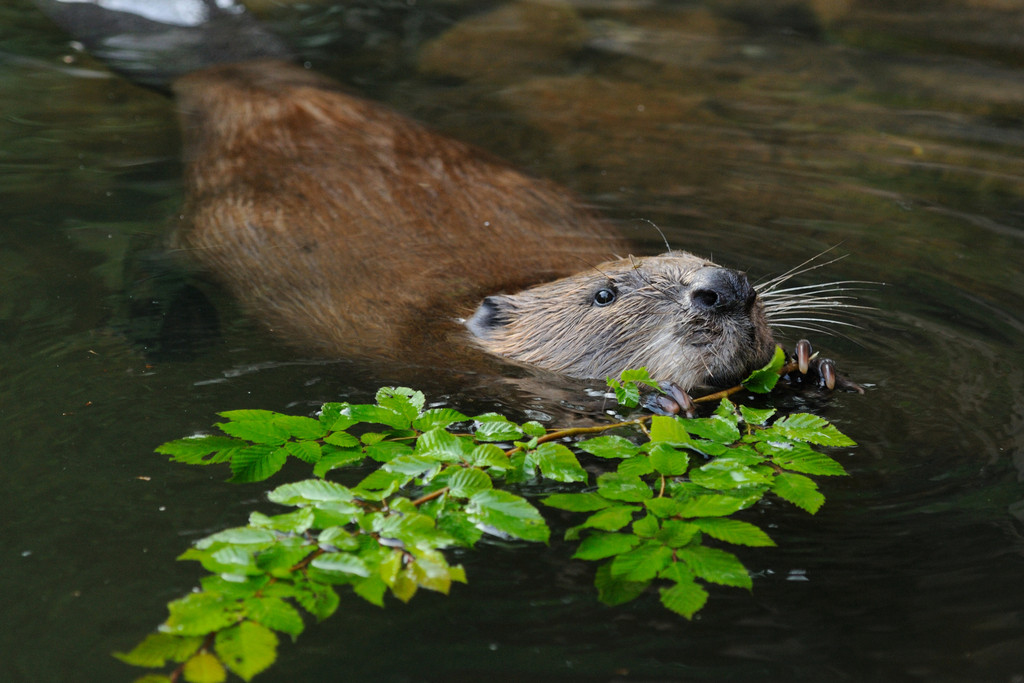
On the banks of the Sense, Cécile Auberson points out the trees submerged in the pond. “There are more ecological niches here – in the sun and in the shade – than anywhere else,” she says. Moreover, the wetlands created by beavers act as carbon and methane sinks, trapping these molecules in the water. They also filter out the nitrates produced by farms, among other sources. In addition, these reservoirs contribute to refilling the water table and can buffer the effects of heavy flooding. This is exactly what is needed in an urbanised country like Switzerland, which is threatened by droughts in summer.
As a study by info fauna has shown, the dams built by beavers increase biodiversity and biological mass. On average, their presence results in 2.6 times more species and 5.9 times more animals of those species. “The reservoirs I study on the left bank in Geneva have seen the return of kingfishers,” Marie Bessat is delighted to note.
The hitch is that beavers are unpredictable in where they create their reservoirs. For example, beavers built dams in an industrial district in Geneva, on the left bank of Lake Geneva, which triggered flooding. The cantonal authorities have responded by monitoring water levels; if they rise suddenly, the height of the dam is lowered to prevent a sudden inrush of water, explains Bessat. In the view of Cécile Auberson, beavers unveil situations where urbanisation failed to take account of the natural environment. “When a road floods, you often see that the rules governing construction, which stipulate a minimum distance between the river and the road, were not followed,” she says. The national beaver centre thus organised a symposium aimed at civil engineers, to raise awareness of these issues.






Comments