Menu
stage img
  • Nature and the environment

Applauded, then poisoned – Peterli, the crowd-pleasing otter that met an unfortunate end

19.12.2025 – Roger Sidler

The story of Peterli the otter is a metaphor for Swiss attitudes to wildlife. Otters were regarded as pests in Switzerland until the middle of the 20th century. Peterli, the darling of Dählhölzli Zoo, became too popular for his own good – and paid for it with his life.

In 1953, the director of Basel Zoo, Heini Hediger, wrote an essay addressed to the Federal Council. The renowned zoologist wanted to express his appreciation for the revised Hunting Act that had come into force. The legislation marked a turning point: otters, along with other species like the skylark and the golden eagle, had finally been removed from the list of huntable animals and were now regarded as protected. It was a very late reprieve for the otter – the animal was almost extinct in Switzerland by that time.

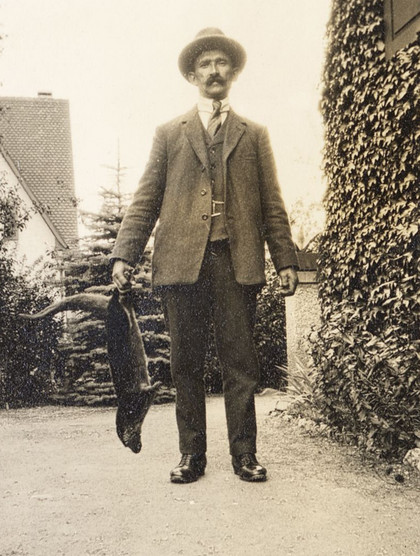
Hunter Rudolf Plattner holding a dead otter in Reigoldswil (1927) – there was a nice bounty payment for every kill. Picture source: Basel-Landschaft cantonal archives, StABL PA 6281 02.01

Extinction was the goal

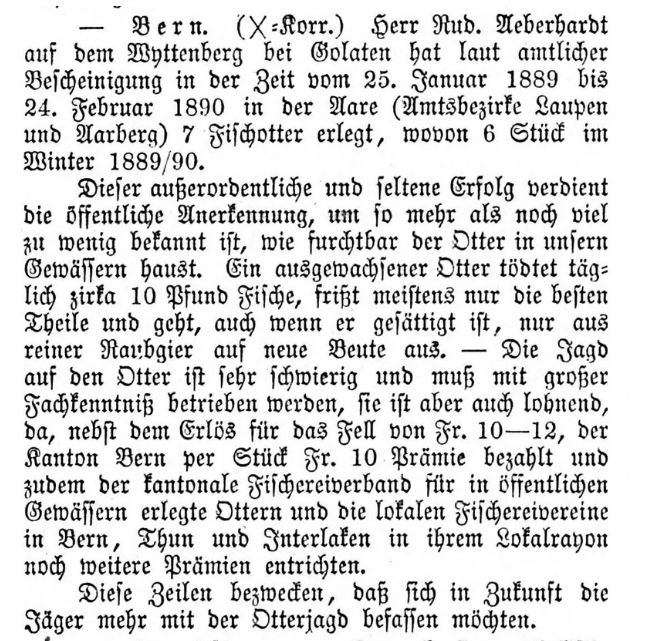
Hediger thought the original legislation, dating back to 1888, had been a big mistake. “Everything must be done to facilitate the extirpation of otters, herons and other animals that threaten fishing,” read Article 22. Bonus payments would also be made for culling them, it said. The canton of St Gallen would pay 20 Swiss francs, Berne 15 francs and Vaud 40 francs per kill. The rewards were sizeable in the end, with cantonal and local fishing associations often paying an additional bounty on top. Hunters would have shown little interest in slaughtering otters otherwise, preferring stags, roe, and wild boar for their meat.

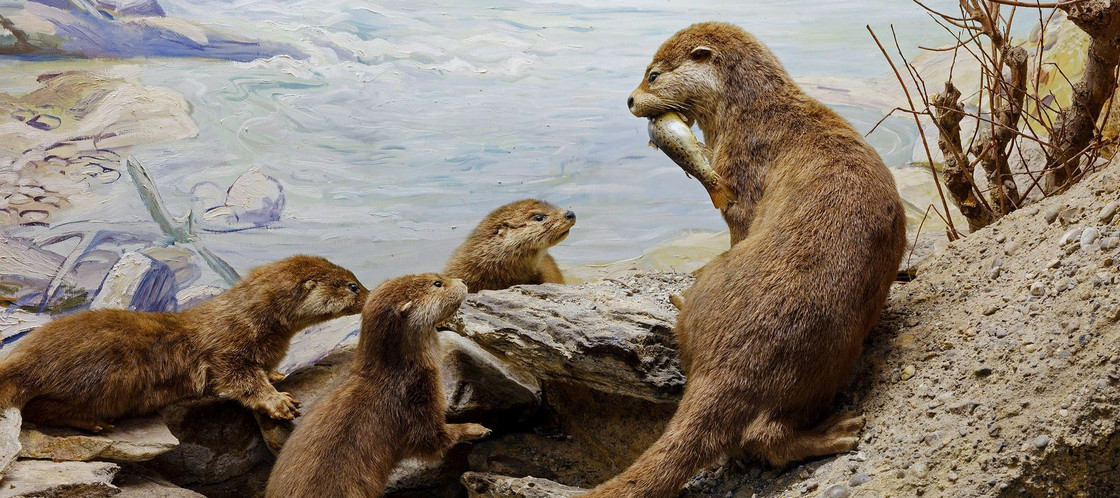
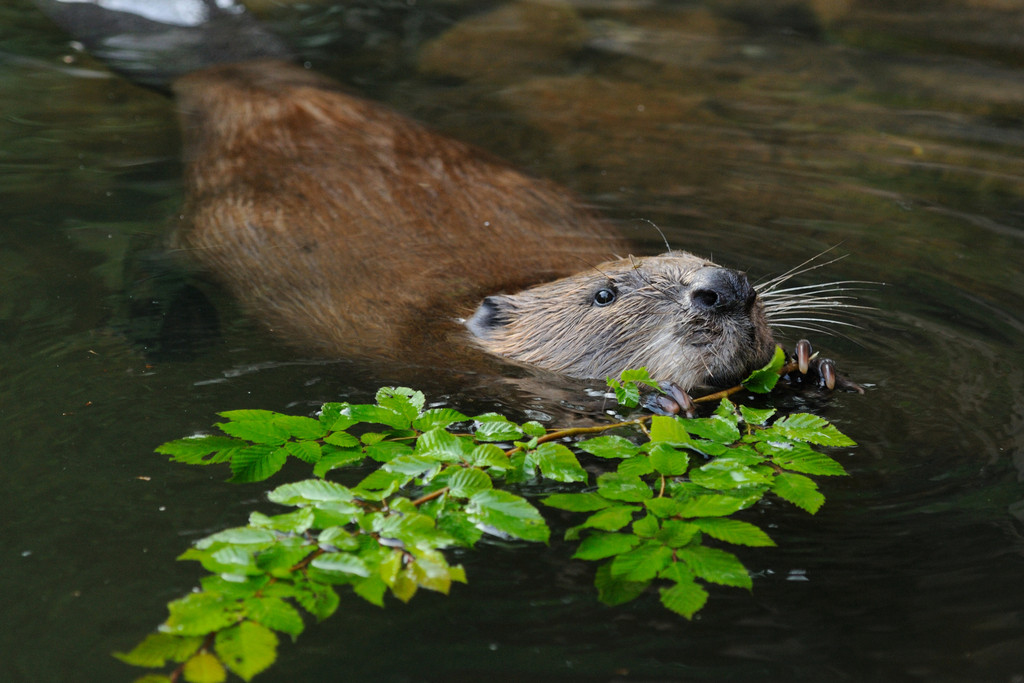
A baby otter

Records show that 100 to 150 otters were shot each year in the 1890s, but the annual kill rate dropped to under ten during the Second World War. The last bounty payments were made in 1932. With no animals to kill, there was no sense in dangling any more financial carrots. Otters had completely disappeared by the middle of the 20th century.

Heini Hediger’s efforts to protect local wildlife were inspired by the sad story of one otter. Hediger had been the director of Dählhölzli Zoo in Berne from 1938 to 1944, and it was there that he had grown fond of Peterli, the resident otter. Peterli had caused quite a stir one summer – much to Hediger’s delight. The director could not think of a better advertisement for the zoo.

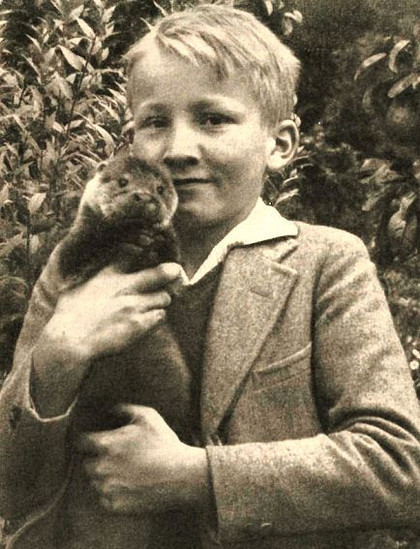
Peterli in the arms of a young boy at the zoo – photographed by Heini Hediger. The otter had not yet grown to full size. Photo: Heini Hediger, 1938/1939

But how did Peterli end up at Dählhölzli in the first place? Head warden Werner Schindelholz relates that he stumbled across a blind baby otter while scouting the River Aare in June 1938. The animal could barely have been more than a few days old. Young otters normally open their eyes after about 30 days and only leave their burrow after ten weeks. It is, therefore, extremely unlikely that Schindelholz, an experienced hunter, came across this baby simply on the river path. He probably located it in its den instead. Schindelholz had always dreamed of making such a discovery, and so decided to take the little otter – weighing 220 grams and barely 20 centimetres long – home with him. He proceeded to bring the creature up himself, naming it Peterli.

In autumn 1938, rumours spread around Berne of a man who would walk around town with an otter in tow, the animal obeying its master in the manner of a little dog. Schindelholz even took Peterli with him on the bus. This story has been corroborated. The otter once sat on Federal Councillor Giuseppe Motta’s lap, Hediger claimed in his memoirs. But no one can confirm this.

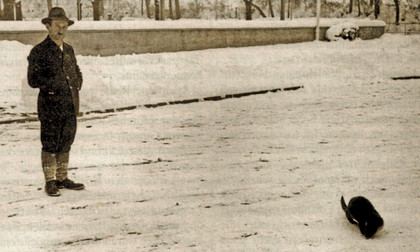
Head warden Werner Schindelholz taking Peterli on a wander through the snow – photographed by zoo director Heini Hediger. Photo: Heini Hediger, 1938/39

Schindelholz handed the otter over to Dählhölzli at the beginning of 1939. Peterli became an instant hit at the zoo, where he was the entertainer. Every afternoon, the otter would scurry over to the water fountain outside the public restaurant, where a crowd of people were waiting for him. Peterli would corkscrew through the water, juggle a ball, catch fish thrown in the air and retrieve objects. Schindelholz would then carry him over to his rudimentary stone-wall enclosure consisting of a pool and a rocky bank.

The fence was pointless

The zoo soon discovered that hosting a celebrity otter had its drawbacks. There was nothing physically protecting Peterli in his pool from the whims of the general public. Visitors would tease the otter with their handkerchiefs, hats, umbrellas and walking sticks. Or throw toys at him – items that were often dangerous to the animal. Neither a hastily erected wire fence nor “keep out” signs improved matters. When the zoo reported culprits to the police, there was an outcry around the city.

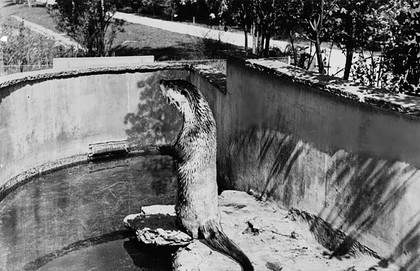
Otter Peterli was at the mercy of humans, his pool accessible day and night, and the boundaries between play and torment blurred. Photo: Burgerbibliothek Bern

Sugar cubes and razor blades

The cantonal government minister responsible for the zoo was irritated by all the fuss and called for an end to the otter’s “performances”. But Hediger the zoo director was having none of it. The quarrel died down a little once Peterli reached sexual maturity by the age of one.

The otter was no longer quite as obedient. But although Peterli was now behaving more like an otter would, he would still come scuttling along whenever Hediger called out his name. He continued to entertain – while visitors continued to throw all sorts of rubbish into the pool. Sugar cubes and other “treats”. But razor blades too. Poisoned bait landed in the enclosure on the night of 5 December 1941. Wardens found Peterli dead in his den the next morning. News of the otter’s demise spread in no time. Newspaper “Der Bund” published an obituary.

Otter from Warsaw

One of Peterli’s two predecessors at the zoo, purchased for 550 francs when Dählhölzli opened in 1937, had already disappeared without a trace. Zoos in general were anything but safe havens for otters. By 1951, Zurich Zoo had reported its third otter fatality due to an attack by a member of the public. One of its otters had more or less been stoned to death.

Dählhölzli initially chose not to keep otters after Peterli’s death. This was until it built a new, safe space situated in the woods in a protected part of the zoo. Dählhölzli’s director Monika Meyer-Holzapfel was ready to purchase an otter in 1949 but was unable to find one in Switzerland. She had to fly in Peterli’s successor from Warsaw.

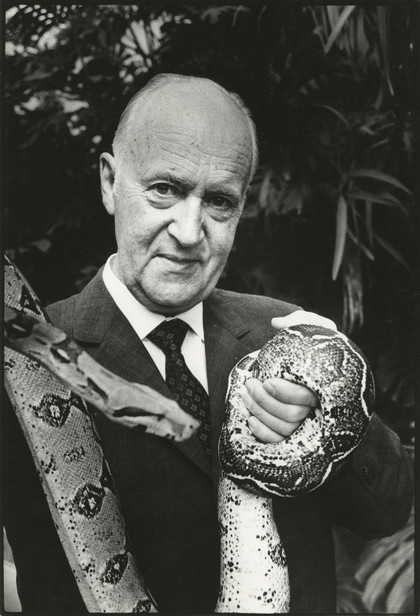
Professor Heini Hediger, Director of Zoo Zurich, 1972. Photo: Keystone

Hunted and misunderstood

After seeing what had happened to Peterli, Heini Hediger took matters into his own hands. In publications and on radio programmes, he did all he could to highlight the plight of a species that had been unfairly branded as a fish thief. Didn’t otters devour vast numbers of fish and hunt simply for the thrill? No, said Hediger, explaining that the otters at Basel Zoo each consumed 600 grams of food every day – not kilos of fish, as the press had written. Their diet also included frogs, crayfish, rats, mice and waterfowl.

When the otter became a protected species in Switzerland, Hediger concluded that the animal was virtually extinct. He believed that the opportunity to learn more about otters had been squandered. He also had no idea why otters were unable to breed in captivity. Knowledge in this area was limited. Switzerland still had between 80 and 150 otters at the time, divided into a few small clusters in Grisons, on Lake Neuchâtel and on Lake Biel. But despite government measures to protect them, these remaining otters also disappeared. Not only had their natural habitat been destroyed, but pollution had also been an aggravating factor.

Polychlorinated biphenyls (PCBs), a group of man-made, toxic chemicals used in numerous products, had entered the otter’s food chain, building up inside the animal. Consequently, the otters became infertile. Switzerland banned PCBs in 1986, but the last otter died on Lake Neuchâtel three years later. The species was declared extinct in Switzerland.


Addendum

For two decades, the only otters in Switzerland lived in zoos or were preserved in museums. Nevertheless, 1985 saw the first-ever Swiss otters to be born in captivity. This was in Berne. Another litter was born one day later at Zurich Zoo. The species started to make a quiet comeback in 2009. There were individual sightings at first. Now offspring have also appeared. The outlook may be improving.

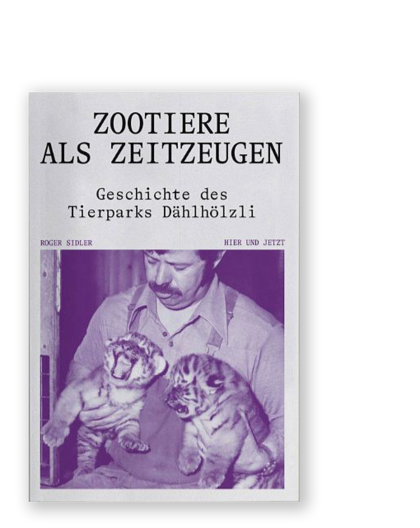
“Zootiere als Zeitzeugen”. 2024, Hier und Jetzt publishing house, 208 pages, ISBN 978-3-03919-623-4, CHF 34.00


Animals in captivity

The history of Dählhölzli Zoo

There are various ways in which to recount the history of a zoo. Historian Roger Sidler (born in 1968) tells the story from the point of view of the animals. Peterli the otter, Igor the tiger and Céline the wildcat lived at Dählhölzli Zoo in different eras. They and other animals in captivity are reflections of society. They are silent witnesses of history, raising fundamental questions about our relationship with wildlife and the natural world.

Comments

×

First name, surname and place/country of residence is required

Enter valid name

Valid email is required!

valid email address required

Comment is required!

Comment rules have to be accepted.

Please accept

* These fields are required.

top