Switzerland is known internationally for its “mastery of time”. Ever since the mid-16th century, the Swiss watchmaking industry has been crafting measuring devices that attribute a specific value to every moment. This expertise, patiently passed down and continually improved, is one of the benchmarks of reliability and precision that characterise our nation.
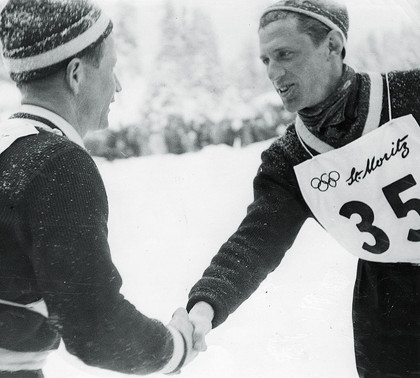
Birger Ruud congratulates Petter Hugted for his gold medal in the ski jump at the second Winter Olympics in St. Moritz in 1948. Photo: Norwegian National Archives
Contrôle suisse des chronomètres (COSC), a charitable organisation founded in 1973, plays a central role in guaranteeing Swiss timekeeping accuracy. This institution, which is independent and recognised at an international level, puts mechanical watches through a battery of tests. Only timekeeping devices with a precision that meets ISO 3159 standards are certified as chronometers.
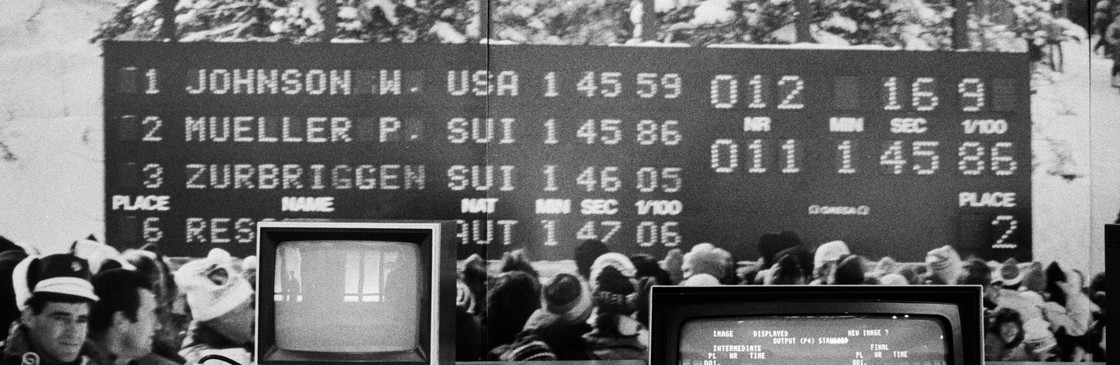
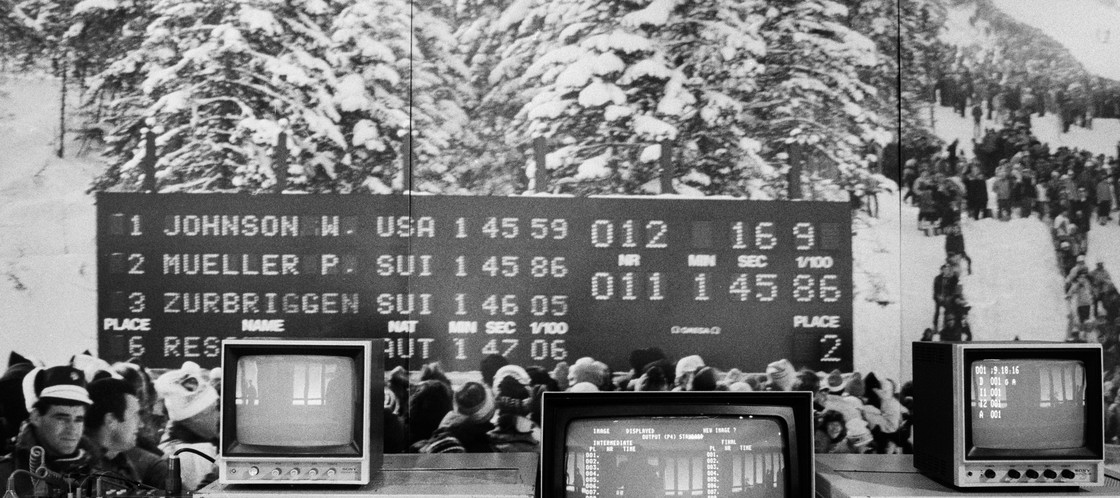
This search for precision is particularly evident in sports, where events are constantly becoming more professional and more competitive. Time measurement is a crucial part of this: it embodies the very essence of performance, that invisible line that separates effort from a record.
Swiss watchmaking, in the same way as Swiss diplomacy, has played a major role in this field for decades, especially when it comes to timekeeping at the Olympic Games, a sector where technology is constantly evolving.
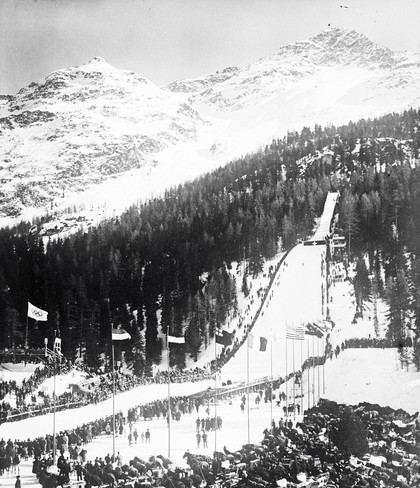
Iconic image of the St. Moritz Winter Olympics in 1928. Photo: Norwegian National Archives
The St. Moritz Winter Olympics
The St. Moritz Winter Olympics in 1928 was the pinnacle of years of effort designed to promote alpine tourism and bolster Switzerland’s image on the international stage. The event represented a major diplomatic opportunity for the Swiss government: it was the perfect venue for gathering together a broad diversity of participants and to portray Switzerland as an appealing and reliable partner. The second Olympic Games held in Switzerland, in 1948, let the country showcase its watchmaking expertise, marking the first time an entirely automatic Omega chronograph was used to record the exact time at which the finish line was crossed. These Games also enhanced Switzerland’s profile internationally, confirming its role as a neutral host in a world marked by postwar fallout.
During the 1960s, against a backdrop of intensifying rivalry, the dominant position of Swiss companies in timekeeping for major sporting competitions was shaken by the appointment of Japanese firm Seiko as the official timekeeper for the Tokyo Olympics in 1964.
Competition in sports timekeeping
Renowned Swiss watchmaking firms took to diplomatic channels to defend their expertise in sports timekeeping. Swiss representations abroad were called upon to promote Switzerland’s know-how to the host countries of major international competitions, such as the Mexico Olympics in 1968.
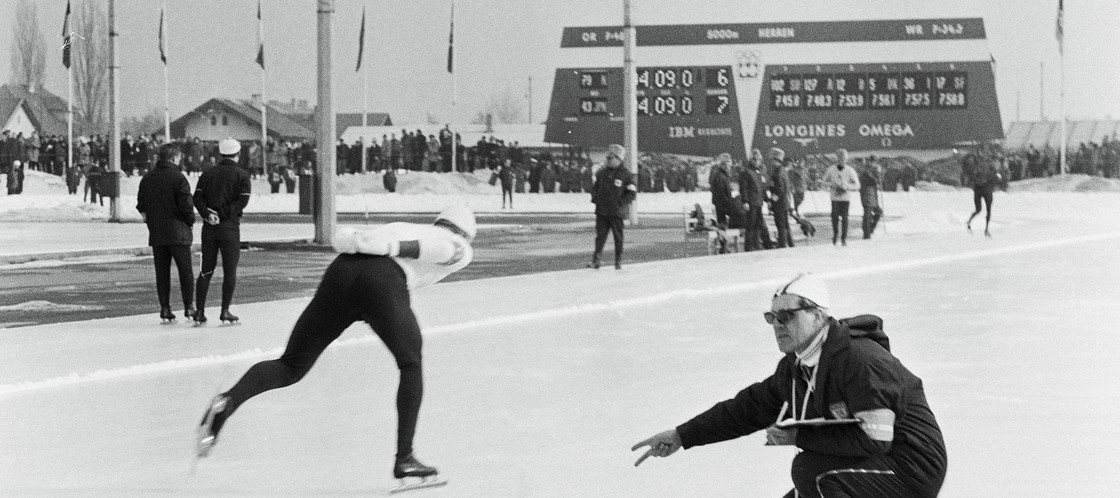
Alongside competition from Japan, which was gaining ground, including by providing the timekeeping for the Sapporo Winter Olympics in 1972, a second challenge was emerging: a growing rivalry between Swiss companies themselves. Omega and Longines fought for the strategic territory of sports timekeeping, which caused serious concern for the Federation of the Swiss Watch Industry (FH).
The brands responsible for timekeeping, which were initially paid for their services, were quick to understand the advertising value of the fact that major competitions began to be broadcast in colour in the 1970s. Since the Olympic Games were the event that got the largest media coverage in the world, these brands sometimes even offered their services free of charge.
Following years of tension and in full awareness of what was at stake, the major Swiss watchmakers finally decided to join forces and founded Swiss Timing in 1972, which would join the Swatch Group in 1983. This strategic alliance between Omega and Longines, driven by a desire to consolidate Switzerland’s position, was made possible thanks to the efforts of sporting institutions, the watchmaking industry and the diplomatic world.
With a few exceptions, Swiss timekeeping dominated the Olympic Games for the first half of the 20th century and made a name for itself as a global standard for precision. This tradition of excellence continues today: Omega is currently the official timekeeper of the Olympic Games and has signed a partnership with the IOC that is set to run until 2032. Behind this symbolic image, Swiss Timing organises the measuring technology. These organisations will be responsible for keeping time “down to a millionth of a second” at the next Winter Olympics.
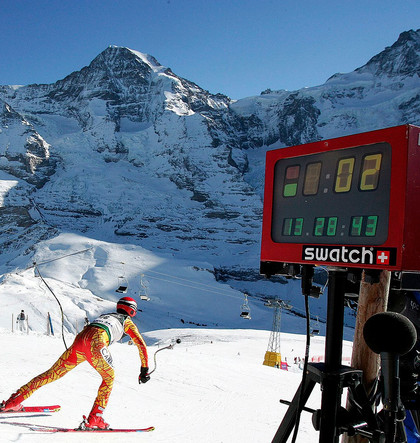
Mountains, snow and speed define downhill racing. But the clock decides who wins. Photo: Keystone
2026 Olympics and Paralympics in Italy
The Winter Olympics and Paralympics will take place largely in Milan and Cortina d’Ampezzo on 6–22 February and 5–15 March 2026. This will be the 90th anniversary of Omega providing timekeeping for the Winter Olympics. The Swiss delegation is expected to be significant: according to estimates, almost 190 athletes from the Swiss Olympic Team will be representing Switzerland in Italy.
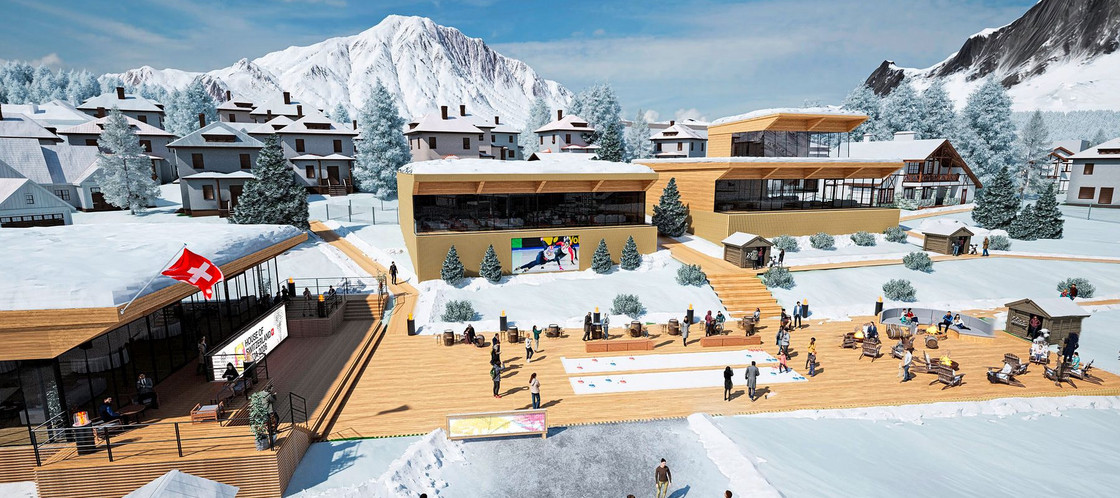
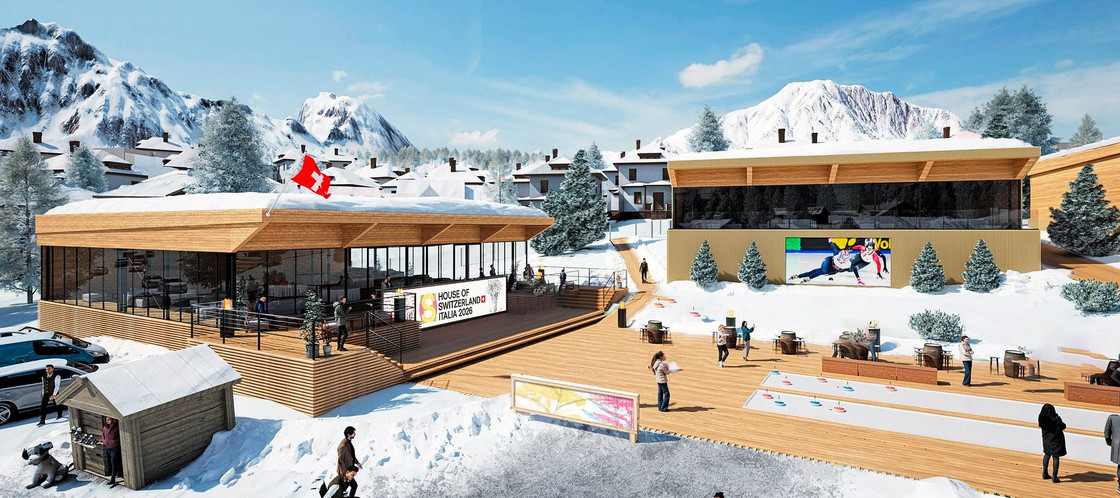
As a nod to Switzerland’s longstanding commitment to supporting major sporting events, the House of Switzerland Italia 2026 will proudly continue this tradition. Opening its doors in Cortina d’Ampezzo and Milan and designed by Presence Switzerland, it will showcase Swiss expertise and simultaneously act as a meeting place for athletes, partners, the media and spectators.
Flora Alpina, the theme chosen for the House of Switzerland Italia 2026, will highlight the role played by flowers in sport, medicine and culture. The hardiness of mountain plants calls to mind the determination of the athletes, and their use as folk remedies makes them a powerful symbol of strength. The graphic design will be based on the codes of Swiss craftsmanship, particularly traditional Grisons cross-stitch. The platform’s set design will offer an immersive experience where creation, emotion and beauty meet the environment.
According to Daniel Zamarbide, the architect and set designer for the House of Switzerland Italia in Milan, the flowers represent more than just beauty: they symbolise generosity and joy and are a frequent feature at celebrations. At the Olympic and Paralympic Games, moreover, they are traditionally associated with the medals awarded to the athletes. A pop-up alpine garden will be set up in the Centro Svizzero in Milan. It will be open to the public and will celebrate Swiss and international athletes.
At a time when sport is breaking new limits and where each performance tells a story, Swiss excellence and precision continue to offer the world an expertise that transforms emotions into unforgettable experiences.






Comments