A climate exhibition without the lecturing
06.02.2026 – Jürg Steiner
How are we doing in the fight against climate change? Berne’s Natural History Museum will attempt to keep tabs on this over the next ten to 20 years in a fascinating exhibition that also has a message of hope.
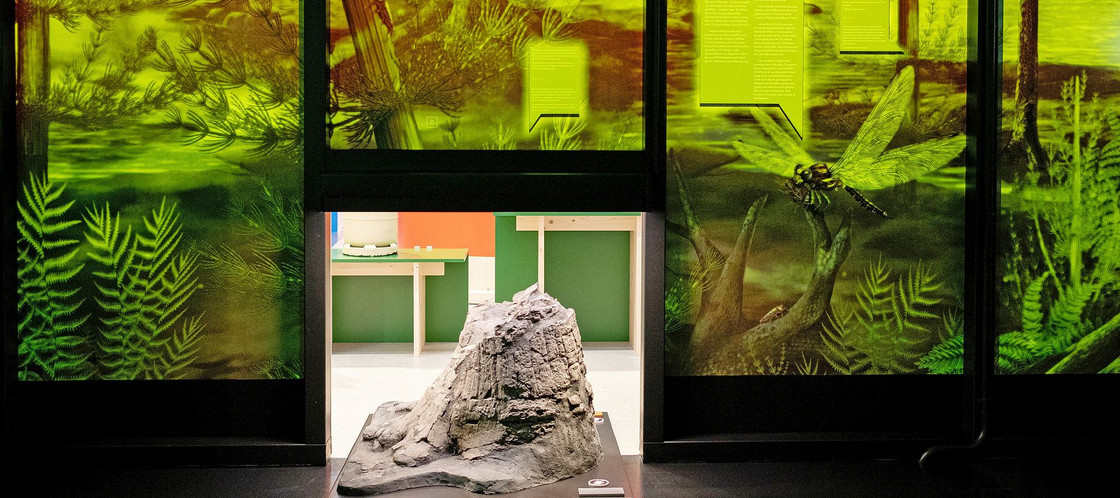
Slobbering, croaking and splashing all around. You find yourself in a dripping swamp as a monstrous dragonfly hurtles through the air. Beside a rotting tree stump, a white, eyeless thing – possibly a worm or a caterpillar – drags itself forward, its feelers outstretched. You automatically look down to make sure that your feet are not sinking into the quagmire.
This is a rainforest scene from a new exhibition at Berne’s Natural History Museum called “Earth, folks! – The changing climate”. The tropical swamp sits within a wooden cube that shows the world as it looked 300 million years ago. Long before humans.
Twenty years ago, during the excavation of the Lötschberg Base Tunnel, evidence came to light that the region now forming the mountainous canton of Berne was once a hot, swampy environment. Workers not only found granite but also came across a layer of rock containing the carbonised remnants of prehistoric plants. What has this got to do with climate change? The answer is that the remnants are a fossilised reminder of the vast quantities of carbon that intact wetlands were able to capture over centuries. By burning fossil fuels, modern civilisation has released this trapped carbon as CO2 within a matter of decades and driven climate change.
Fanning the flames
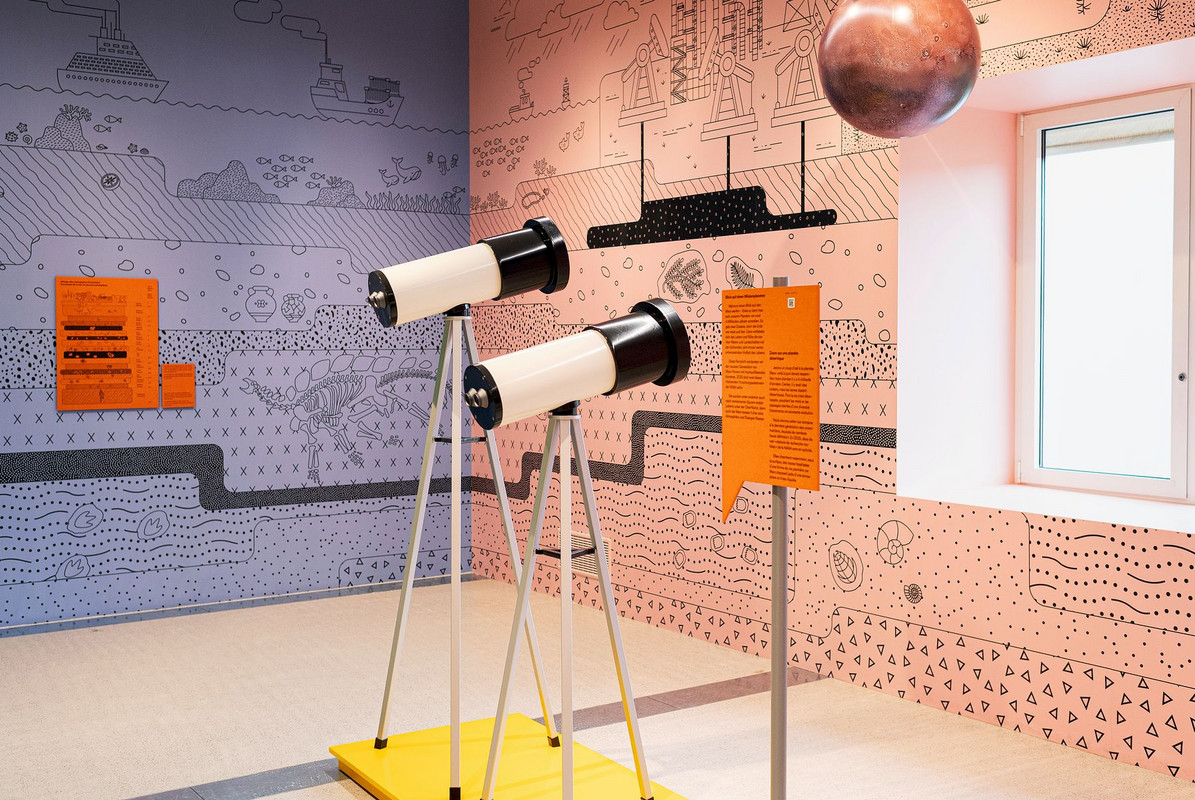
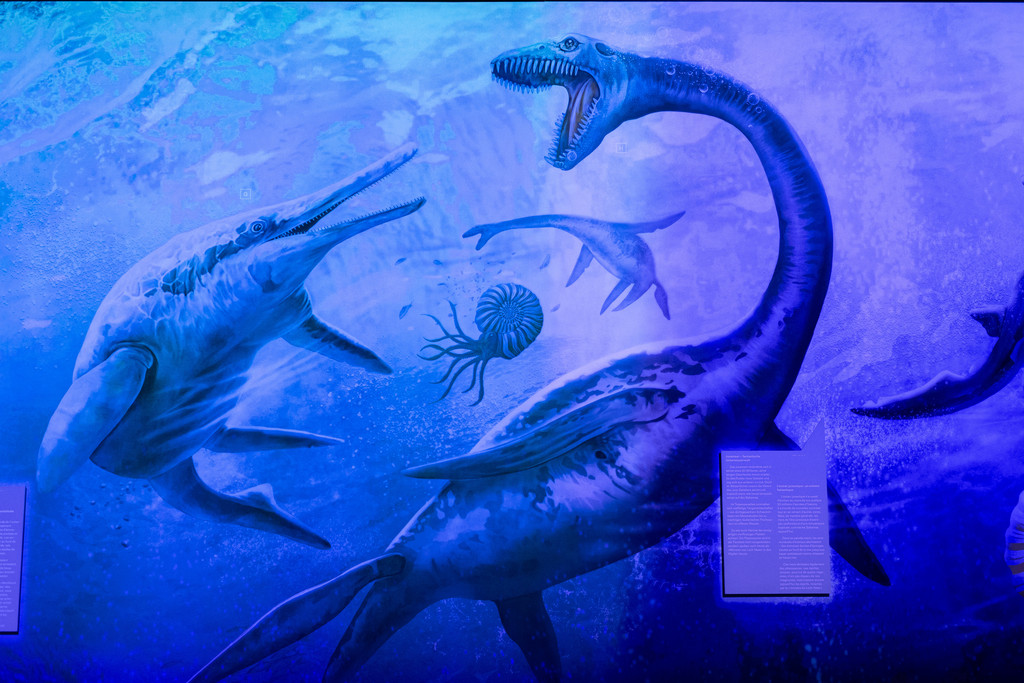
This is how the Natural History Museum uses visual language to powerful effect, underscoring that climate change and natural disasters have been constant factors throughout the Earth’s history. But humans, relative newcomers on this planet, are now setting immense forces in motion. Still, unlike meteorite strikes or volcanic eruptions, we can (or could) still do quite a lot to avert catastrophe.
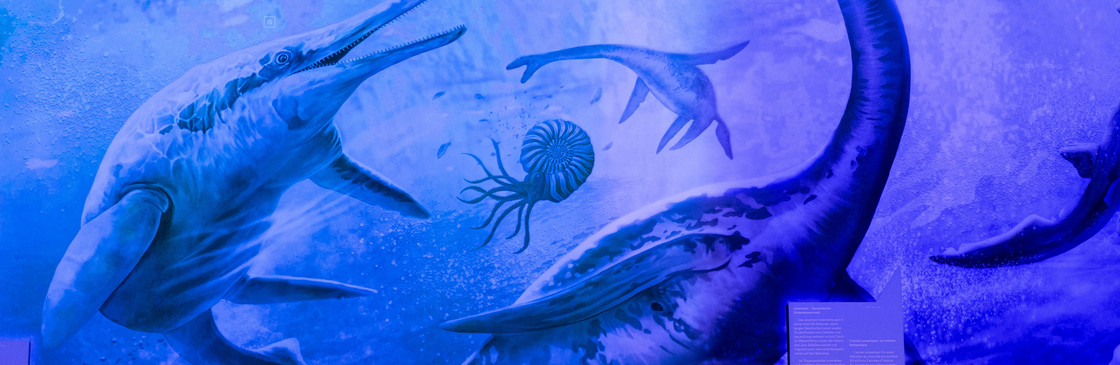
The exhibition underscores that climate change and natural disasters have been constant factors throughout the Earth’s history.
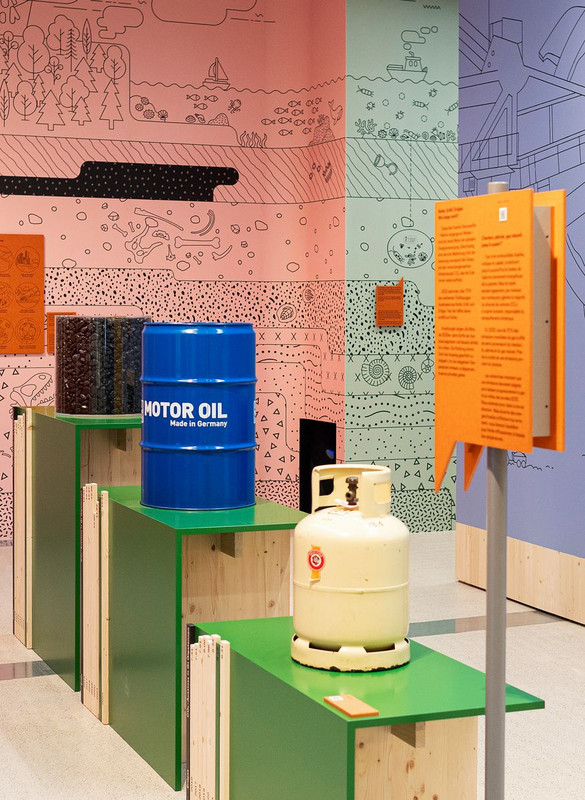
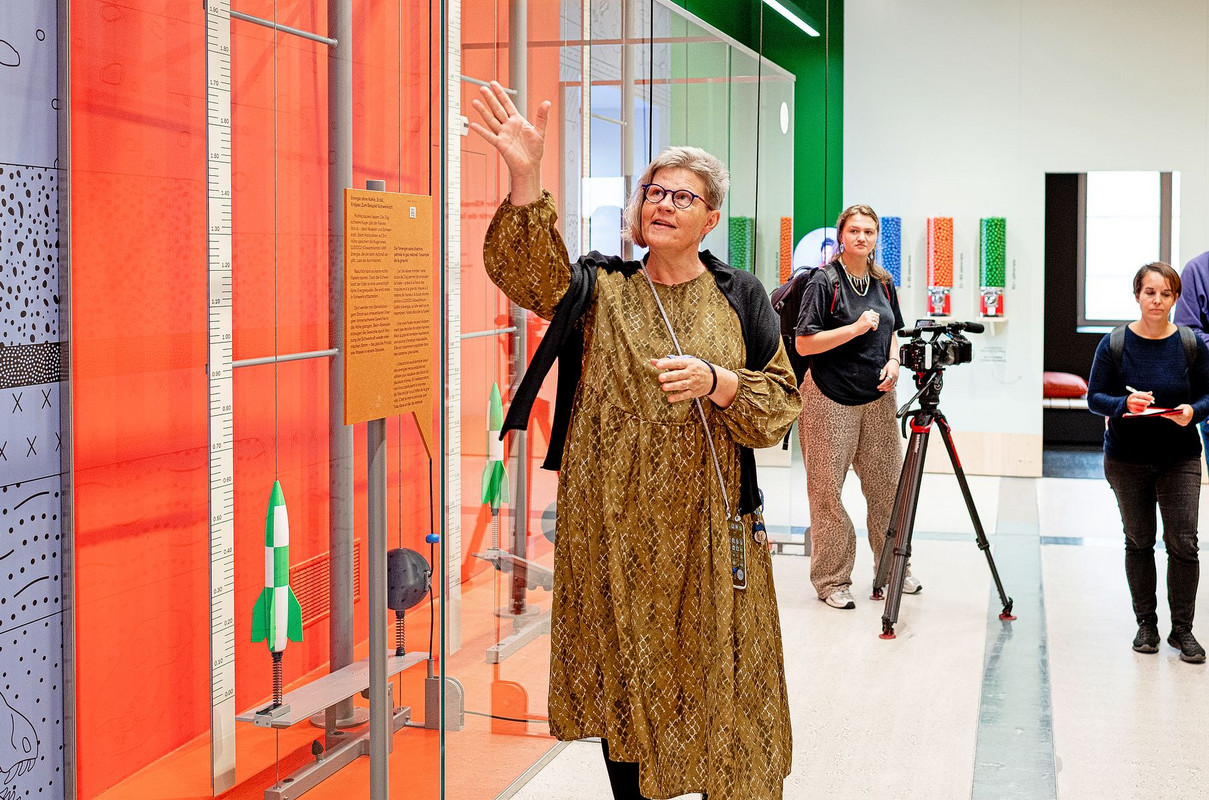
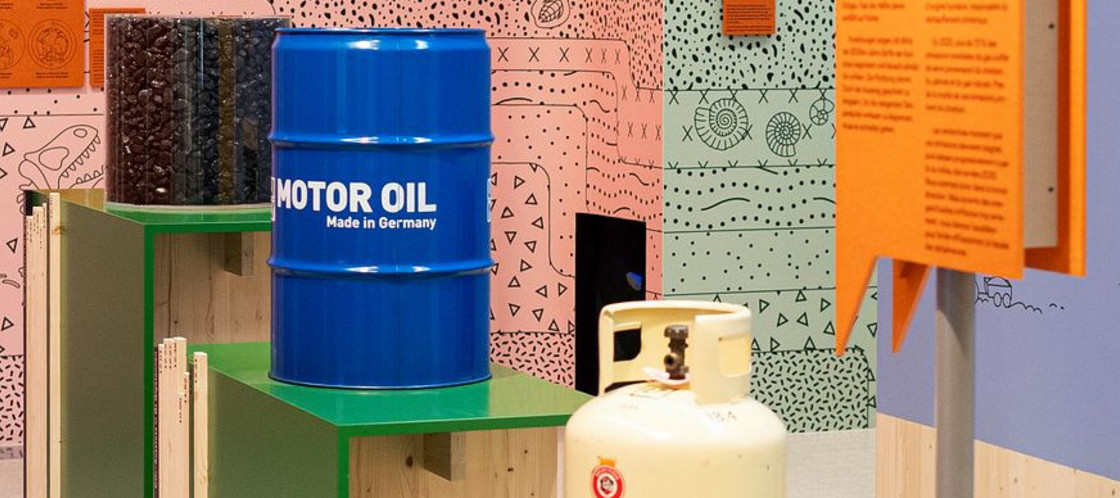
Dora Strahm, the exhibition curator, explains this accessible approach to the subject matter: “We want to return to the underlying facts that often fade into the background but are far less complicated than people make out.” Strahm condenses Earth’s underlying problem into one succinct sentence: “We are still burning fossil fuels.” The burning of coal, oil and gas still accounts for 70 per cent of global CO2 emissions. “Climate change is not politics, but physics.”
The exhibition takes visitors far back in time but always keeps the connection to the present. Strahm: “We also want the exhibition to appeal to people who have zero scientific knowledge.”
Walking with dinosaurs
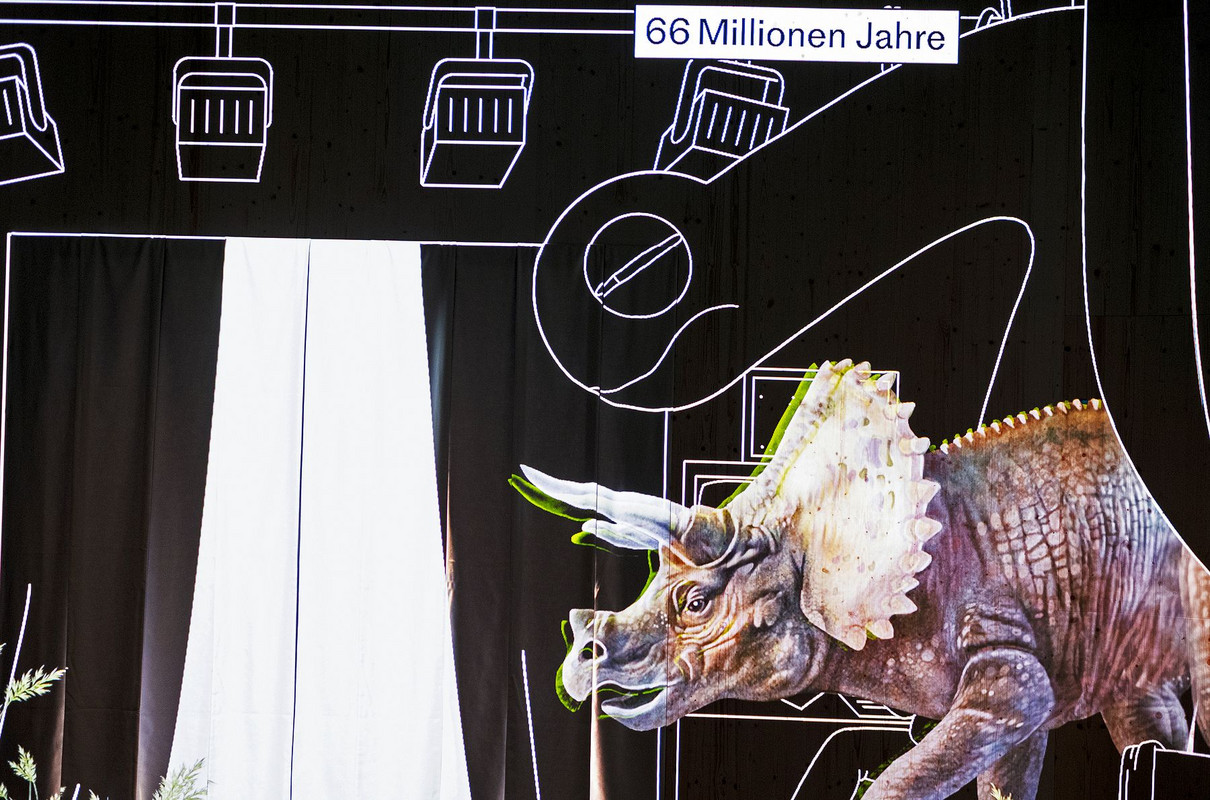
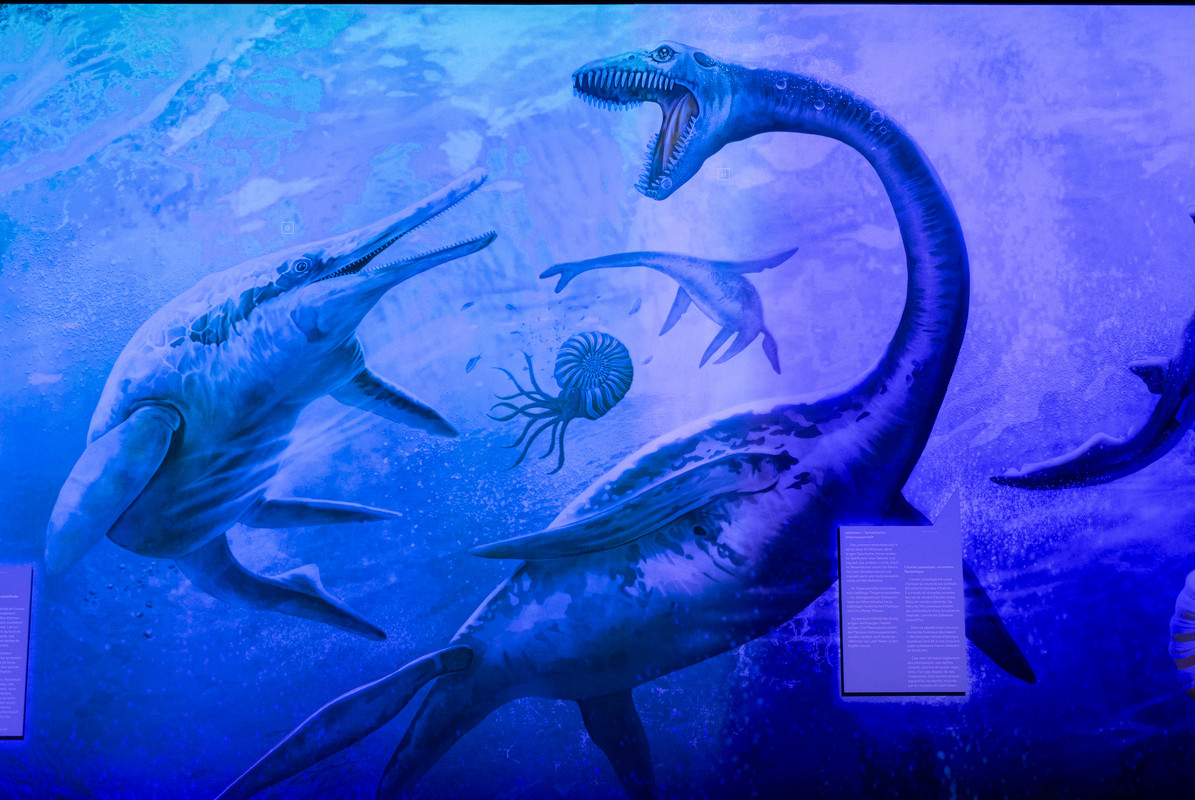
Nevertheless, anyone with existing knowledge will also learn plenty. For example, there is another cube structure, this time devoted to an event dating back 66 million years: the 14-km-diameter asteroid that slammed into what is today south-east Mexico. The impact spewed sulphur into the atmosphere, turning the Earth into an inhospitable place within seconds and sending the dinosaurs into extinction. But not all life was wiped out. Some birds that lived on the ground instead of in trees survived the catastrophe – probably because they relied less on habitats (trees) that were destroyed, say scientists. These birds are the dinosaurs that are still among us today.
The new exhibition will run for an unusual length of time: it is scheduled to remain in situ for the next ten to 20 years. Some elements – including 12 short videos of people from different walks of life saying how they currently view climate change – will be continually updated during this period. The same 12 people will each record a new video every year.
What we can or could still do
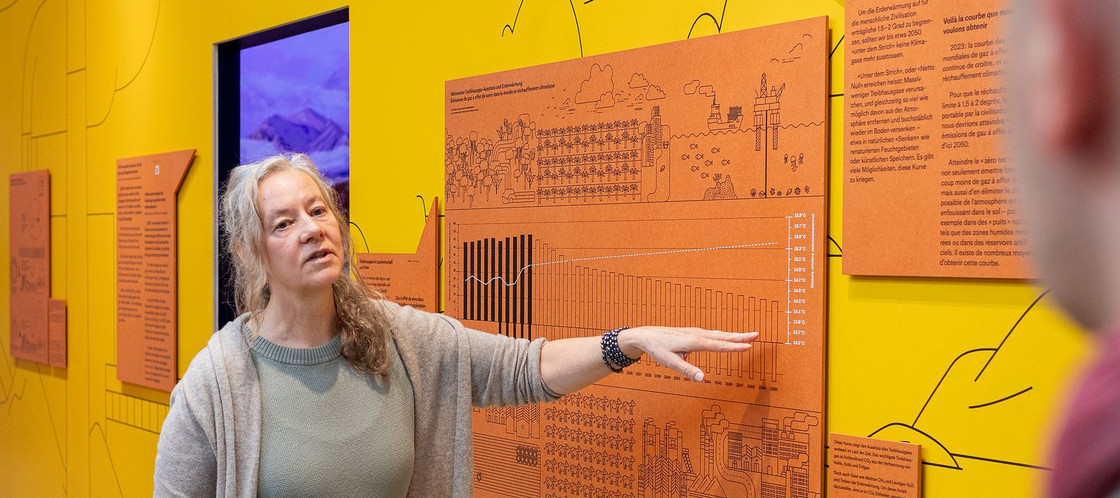
The exhibition will also keep tabs on whether humanity is making progress or otherwise in the fight against climate change. A big diagram hangs on one display wall, with numerous columns depicting greenhouse gas emissions and the extent of global warming until 2050 – the year by which most countries aim to have delivered on their net-zero goal of no longer producing more CO2 emissions than they can offset.
“Climate change is not politics, but physics.”
Dora Strahm, curator
Every year, the next column will be updated. The data for the 2025 entry will soon be available. It is already safe to say that CO2 emissions in 2025 will have been higher than what is compatible with net zero by 2050. However, the exhibition – in its own words – “stands for hope rather than powerlessness, and for celebrating the flourishing life on planet Earth rather than lamenting its loss”. For instance, visitors will learn that China cut its greenhouse gas emissions in the first quarter of 2025 despite the continued operation of countless coal-fired power plants. This is because China is rapidly installing more solar capacity.
Strahm cites one key difference between present-day climate change and cataclysmic events like an asteroid impact: “We can still do something to protect the Earth as we know it.” Visitors to the exhibition can help to decide how the Natural History Museum can do its own bit. By submitting their votes, they will determine over a number of stages which sustainability projects the exhibition should showcase and support in future with a small donation. “Every little helps,” says Strahm.
No moralising
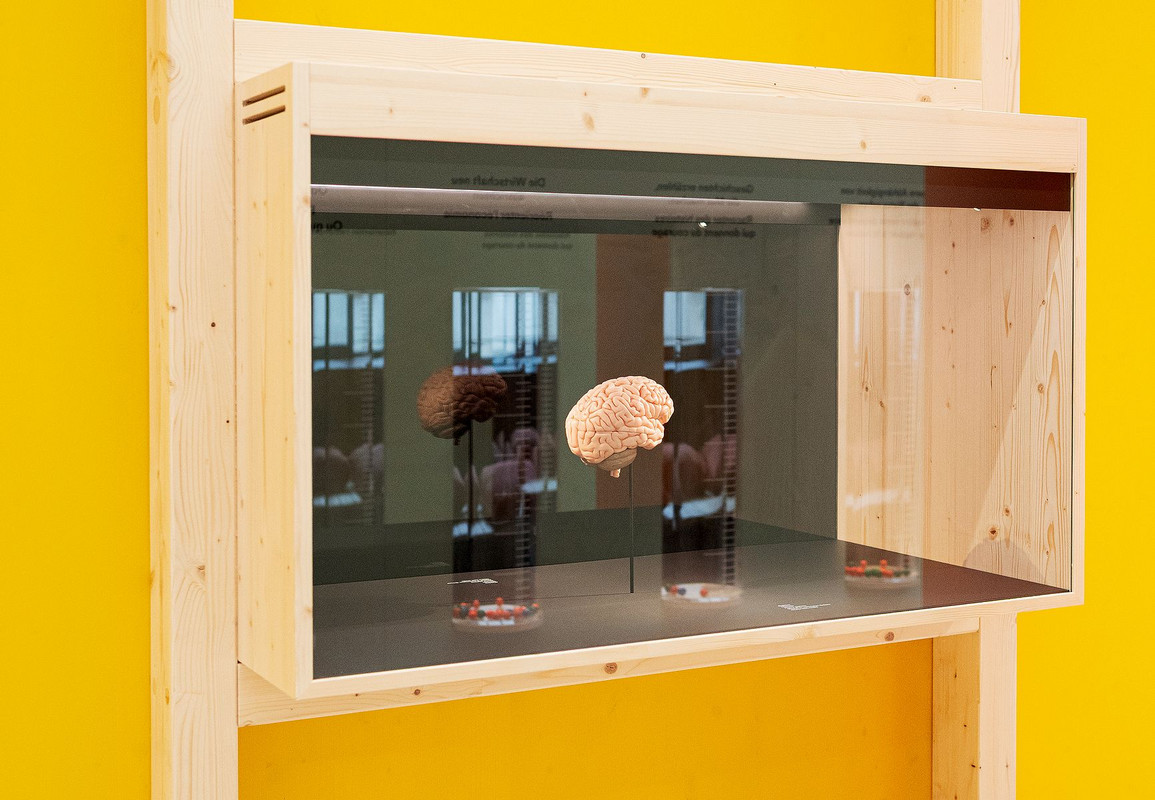
If ”Earth, folks” has a message, it is that we must act – even though museum-goers may be forgiven for thinking that it is all too little too late, based on what they see in the exhibition. Yet the tone is anything but preachy. Before you walk in through the entrance, you are taken on a one-minute whistle-stop video journey through 4.5 billion years of the planet’s history. Humans only appear on screen at the very last moment. Later, there is a display cabinet containing the model of a human brain. Just a human brain and nothing else – the crucial tool for bringing greenhouse gas emissions to net zero.
Naturhistorisches Museum Bern: Earth, folks! – The changing climate




Comments
Comments :
Exposition générale très explicite sur l'evolution naturelle du climat. Elle n'est pas effectivement moralisatrice, mais elle souligne l'importance de l'homme à s'allier avec la nature pour apporter sa contribution respectueuse au ralentissement du rechauffement climatique. Merci.